

Makerere University has launched a two-year research project to explore how restaurant waste in Kampala can support farming, create jobs and reduce pollution.
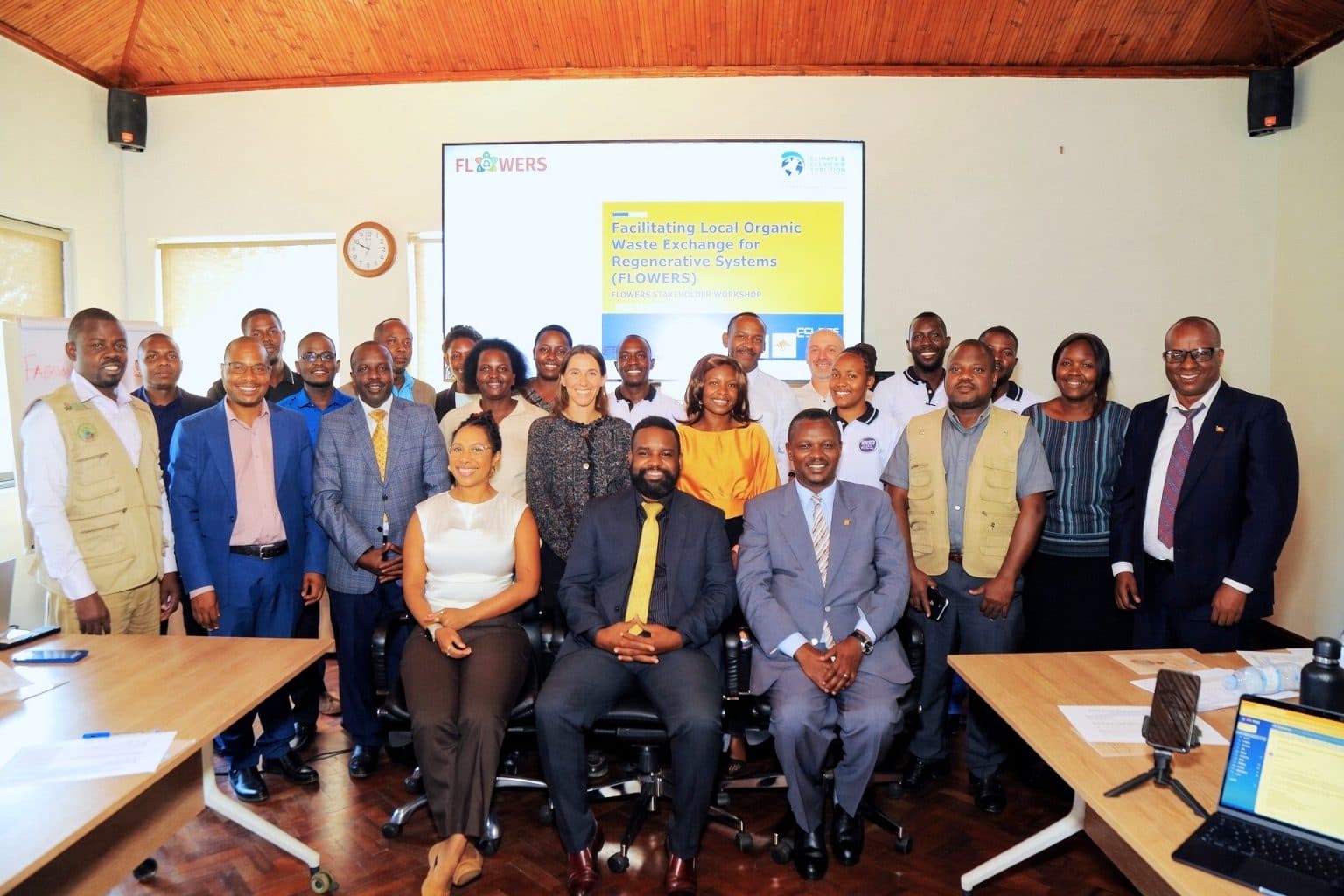
The university unveiled the Facilitating Local Organic Waste Exchange for Regenerative Systems (FLOWERS) project during a meeting at Fairway Hotel in Kampala on September 10, 2026.
The Climate and Clean Air Coalition funds the project, which will run until 2028. Makerere will implement it alongside ETH Zürich, Eawag, End Plastic Pollution and Kampala Capital City Authority (KCCA).
The project will study how food waste moves from restaurants to farms across the Greater Kampala Metropolitan Area. Researchers will also test ways of increasing the amount of separated restaurant waste supplied to farmers.
Makerere Deputy Vice Chancellor for Academic Affairs Sarah Ssali said the growth of restaurants and food vendors had increased the volume of organic waste in African cities.
Professor Robert Wamala, the director of Research, Innovations and Partnerships, delivered her opening remarks.
Professor Ssali said poor waste management causes pollution and wastes nutrients that could improve soil fertility.
“Rather than viewing restaurant organic waste simply as a disposal problem, the project seeks to examine how it can become a resource within a regenerative system, returning nutrients to agricultural production through appropriate mechanisms for recycling and reuse,” she said.
She said Kampala’s population growth and changing consumption patterns had placed more pressure on the city’s waste management system.
Professor Ssali asked researchers to produce evidence that could guide policy, investment and business decisions. She also urged the partners to involve restaurant owners, farmers, waste traders and government agencies throughout the study.
The project will use surveys involving restaurant managers, farmers and waste traders. Researchers will also conduct two waste-measurement exercises and track waste traders’ bicycles by GPS for six months.
The team will match selected restaurants with waste traders to determine whether the arrangement increases the amount of organic waste delivered to farms. Researchers will track the quantity of waste and money exchanged along the supply chain.
Makerere’s principal investigator, Associate Professor Charles Niwagaba, said the scale of Kampala’s waste problem required several institutions to work together.
He said researchers should treat Kampala as a living laboratory where universities, students, private businesses and public agencies can test solutions before KCCA adopts successful models.
Makerere will participate in three of the project’s four work areas. These include mapping waste, financial and carbon flows and assessing markets for products from composting, anaerobic digestion and black soldier fly treatment.
The university will also lead the national dissemination of the findings.
Associate Professor Niwagaba said Makerere would seek ethical approval, help map licensed restaurants and recruit enumerators. The university will also work with ETH doctoral researchers during the study.
Field data collection will run from September to December 2026.
The project will examine informal waste traders instead of replacing them. Many already collect leftover food and peelings from restaurants for delivery to farms.
However, researchers say little evidence exists on how much food waste moves through these informal networks or how much money participants earn.
KCCA, the National Environment Management Authority and government ministries regard the collection of restaurant food waste as a low-emission reuse strategy. FLOWERS will support this approach with waste and financial flow maps, a methane assessment and findings from a field experiment.
Professor Ssali said the project could turn Kampala’s restaurant waste from a municipal burden into a resource that supports farms, livelihoods and cleaner air.