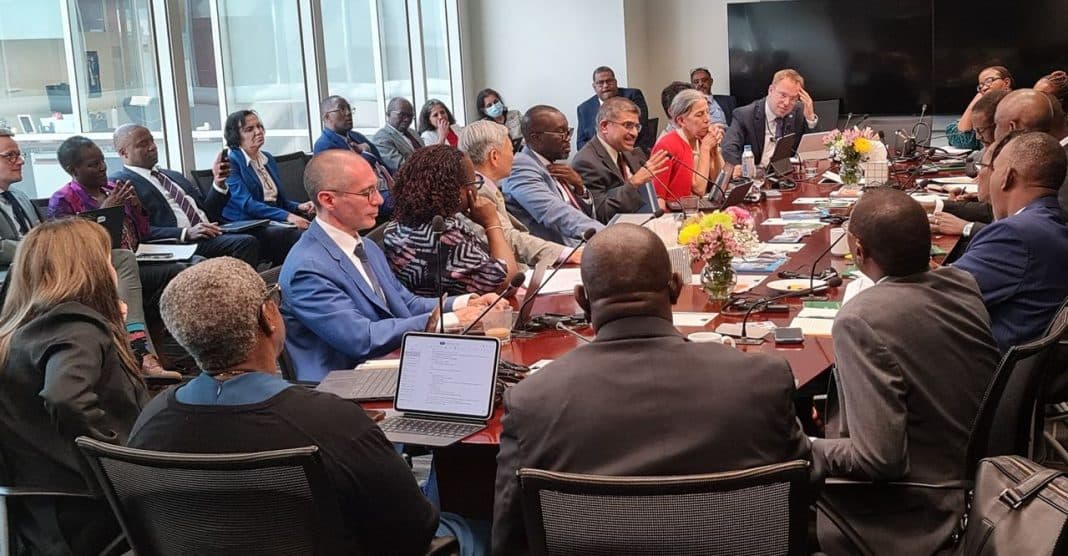
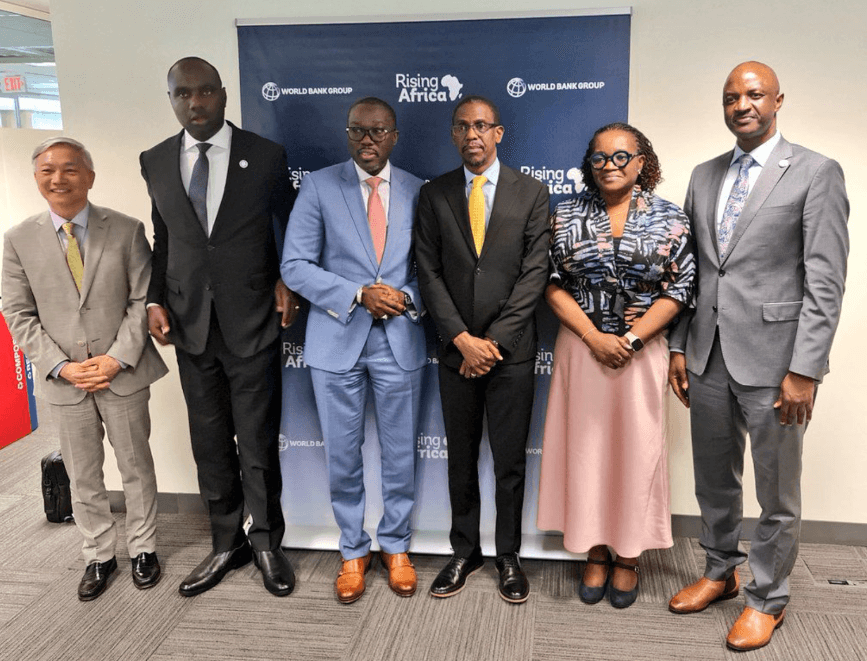
Uganda has intensified efforts to secure financing for major infrastructure and growth projects during high-level talks with the World Bank at the IMF/World Bank Spring Meetings in Washington, D.C.
The Ugandan delegation met the World Bank Vice President for Africa, Ndiame Diop, to review the country’s economic performance and assess the Bank’s expanding investment portfolio in Uganda.
During the meeting, the Minister of State for Finance in charge of General Duties, Henry Musasizi, said Uganda’s economy remains resilient despite global pressures. He noted that the country’s GDP growth stands at 6.3 percent, with projections of between 6.5 and 7 percent by the end of the financial year.
“This growth trajectory is well aligned to our ambition to grow the economy tenfold by 2040,” he said.
Musasizi said the World Bank portfolio in Uganda has expanded from USD 3.9 billion in March 2025 to USD 4.74 billion, covering 18 active projects and programmes.
“We thank the Bank for the approval of the Uganda Cities and Municipal Infrastructure program and additional financing to the Integrated Water Management Development Project,” he said. “We look forward to the approval of Uganda Tanzania Transmission Line project and additional financing to the Lot 1 of the North Eastern Road Asset Management Project.”
He said government is seeking increased World Bank support for key growth drivers under its long-term strategy. These include the Standard Gauge Railway, hydropower generation, urban infrastructure, drainage and waste management, electricity transmission systems, and private sector financing.
The World Bank Vice President commended Uganda for maintaining macroeconomic stability but urged authorities to ensure that economic growth translates into jobs and poverty reduction.
He also praised Uganda’s refugee policy and pledged support. “The Bank is ready to develop a programme to support Uganda in hosting the refugees,” Diop said.
Diop called for improved efficiency in project implementation and faster disbursement of funds to maximise impact.
The delegation also held technical discussions with World Bank officials on the INVITE Export Guarantee Scheme. Both sides agreed that the facility should be restructured to better serve beneficiaries.
Further talks focused on reforms needed to improve performance in Uganda’s energy sector.
In a separate engagement, the delegation met officials from the Japan International Cooperation Agency, including Yushi Nagano and Shinohara Shunei, to discuss financing for priority infrastructure projects.
Key projects under discussion included the Kampala Flyover and the Kampala Metropolitan Transmission System, which are central to easing urban congestion and improving power distribution.
The meetings signal Uganda’s continued push to attract development financing and sustain economic growth through strategic partnerships.