

What began as a modest government-backed project in Kalangala District more than two decades ago has grown into one of Uganda’s most impactful agricultural investments.
Launched around 2002 under the Vegetable Oil Development Project, the oil palm initiative aimed to reduce Uganda’s dependence on imported vegetable oil. Today, it has reshaped livelihoods, boosted incomes, and expanded economic activity on the island district.
The project operates under a public-private-producer partnership model. It is supported by the International Fund for Agricultural Development and the World Bank, with Wilmar Plantations playing a central role through its subsidiaries, Oil Palm Uganda Limited and Bidco Uganda Limited.
Oil Palm Uganda Limited manages the plantations and processes crude palm oil, which is then transported to Jinja for refining into cooking oil, soaps, and other products. The Uganda Investment Authority (UIA) has overseen the project from its early stages to its current scale.
Production has steadily increased over the years. According to UIA, the first mill in Bwendero on Bugala Island processes about 20 tonnes per hour and handles around 15,000 metric tonnes annually. Additional mills have since been set up in Buvuma and Sango Bay to meet rising demand.
According to plant manager Eng Simon Bwanika, demand for palm oil remains strong. He said any supply delivered for processing is cleared within days, showing the strength of the market. Crude palm oil currently sells between $1,200 and $1,500 per tonne, depending on quality. The company has also started exporting fatty acids to European markets such as Spain and Italy.
The project has created thousands of jobs. The three mills now employ between 1,200 and 1,400 workers. It has also driven financial activity in the district, with major banks opening branches to serve farmers and businesses.
Local farmers, known as out-growers, have benefited greatly. Deo Sseguya, one of the farmers, said oil palm farming provides steady monthly income. He noted that an acre can earn at least Shs650,000, improving household welfare.
Residents say the project has improved roads, electricity, water access, and housing. New businesses have emerged, and transport links have improved, boosting trade and tourism.
Oil Palm Uganda Limited has also invested in social services. These include schools, health centres, and water projects, alongside training programmes to build local skills.
However, challenges remain. Bwanika said low supply of raw materials from plantations and farmers limits production. He also cited the high cost of importing spare parts and poor road networks in farming areas. He called for more support to address these gaps.
Despite these issues, the project continues to stand out as a key example of how long-term investment can transform rural economies.
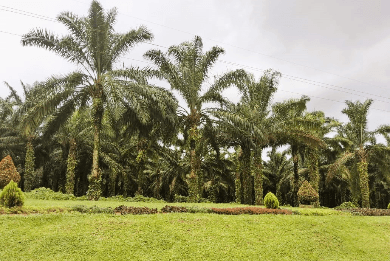
The Kalangala Oil Palm Project is part of the Government of Uganda’s Vegetable Oil Development Project
Photo: UIA/websiteKalangala oil palm project has grown into a major economic driver, creating jobs, boosting incomes, and transforming livelihoods despite ongoing challenges.
Advertisement
N
Nicholas Agaba
Author
Topics
Advertisement