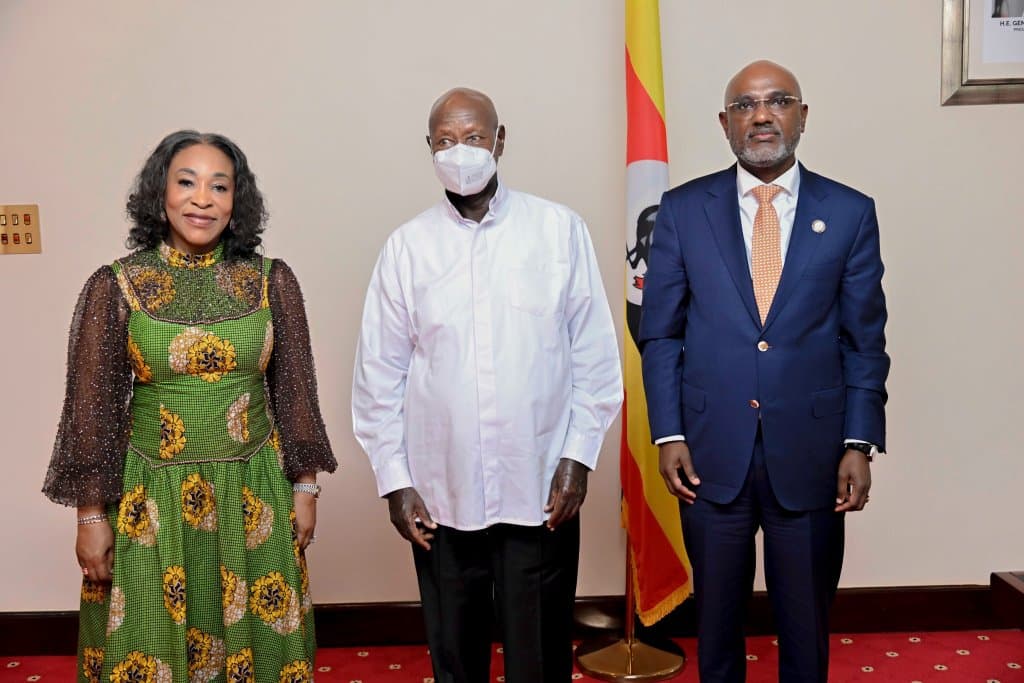

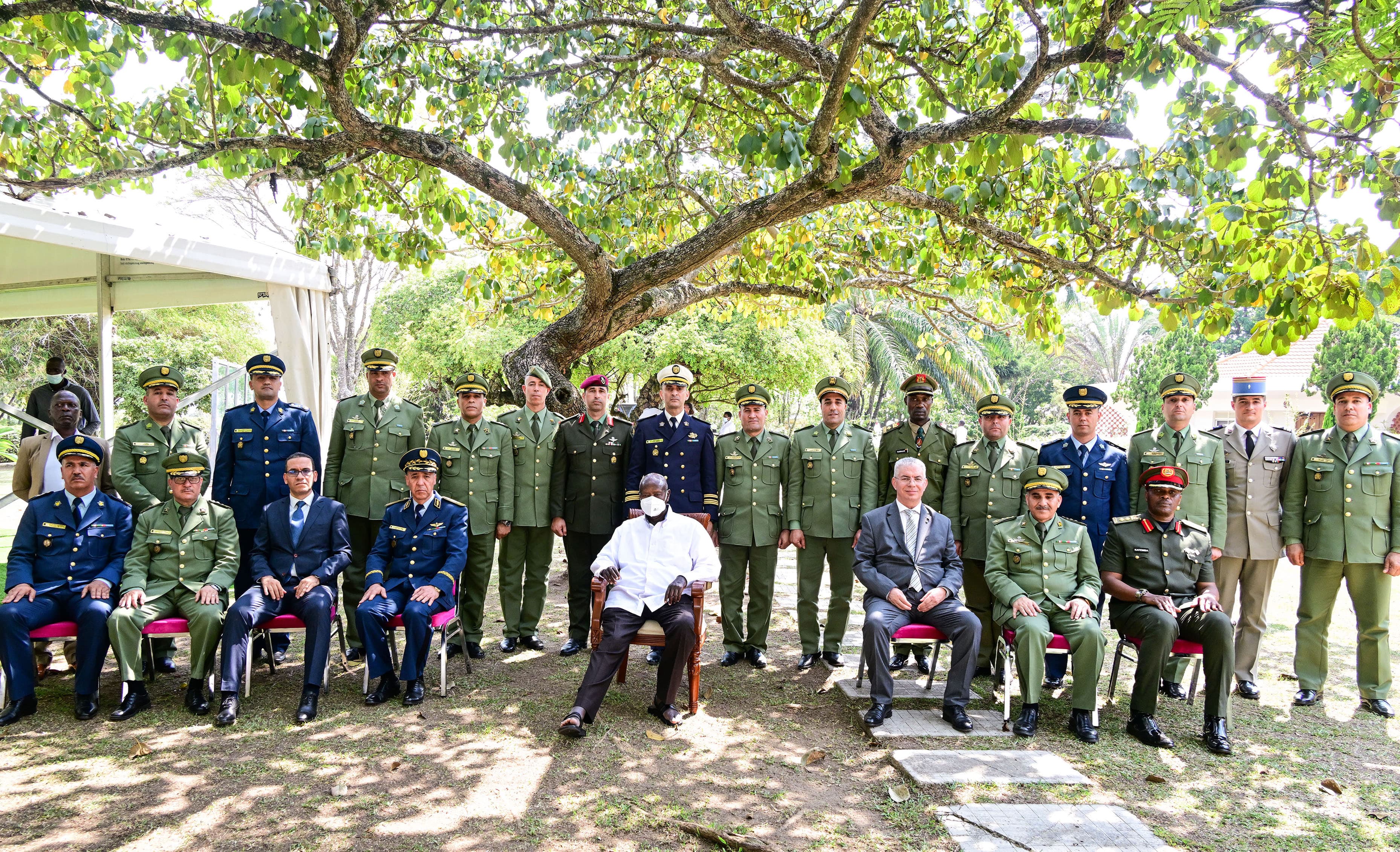
President Yoweri Kaguta Museveni has called on countries in the Maghreb region to embrace integration as a path to strategic security, economic growth, and political stability.
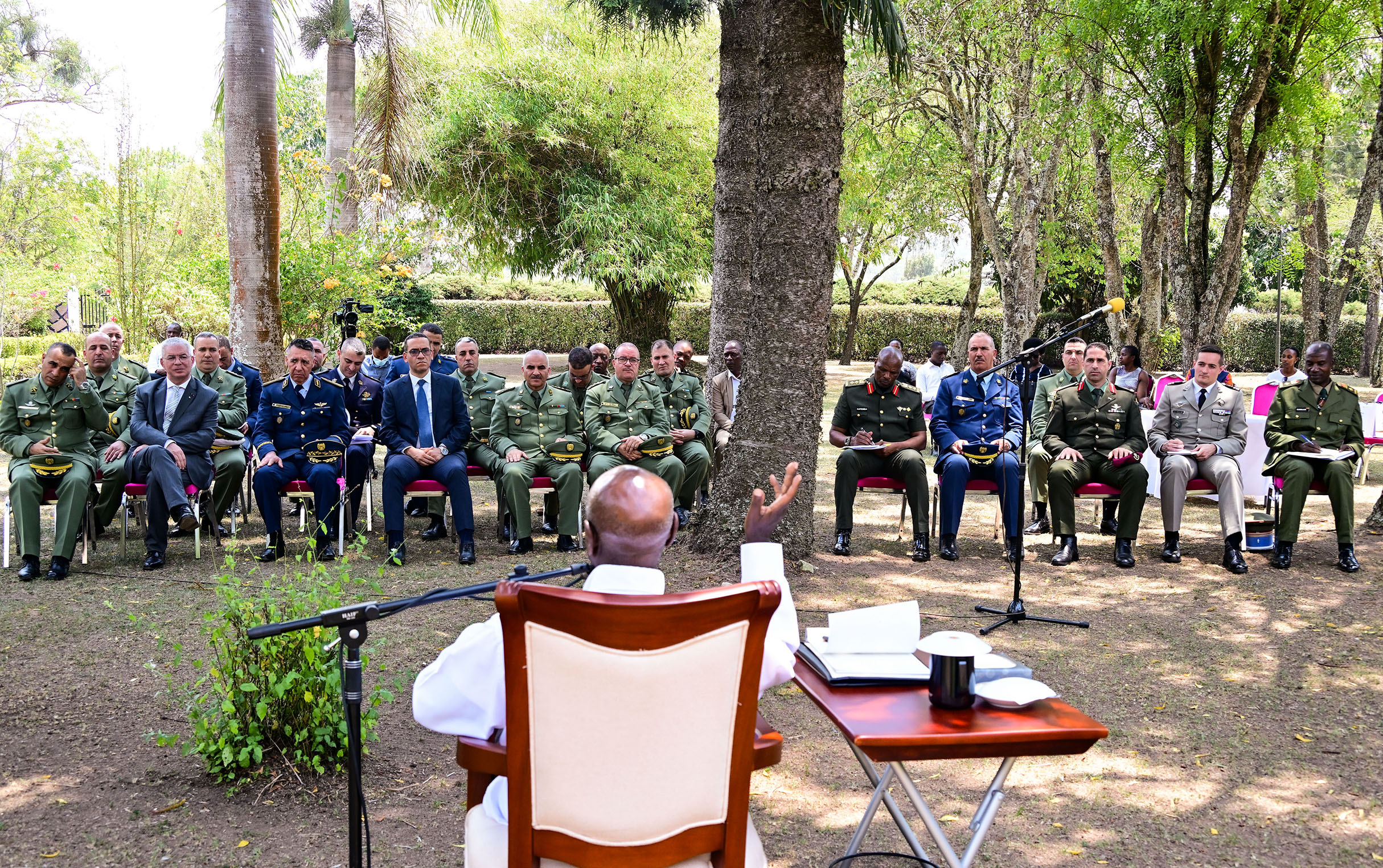
Speaking to students from the Algerian High War College on February 28, 2025, at his country home in Rwakitura, Museveni emphasized that historical divisions hinder Africa’s progress. He urged Maghreb nations—including Algeria, Libya, Mauritania, Morocco, and Tunisia—to unite for a stronger and more secure continent.
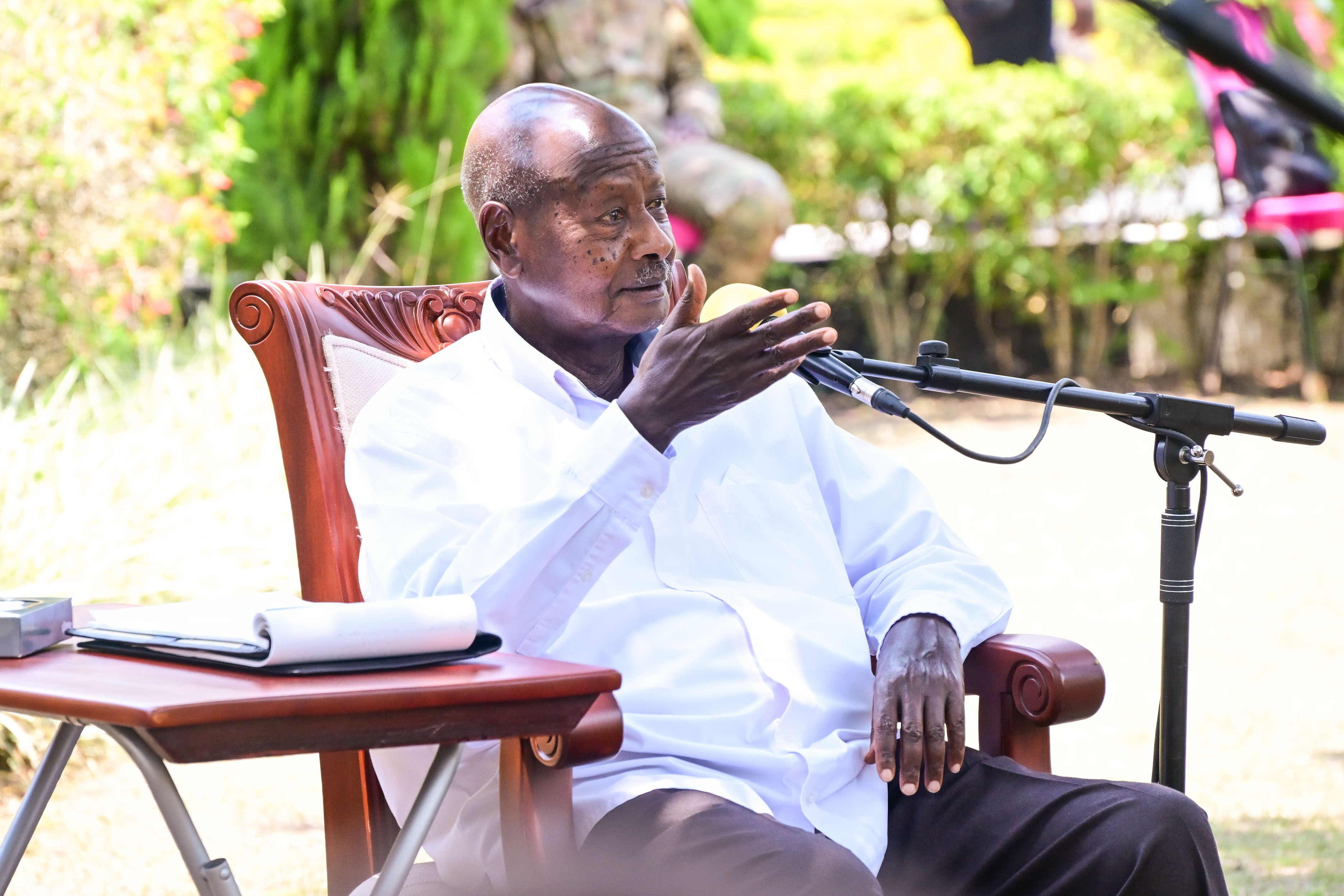
“So that's why we're always looking at the Maghreb as a region. Why can’t these people be together? I was listening to the general speaking Arabic, and it reminded me of Muammar Gaddafi because I could pick some of the words. Maghreb can be a potential powerful center of gravity,” Museveni said.
The 19-member delegation, led by Brig. Gen. Benhamouda Rabal, included five college staff and 14 students from Algeria, France, Palestine, and Uganda.
Algeria’s Role in Africa’s Liberation
Museveni praised Algeria’s anti-colonial stance and its role in supporting Africa’s liberation movements.
“I’m very happy to receive you here. We have been working with Algeria for a long time—we, the African freedom fighters. As soon as Algeria got independence (1962), they started supporting the anti-colonial struggle. They took 20 fighters from Mozambique and trained them there to fight against the Portuguese. Therefore, Algeria has been at the side of the anti-colonial struggle all this time. It’s good that you have come so that we can share our thinking,” he said.
He linked integration to security, citing the East African Community (EAC) as a model. He warned that disunity leaves Africa vulnerable to instability, referencing Libya’s ongoing crisis.
“Now you can see the chaos in Libya. We are just sitting here. It's now like 12 years or something. How can this happen? And Africans are just here seated. This is not good. Those people have suffered so much in Libya,” he noted.
The Arab Maghreb Union (AMU), formed in 1989, remains largely inactive due to political tensions. Meanwhile, Libya continues to struggle with instability.
Integration as the Key to Africa’s Global Standing
Museveni highlighted Africa’s technological gap as a major setback. He warned that without integration, the continent will struggle to compete globally.
“The ones who have been to the moon are the Americans, the Russians, the Chinese, and recently the Indians. But friends like France, Britain, and Germany are still here with us. So, it seems there is something with size. Size matters,” he stated.
He reiterated the need for political and economic integration to secure Africa’s future.
“We think if we do the continental free trade area, we can address the issue of prosperity. But we didn't address the issue of strategic security. We think that security needs some political integration, where possible. That's why we are always talking about the East African Federation. Since independence, I've never given up,” he added.
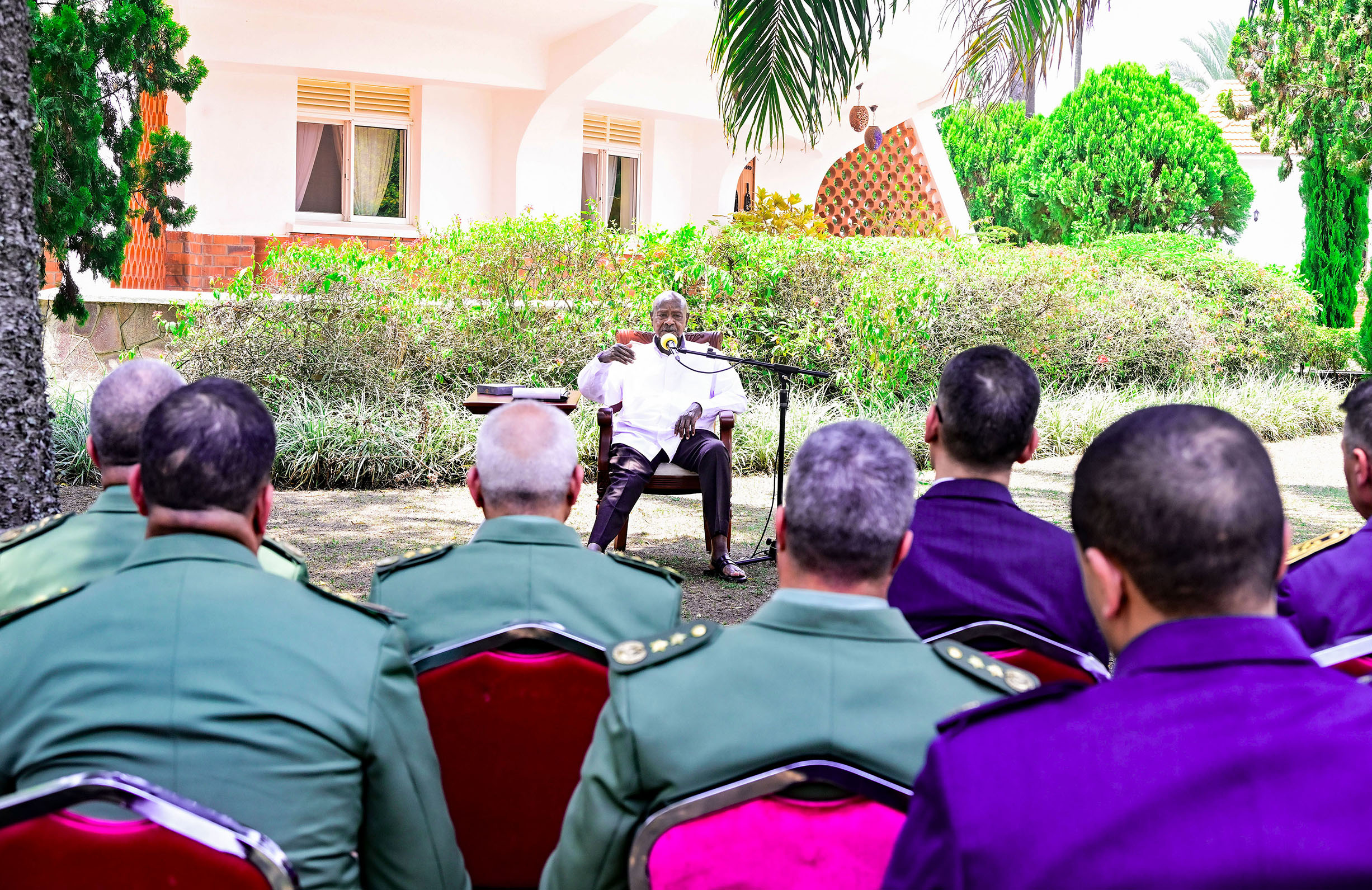
On Africa’s representation at the United Nations Security Council (UNSC), Museveni revealed that a consensus had been reached to grant Africa two rotating seats.
“So, the remaining question is, who? Let the two seats be for the African Union, and we can select in rotation after even three years or whatever. Let it be for the whole of Africa.”
Africa’s Leadership Crisis
Museveni criticized Africa’s leadership failures, attributing underdevelopment to a lack of patriotism, pan-Africanism, self-reliance, and socio-economic transformation.
“For instance, in Uganda, there were many mistakes in not understanding the role of the private sector. Our economy has performed well because we use egocentrism well—some people want to benefit by themselves, but there are also others like me who are for altruism. That was our problem here when Idi Amin expelled the Asians who were part of the private sector, but when we came, we recalled them and handed back their properties,” he said.
Algerian Delegation Expresses Gratitude
Brig. Gen. Rabal, speaking on behalf of the delegation, thanked Museveni for his hospitality and insights.
“Mr. President, I extend our deepest gratitude for honoring us for this historical welcome and hospitality you have shown us. You know it's an honor and privilege to be with you this side. Thank you, your excellency, for the rich information full of research,” he said.
The Algerian High War College trains senior military officers for high-level command and leadership roles.
According to Col. Saad Katemba, the Director of Training - UPDF Land Forces, the delegation also visited Uganda’s key defense and government institutions, including the UPDF headquarters, the Ministry of Internal Affairs, the Ministry of Foreign Affairs, the Ministry of Energy and Mineral Development, and the National Enterprise Corporation (NEC).
Museveni’s message reinforced his long-standing advocacy for African unity and strategic security through regional and continental integration.