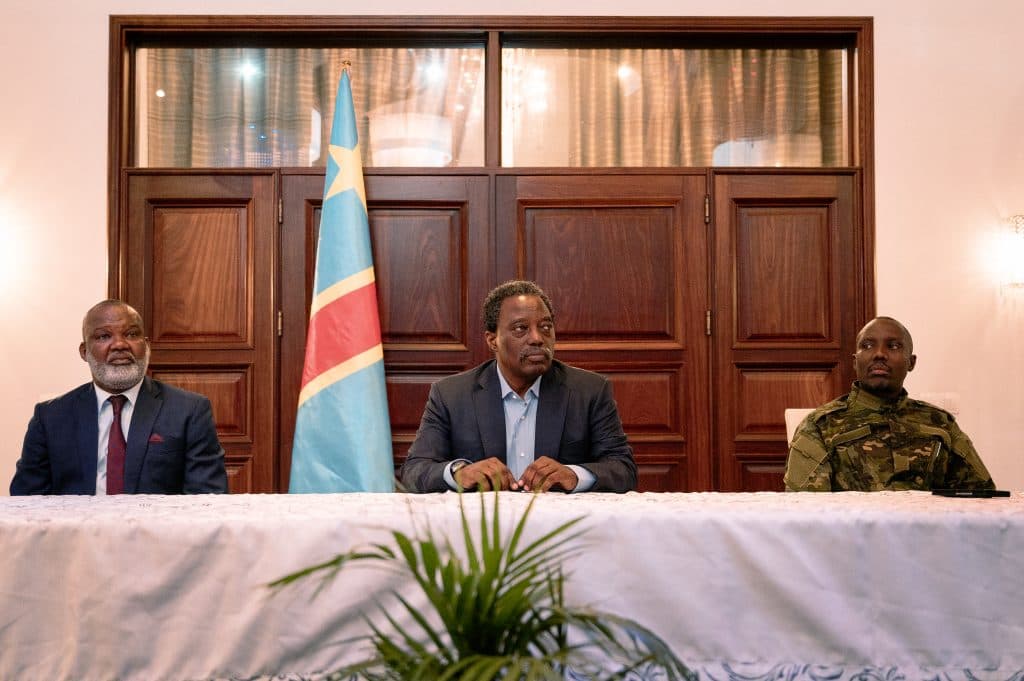
Former Democratic Republic of Congo (DRC) President Joseph Kabila has assumed leadership of a new political-military movement linked to the M23 rebellion, marking a more direct involvement in the conflict gripping the country’s eastern region.
According to media reports, the new Front for the Refoundation of the Nation (FRN) was unveiled on October 12, 2026, in Goma, a major eastern city under M23 control. The movement replaces the Congo River Alliance (AFC) and its associated political-military structure, bringing key figures from the former alliance under Kabila’s leadership.
The development adds a new dimension to the conflict and raises questions about the movement’s military ambitions, its relationship with Rwanda and the prospects for negotiations with the government in Kinshasa.
Kabila, who served as president from 2001 to 2019, was named head of the new coalition, while former AFC leader Corneille Nangaa and other rebel figures assumed senior positions.
The movement describes itself as a political-military organisation seeking to unite opposition forces and challenge the government of President Félix Tshisekedi.
Its stated objective is to end what it calls tyranny, using any means necessary, including force. According to media reports, the Congolese government had not officially responded to the announcement at the time of the report.
Kabila’s role raises questions over rebel leadership
Kabila’s move formalises his leadership of a coalition involving figures associated with the M23 insurgency, which has seized substantial territory in eastern DR Congo.
The former president returned to public prominence in May 2025, when he appeared in Goma after spending several years largely outside the country. He subsequently made visits to territory controlled by the rebels.
His new position comes amid serious legal and diplomatic consequences. Congolese authorities sentenced him to death in absentia over allegations linked to the rebellion, while the United States imposed sanctions on him in April 2026 for what it described as support for M23 and the AFC. Kabila has denied accusations against him and characterised the proceedings as politically motivated.
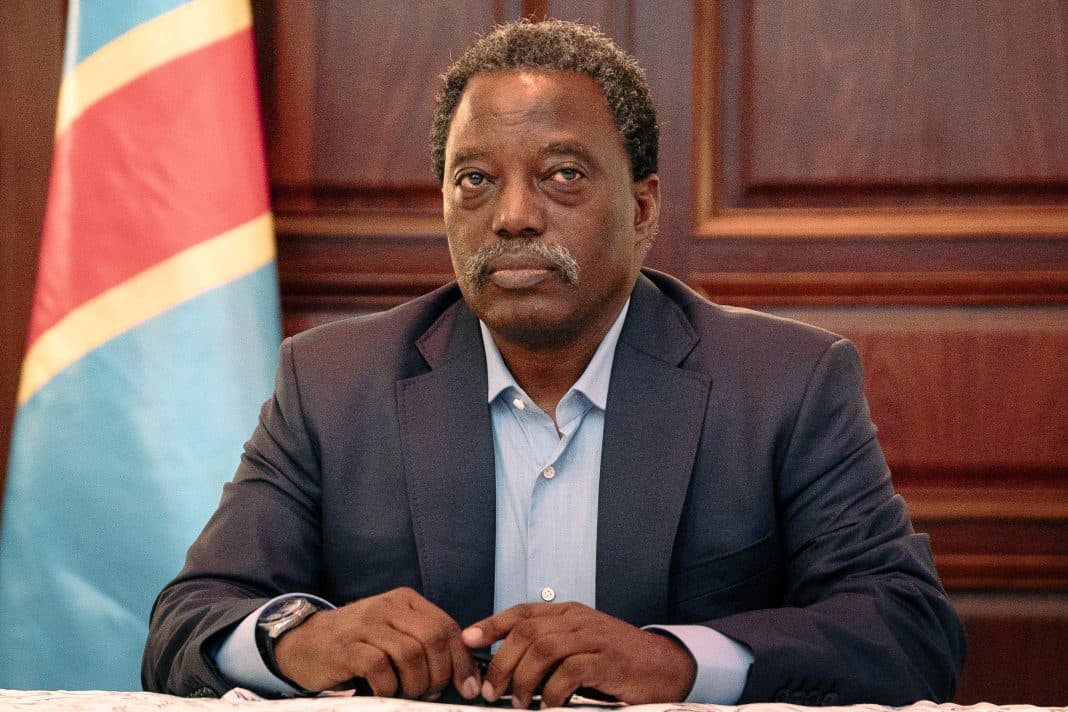
It remains unclear how much direct authority Kabila will exercise over the movement’s military operations. United Nations experts have previously reported that the AFC/M23 military command was directed and coordinated from Kigali, while Rwanda has denied supporting the rebellion.
Analysts have also pointed to differences between the coalition’s political and military wings over how far the conflict should extend beyond the eastern provinces of North Kivu and South Kivu.
The new arrangement could alter those internal dynamics, although its practical effect on military operations remains uncertain.
Could the movement target Kinshasa?
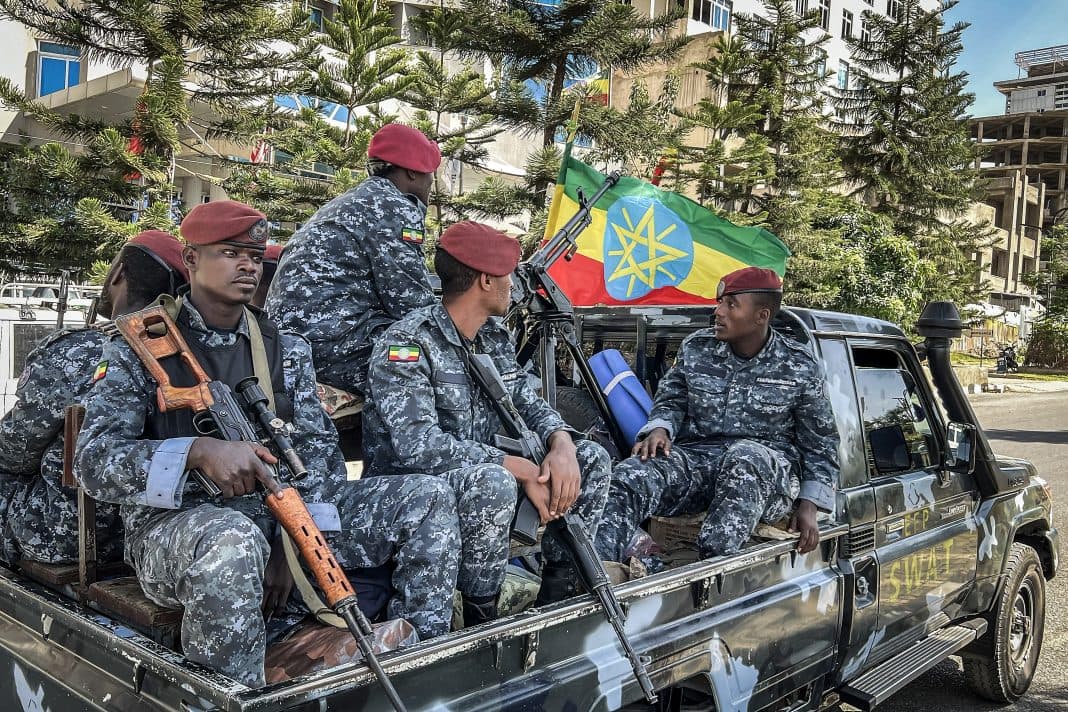
The coalition’s formation comes amid continuing fighting in eastern DR Congo, where M23 and Rwandan forces launched a major offensive in early 2025 that led to the capture of Goma and Bukavu.
Although front lines have since stabilised in some areas, clashes have continued, including attacks involving drones and artillery, particularly in South Kivu.
Pierre Boisselet, research coordinator at the Congolese research institute Ebuteli, cautioned against assuming an immediate change in the military balance.
“I don’t necessarily foresee any short-term shift in the military balance of power, but things could change very rapidly,” he said.
United Nations experts have previously reported that elements of the AFC/M23 political leadership harbour ambitions to take power in Kinshasa. The extent to which the FRN intends to pursue that objective, and whether its military leadership shares the same strategy, remains unclear.
Analysts have also raised concerns that placing a former Congolese president at the head of the coalition could strengthen its claim to represent a domestic political movement, while complicating questions about external involvement in the conflict. Rwanda has repeatedly denied backing M23, despite allegations by the United Nations and Western governments.
Tshisekedi faces a growing political challenge
Kabila’s return to the centre of national politics comes as tensions rise over the future of President Tshisekedi’s administration.
Tshisekedi, who succeeded Kabila, is due to complete his second five-year term in 2028. The constitution limits presidents to two terms, but debate over a possible constitutional amendment has fuelled opposition protests.
Demonstrations in June and September opposed proposals that critics fear could open the way for Tshisekedi to remain in power beyond the current constitutional limit.
Kabila has also criticised the current administration, accusing it of prioritising its continued hold on power. However, the main opposition coalition has so far maintained its distance from him.
The former president’s new alliance could therefore reshape opposition politics, while creating additional pressure on the government as it confronts the armed rebellion in the east.
A diplomatic source cited in the report warned that the government could respond to the development with a wave of arrests if it begins associating political dissent with support for M23.
Meanwhile, defections have reportedly emerged within Kabila’s People’s Party for Reconstruction and Democracy (PPRD), whose headquarters are in Kinshasa.
Peace negotiations face fresh uncertainty
The formation of the FRN could complicate ongoing efforts to end the conflict through negotiations.
Since April 2025, M23 has been engaged in talks with the Kinshasa government under Qatari mediation. The new movement said on Thursday that it would honour commitments made through that process.
However, it remains uncertain whether the government will continue negotiations with a coalition now headed by Kabila, who is considered a political adversary by the authorities.
A breakdown in the talks could also affect wider diplomatic efforts led by the United States to improve relations between Kinshasa and Kigali.
Washington has pursued a peace and economic framework linking regional stability with a strategic partnership involving DR Congo and access to its mineral resources.
The continued presence of Rwandan forces in eastern DR Congo and ongoing fighting have, however, undermined hopes for a lasting settlement.
Kabila’s elevation to the leadership of the new coalition adds another layer of complexity to the negotiations, leaving the future of the peace process uncertain as the conflict continues.