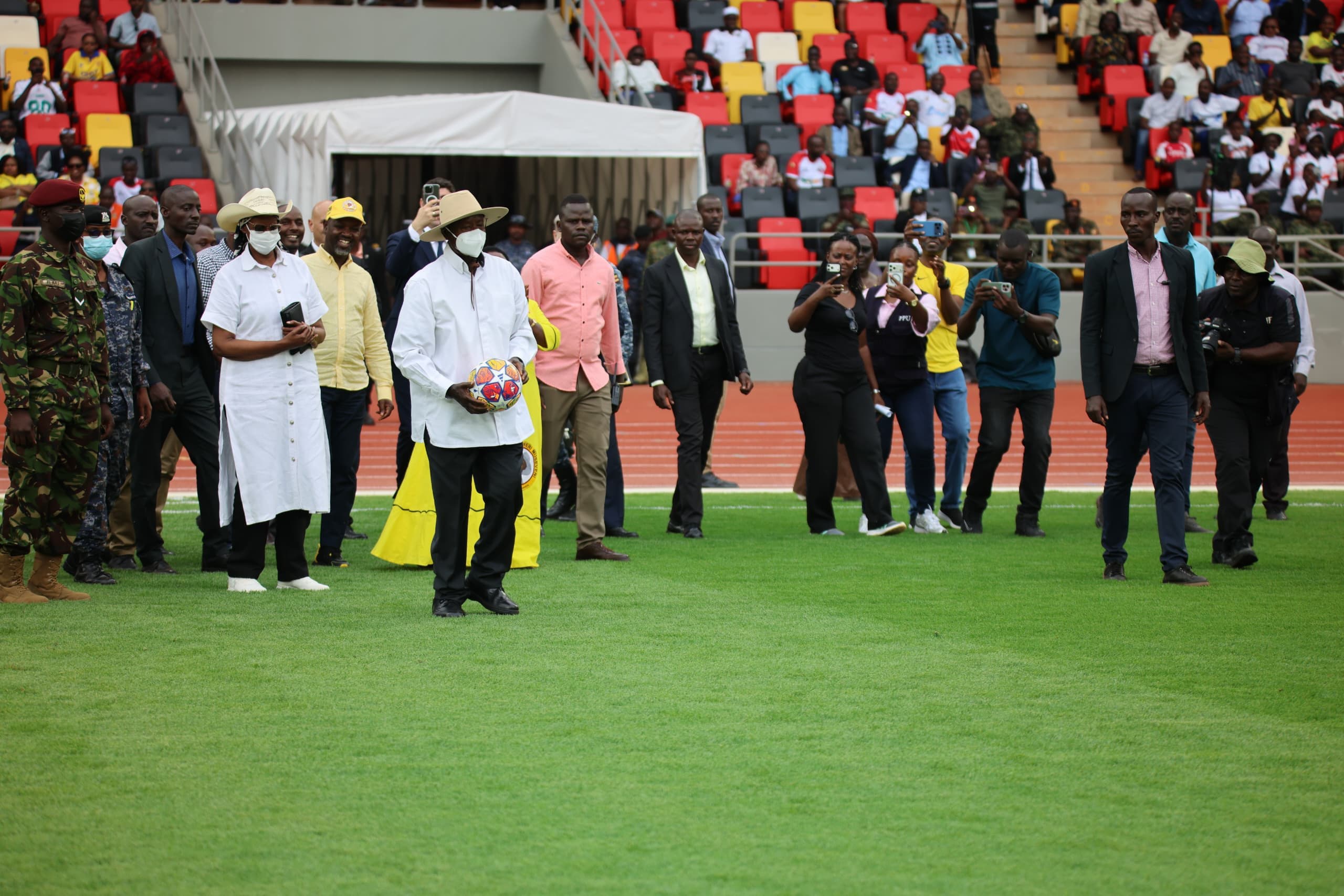
On a warm afternoon in Hoima City, cheers rippled across the newly finished terraces as President Yoweri Kaguta Museveni stepped onto the pitch, not just to cut a ribbon, but to underline a message he has repeated for decades, progress comes step by step, not in bursts of noise.
The commissioning of Hoima City Stadium on 24th December 2025, one of ten major facilities Uganda is developing ahead of the 2027 Africa Cup of Nations (AFCON), marked a defining moment for the country’s sporting ambition and economic confidence. Standing before residents, contractors and leaders, Museveni described the stadium as a national asset born out of patience, planning and discipline.
“Akwata empola, atuuka wala. Bugu-bugu, ssi muliro,” Museveni said, reminding the audience that steady work delivers lasting results.
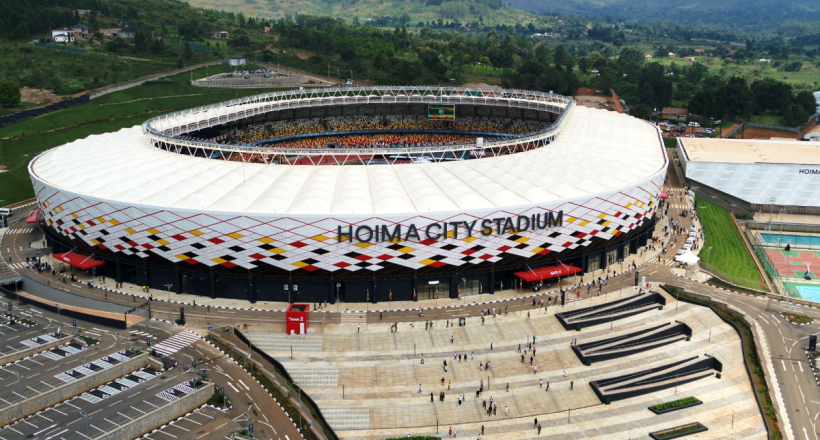
Located near an international airport, the 20,000-seater facility meets Confederation of African Football (CAF) requirements, a factor Museveni said directly influenced the decision to construct it in Hoima rather than elsewhere.
“We initially wanted to build John Aki-Bua Stadium, but CAF advised that the stadium must be near an international airport. That is how we came here,” Museveni explained.
The President emphasized that the stadium was financed using Uganda’s own resources, attributing this to an economy built deliberately over time. He said government priorities must be sequenced to avoid overstretching national capacity.
“We have the money, but we cannot do everything at the same time. We have resources because we built our economy step by step,” he said.
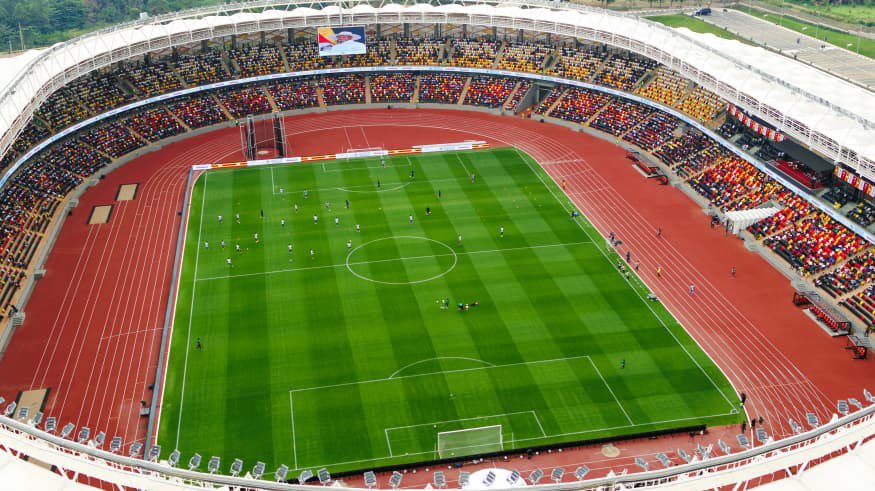
Museveni used the occasion to reflect on broader economic gains, citing improved food security, expanded irrigation, growing manufacturing and the rise of service industries such as tourism, hospitality and music. He noted that preparations for AFCON had accelerated infrastructure development, particularly in emerging regions like Bunyoro.
He pointed to local manufacturing as evidence of Uganda’s growing industrial capability, sharing an example of electric buses made by Kira EV that recently travelled by road to South Africa and secured an initial order of 450 units.
“This is precisely the kind of progress we have been talking about,” Museveni said.
The President commended the Turkish contractor, Summa, for delivering the project on time and within budget, and thanked the family of the late Dr James Rujumba for providing land that made the project possible. He said collaboration between government, private partners and local communities had been critical to success.
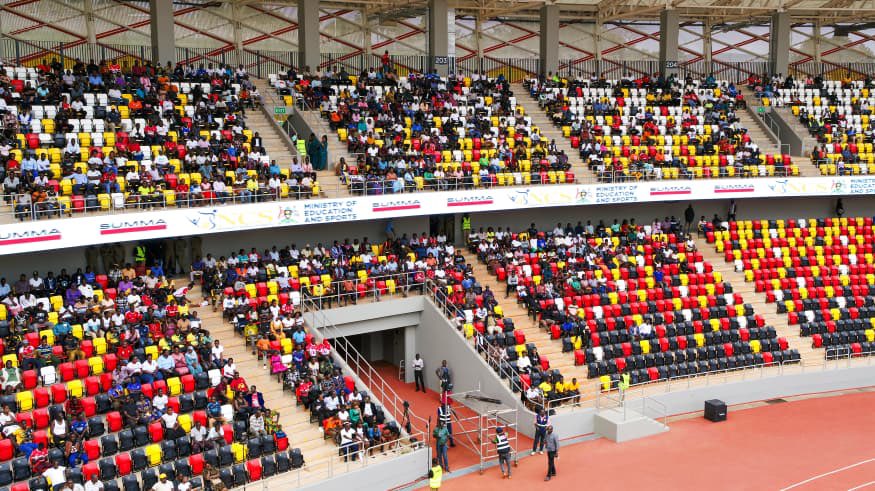
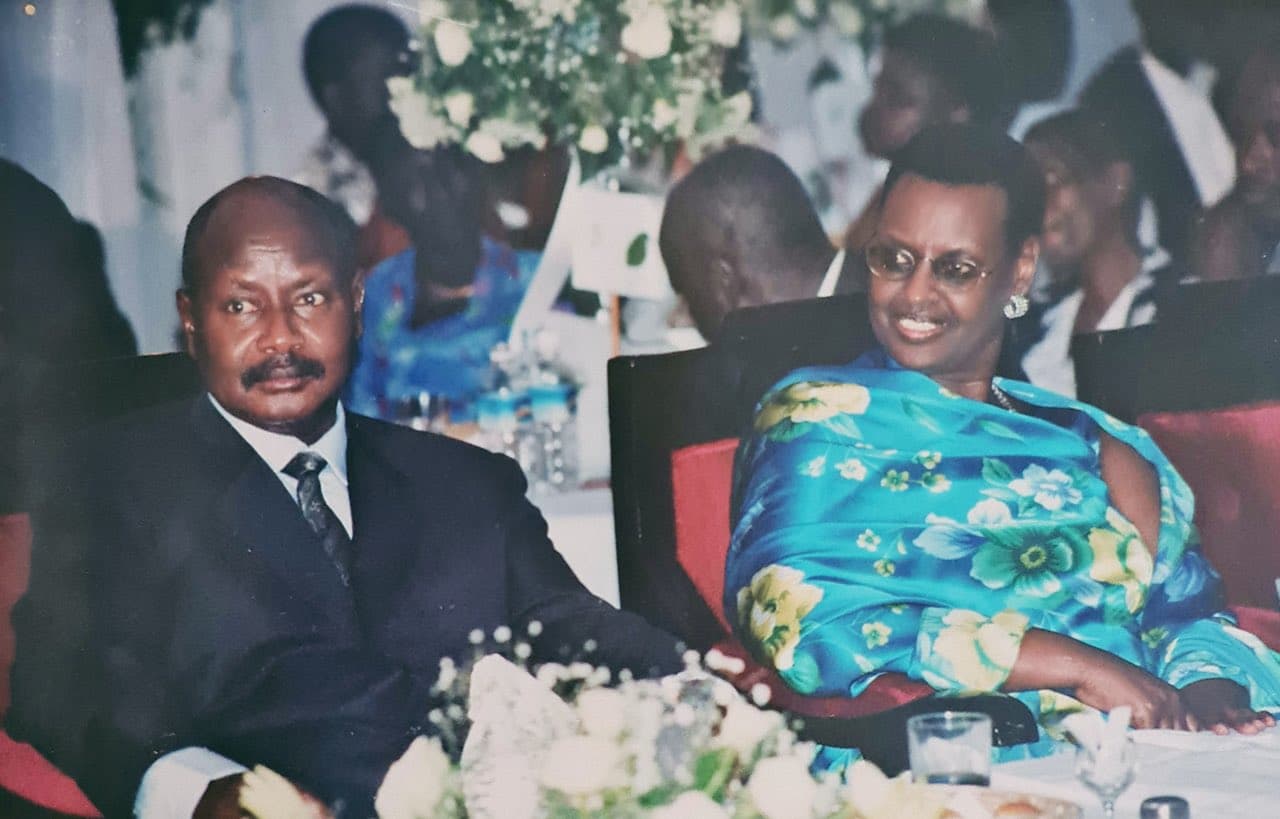
First Lady and Minister of Education and Sports, Maama Janet Museveni, described the stadium as a timely national gift and a symbol of shared commitment.
“This is the Lord’s day, and we rejoice and are glad in it,” she said, calling the facility a “Christmas gift” to Uganda. She praised Summa for its dedication and patience, urging other contractors to emulate the same standards of professionalism.
As celebrations continued, Museveni also warned that poor waste management could undermine the value of the new facility and its surroundings. “Let us not dispose of waste carelessly,” he cautioned.
Hoima City Stadium is expected to boost sports development, tourism and business activity, while strengthening Uganda’s capacity to host continental and international events. For Hoima and the wider Bunyoro sub-region, the stadium represents more than concrete and steel; it signals inclusion in Uganda’s national growth story.
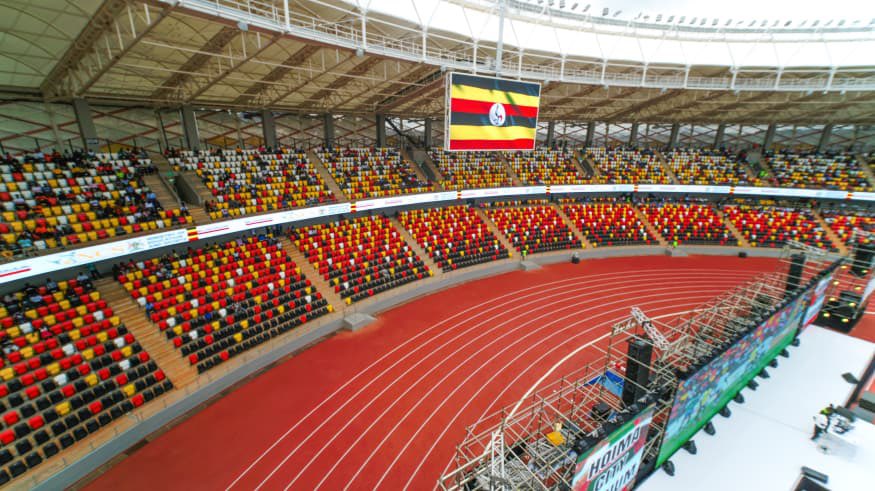
Implemented by the National Council of Sports under an engineering, procurement and construction contract, the USD 129 million project sits on a 16.8-hectare site and includes a main stadium, a mini arena, a semi-Olympic swimming pool, indoor and outdoor tracks, multiple courts, parking facilities and VIP amenities. At peak construction, more than two-thirds of the workforce was Ugandan, underscoring local participation in a project designed to serve generations.
As Uganda counts down to AFCON 2027, the Hoima commissioning stands as a visible statement of intent: build patiently, build inclusively, and protect what has been built.