
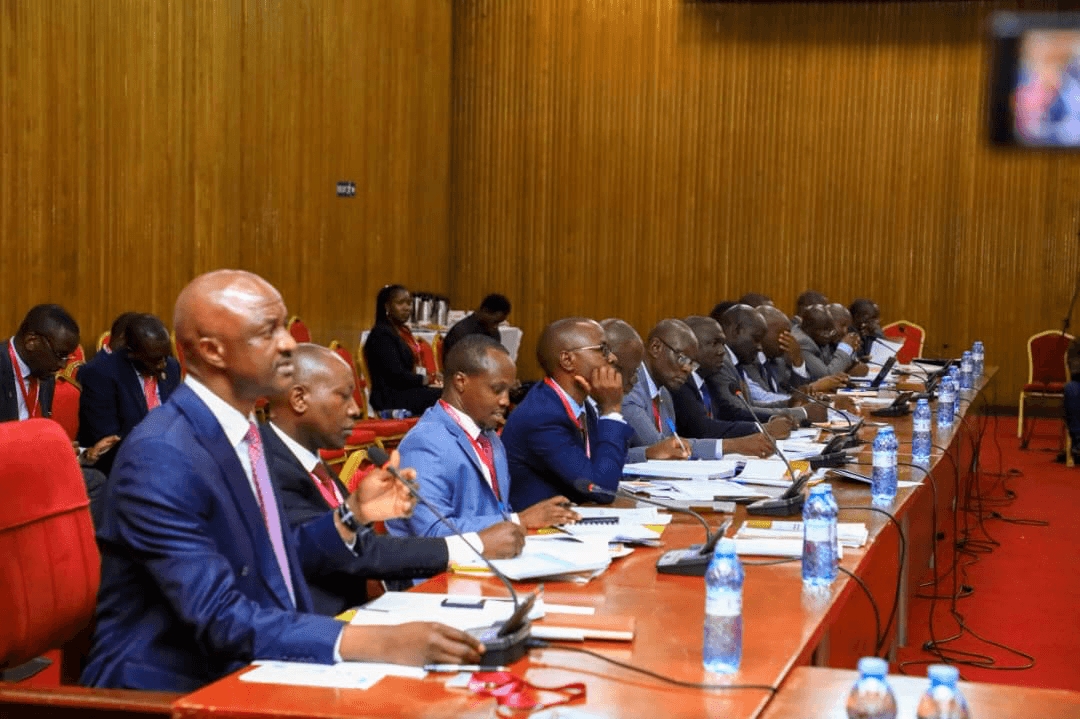
Uganda has compensated 98 per cent of people affected by the East African Crude Oil Pipeline (EACOP) project, according to the Petroleum Authority of Uganda (PAU).
Peninah Aheebwa, Director for Economic and National Content Monitoring at PAU, revealed the figures while appearing before the Public Accounts Committee (Central Government) on March 11, 2026.
Lawmakers had raised concerns about delays in compensating affected communities. Aheebwa told the committee that the compensation process followed national laws and international standards set by the International Finance Corporation.
“Everyone has been compensated to the best of their satisfaction, in our view. This is highly monitored by the lenders of this project, and they do not entertain anything that is not satisfactory,” Aheebwa said.
She added that Uganda still expects to achieve first oil by the end of July 2026. First oil marks the point when a project begins producing and exporting its first commercial shipment of hydrocarbons.
Aheebwa said drilling activities have already surpassed the minimum targets required to reach this milestone. The Tilenga project initially required 170 wells, but 198 have already been drilled. The Kingfisher project required 19 wells for first oil, and 21 have so far been completed.
She explained that the central processing facilities and feeder pipelines for the Tilenga project are now 67 per cent complete, while the Kingfisher project stands at 77 per cent completion. Construction of the EACOP pipeline has reached 81 per cent.
To meet the production deadline, Aheebwa said work on the Tilenga field will shift from two work shifts to three shifts per day, each lasting eight hours.
During the meeting, Basil Bataringaya, the MP for Kashari North County, asked why audits on costs owed to oil companies had taken long despite large investments in the sector.
“There has been mention of an audit of 2021 that states how much money is to be paid to the oil companies, yet we are in 2026. This is a key sector in which we are spending colossal sums of money, so why there is a lag in audit?” Bataringaya asked.
Aheebwa responded that the oil sector has so far attracted investments worth about $12.3 billion. She noted that not all these costs will be recovered as operational expenses.
For the pipeline project, she said recovery will happen through transportation tariffs. About $3.5 billion has already been spent on the pipeline. The money will be recovered through a tariff of $12.77 charged for every barrel transported through the pipeline.
She also referred to a 2021 report by the Auditor General which reviewed claims submitted by oil companies involved in the projects, including TotalEnergies EP Uganda, CNOOC Uganda Limited, Uganda National Oil Company and China Oilfield Services Limited Uganda.
According to the report, the companies claimed $3.4 billion in recoverable costs. Out of this amount, $2.9 billion, representing 87 per cent, was approved, while $439 million, or 13 per cent, was rejected.
Aheebwa said the total investment in the oil sector had reached $12.3 billion by 2025, and some of the spending had not yet been covered by the available audits.