

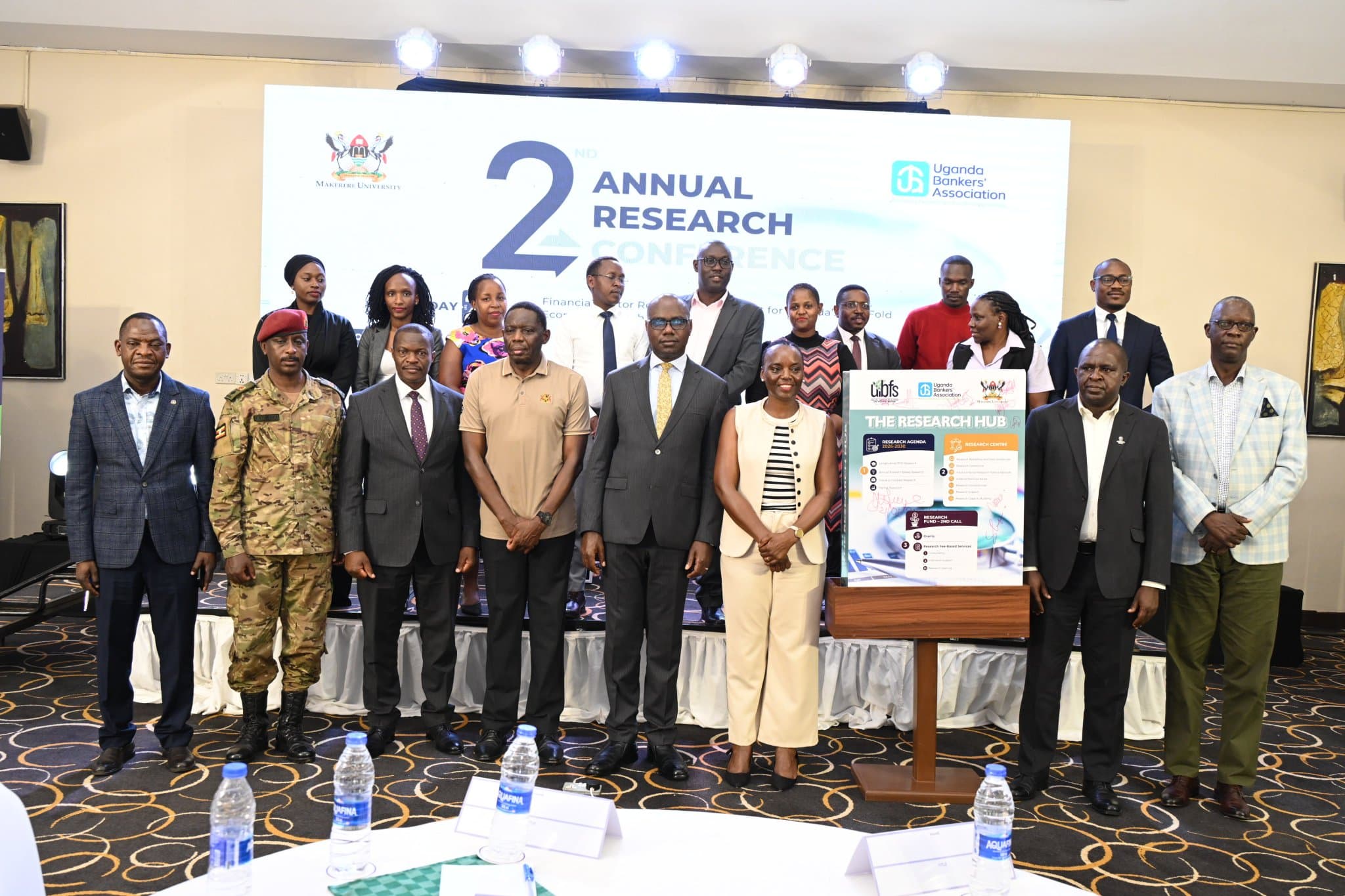
Finance Minister Henry Musasizi has asked the financial sector to focus more research on growing patient capital, deepening financial inclusion and lowering the cost of credit as Uganda seeks to grow its economy tenfold by 2040.
Musasizi said Uganda needs stronger financial systems to support its target of growing the economy to $500 billion by 2040 while increasing domestic resources and managing expected oil revenues without disrupting the economy.
He made the remarks on August 21, 2026, during the second annual research conference organised by the Uganda Institute of Banking and Financial Services (UIBFS) under the theme, “Financial Sector Research as a Catalyst for Uganda’s Ten-Fold Economic Growth Agenda.”
The minister said economic growth must include all sections of society to ensure more Ugandans participate in the country’s transformation.
He challenged researchers and financial institutions to examine ways of expanding long-term capital, improving access to finance and reducing the cost of borrowing.
“Government is ready to use evidence-based research in decision making,” Musasizi said.
He also identified digital finance, fintech, capital markets, domestic revenue mobilisation, climate finance and green growth as key areas that require further study.
Musasizi urged financial institutions to support the real economy by developing suitable financial products and reducing the cost of credit for businesses.
He also took part in the launch of the UIBFS Research Hub, which includes the 2026–2030 Research Agenda, a Research Centre and the second call for the Research Fund.
UIBFS Board chairman and Diamond Trust Bank managing director Godfrey Sebaana said financial institutions have a key role in achieving Uganda’s tenfold growth target.
Sebaana said research will help the sector develop better financial products that can support national development.
He added that building skills for the future remains important in preparing Uganda for economic transformation.