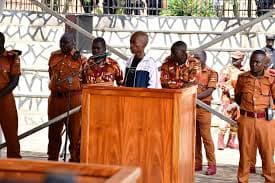
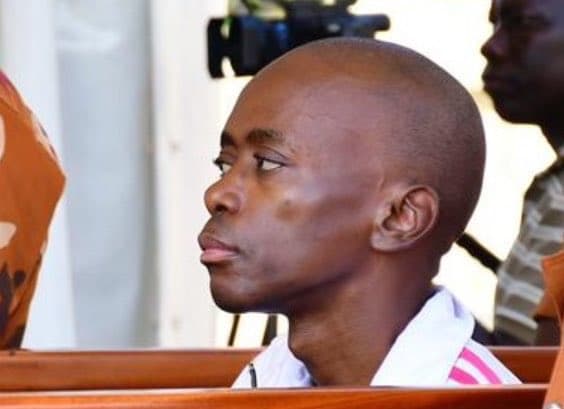
The High Court has sentenced Christopher Okello Onyum to death for the "meticulous" and "barbaric" murder of four toddlers at a Ggaba daycare center.
Justice Alice Komuhangi Khaukha delivered the landmark ruling on Friday, describing the crime as the "rarest of the rare." The victims, all under age three, were Ryan Odeke, Keisha Agenorwoth Otim, Gideon Eteku, and Ignatius Sseruyange. They were slaughtered with a knife on April 2, 2026, at the Ggaba Early Childhood Development Centre.
The judge expressed total conviction that the convict killed the children for ritual purposes. She noted that Onyum refused to apologize to the grieving families even when the court prompted him. Several parents collapsed in the courtroom as the harrowing details of the "blood sacrifice" emerged.
“I would find no reason why someone would rise or leave their home in the morning to come and slaughter children who are their safe space at school,” Justice Khaukha stated.
The prosecution, led by Jonathan Muwaganya, described the daycare as a sanctuary turned into a scene of unimaginable terror. He argued the killings were a "well-calculated massacre" rather than a moment of madness. Muwaganya invoked the biblical principle of "life for life" to justify the ultimate penalty.
Defense lawyer Sarah Awelo attempted to mitigate the sentence by citing Onyum’s background. She claimed he was a first-time offender from a broken family who suffered from sickle cell anemia. The judge rejected these arguments, stating they could not justify the extreme brutality of the crime.
Justice Khaukha emphasized that the sentence serves as a warning to those who believe in human sacrifice for wealth. She noted that Onyum likely planned to kill more children had he not been apprehended. The court highlighted his use of "sophisticated technology" and meticulous planning as major aggravating factors.
“Let them know that it is highly risky because they will be found,” the judge remarked regarding practitioners of ritual murder.
While the death penalty is not mandatory in Uganda, judges retain the discretion to apply it in aggravated cases. This ruling marks one of the most severe punishments imposed by a Ugandan court in recent years. No civilian execution has been carried out in Uganda since 1999, despite several high-profile death sentences.