
Makerere University scientists have secured approval for a new soybean variety expected to raise farm yields and fight disease.
The National Variety Release Committee cleared Maksoy 7N during its 47th meeting held at the National Agricultural Research Laboratories in Kawanda. The committee assesses new crop types before they are allowed on the market to ensure they perform well and meet national standards.
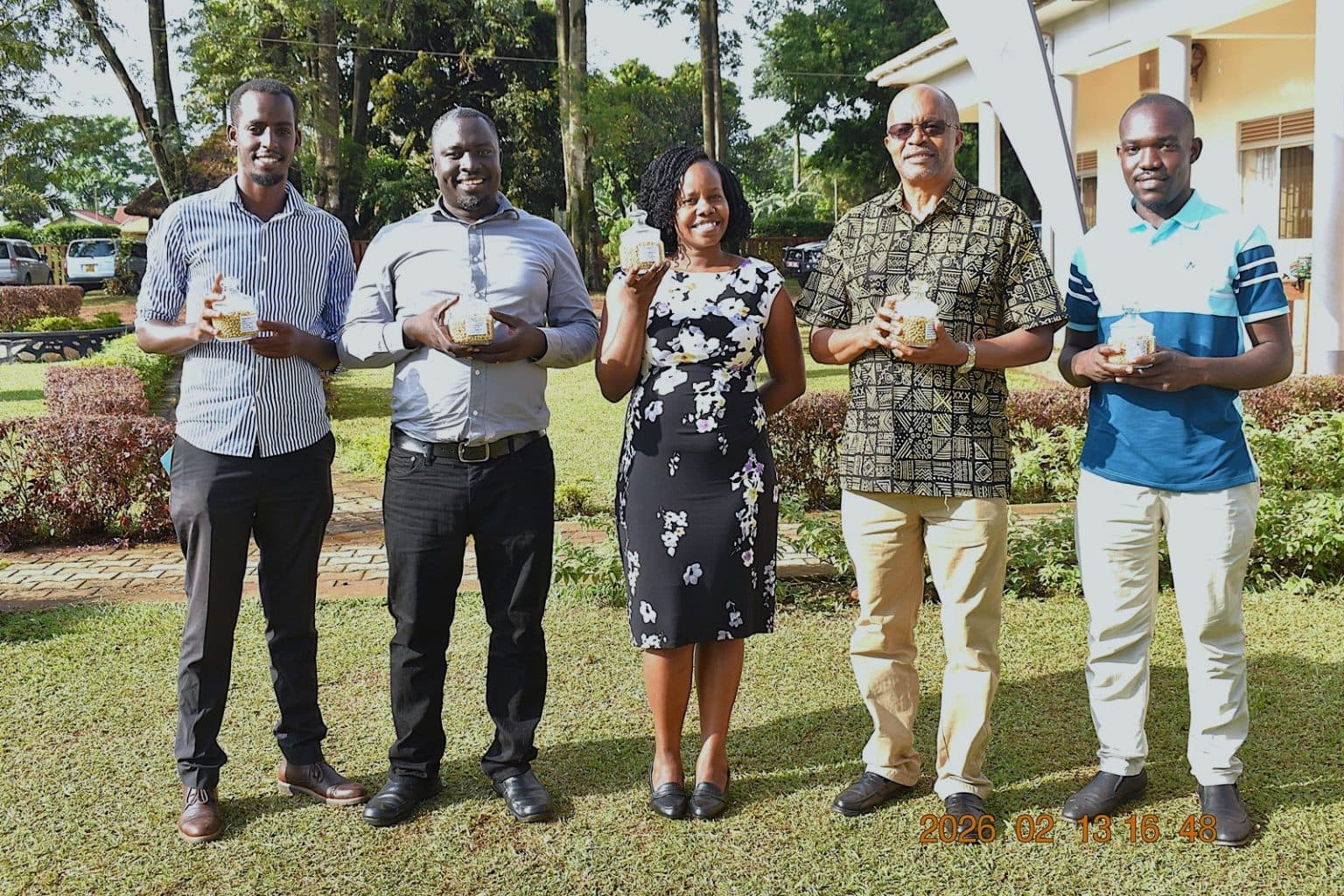
Maksoy 7N was developed by the Makerere University Centre for Soybean Improvement and Development under the College of Agricultural and Environmental Sciences. The new variety was created by crossing two parent lines, 6N and SG. It underwent detailed testing in several districts, including Wakiso, Jinja, Lira, Arua, Hoima and Kasese.
Researchers carried out what is known as Distinctness, Uniformity and Stability testing. This process checks whether a crop is clearly different from existing ones, whether its plants look similar to each other, and whether it performs consistently across seasons and locations. The tests followed Uganda’s Seeds and Plant Act and international plant breeding standards.
Results showed that Maksoy 7N differs from the older Maksoy 3N variety in pod colour, stem hair and seed features. It met national quality standards and proved stable across trial sites. Farmers also tested it under normal field conditions. The National Seed Certification Service later recommended it for release.
Professor Phinehas Tukamuhabwa, who leads the research team, said the variety resists soybean rust, a fungal disease that lowers yields. He said it produces between three and three and a half tonnes per hectare and matures in about three months. He added that the new variety will help farmers earn more and meet rising demand.
Soybean is important in Uganda because it contains about 40 per cent protein and 20 per cent oil. Farmers use it for food, animal feed and cooking oil production. It also improves soil health by adding nutrients back into the ground, which reduces the need for chemical fertilisers.
Maksoy 7N becomes the seventh variety developed by the Makerere team. Studies by the Vegetable Oil Development Project show that most soybean farmers in Uganda already plant Maksoy varieties.
Dr Joseph Kikafunda, chairperson of the release committee, praised the scientists and urged faster seed multiplication so farmers can access the new variety quickly.
At the same meeting, the committee also approved three purple-fleshed sweet potato varieties developed by the National Agricultural Research Organisation. These mature in three to four months and contain high levels of vitamin A. Two new sorghum hybrid varieties from NASECO Uganda Limited were also cleared. They can be used for food, animal feed, brewing and biofuel production.
The approvals are expected to strengthen Uganda’s seed sector and support food security across the country.