

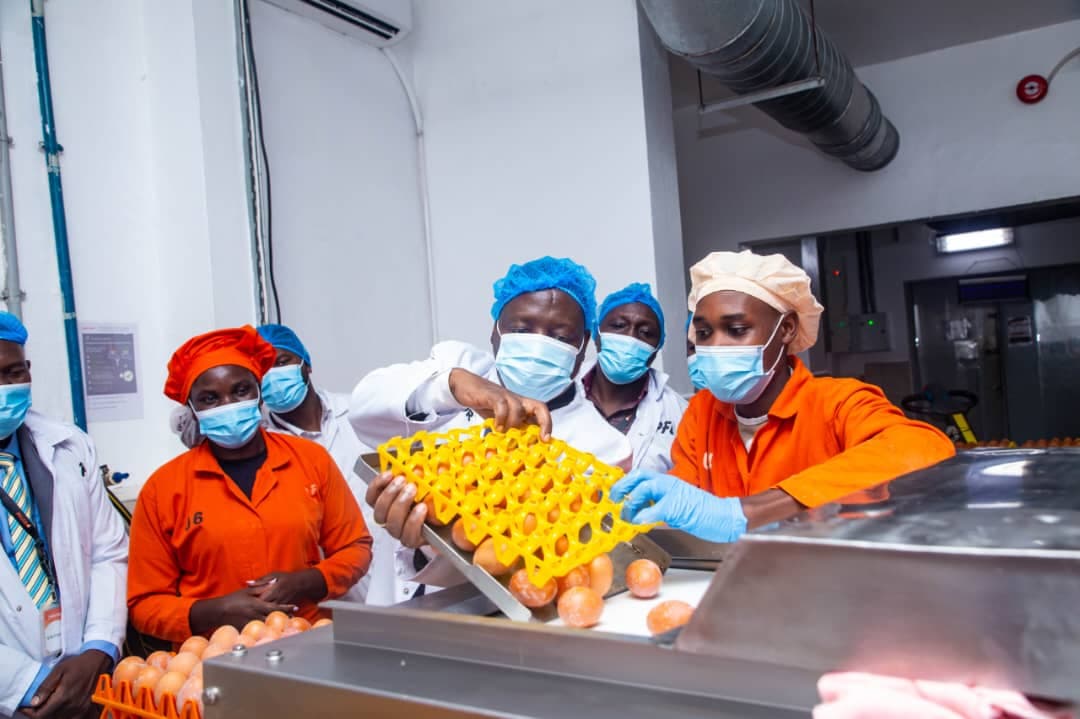
Uganda has launched a new drive to expand egg processing, reduce food imports and create jobs as part of efforts to build a more self-sustaining economy.
The Ministry of Trade, Industry and Cooperatives started the initiative following a directive from President Yoweri Museveni at the fourth Cabinet meeting held on July 20, 2026.
As part of the assessment, State Minister for Industry David Bahati inspected Pristine Foods Limited in Kireka on August 13, 2026.
The company operates what the ministry describes as the only egg processing facility in East and Central Africa.
Bahati said developing the egg industry fits within the government's 10-point programme, which seeks to build an integrated and self-sustaining economy.
He said local processing could help Uganda reduce imports of products that can be made from eggs.
“We have been informed from the experts that we can produce a number of products from eggs. We have liquid eggs and mayonnaise, and we are currently importing $30 million US of mayonnaise,” Bahati said.
He said continued imports were equivalent to “exporting jobs of Ugandans” and pledged government support for companies investing in the sector.
Bahati also proposed including eggs in school meal requirements as part of efforts to fight malnutrition and create a bigger market for local producers.
“The Ministry of Education can support companies like this by making a policy of including eggs as part of the requirements for the meal… not necessarily that government is paying, but just a mere policy,” he said.
Pristine Foods managing director Joel Guma said processing increases the shelf life of eggs and makes them easier to export.
He said fresh eggs have a short shelf life, while liquid eggs can last up to 10 weeks and powdered eggs can remain usable for more than two years under normal storage conditions.
Guma said heat treatment during processing also kills pathogens, helping processed egg products overcome trade restrictions linked to outbreaks such as bird flu.
Pristine Foods produces mayonnaise and sauces including Thousand Island and Tartar.
Guma said such products also support young people working in the food business, including roadside Rolex vendors.
He said about 80 per cent of the company's workers are below the age of 30, while more jobs are supported across the supply chain.
The ministry is now assessing Uganda's egg production capacity and available processing infrastructure.
Bahati said the government also plans to mobilise farmers and support investment needed to develop a larger egg industry linked to the Parish Development Model and commercial factories.
The ministry also wants processors to extract value from egg waste. Shells can be processed into calcium, while other waste can be converted into poultry feed.