The Uganda Investment Authority (UIA) has trained more than 20 traders in leather shoe production as part of efforts to boost local manufacturing and reduce reliance on imported footwear.
The five-day programme, organised through the authority’s Domestic Investment Division, aimed to help traders move beyond importing shoes and take part in local production.
Speaking during the training in Kampala’s Industrial Area, the Director of the Domestic Investment Division, Richard Nuwenyesiga, said Uganda continues to rely heavily on shoes imported from Europe, China and neighbouring countries.
He said the dependence on imports leads to a loss of foreign exchange and denies traders opportunities to earn more through local manufacturing. He noted that Uganda has sufficient hides and skins and a growing market for leather products, including school shoes, men’s shoes and women’s footwear.
Nuwenyesiga said many traders have strong business and marketing skills but lack the technical knowledge needed to manufacture shoes. He argued that this limits their participation in the leather value chain and reduces their ability to create jobs and meet local demand with Ugandan-made products.
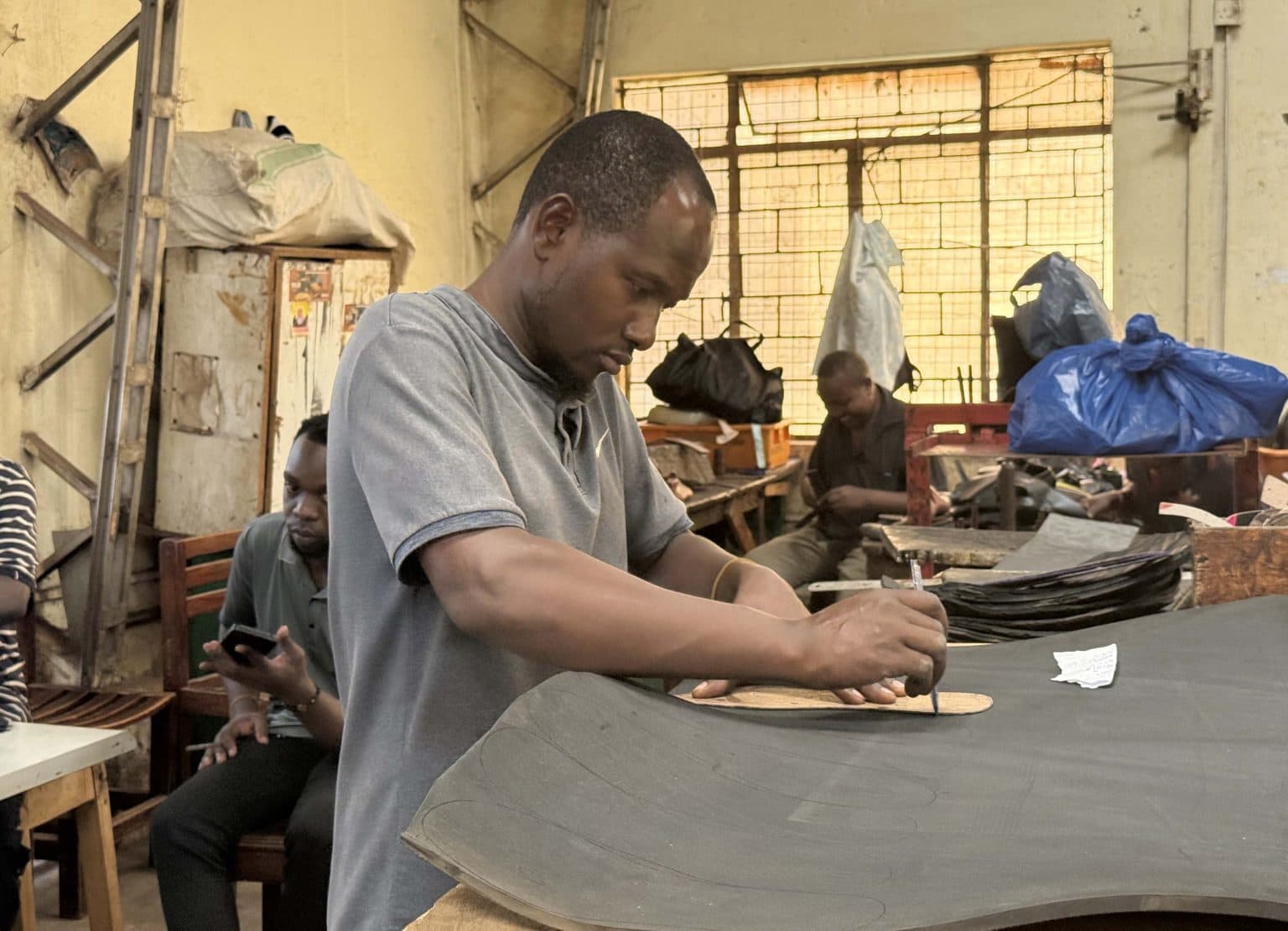
Big Leather Goods Uganda conducted the training at the Training and Common Facility Centre on Sixth Street in Kampala’s Industrial Area. Participants received practical lessons in leather selection, quality assessment, pattern making, cutting, stitching, assembly, sole attachment, finishing, quality control, costing and pricing.
The company’s chief executive officer, Aribaruho Stephen, said the programme focused on equipping participants with practical skills needed to start production.
Each trainee produced at least one complete pair of shoes and left with the patterns used during training to enable them to continue making footwear independently.
Trainer Emmanuel Bakubye said the skills acquired would help increase local shoe production, especially ahead of the back-to-school season when demand for school shoes rises.
Officials said the programme will support the use of locally sourced leather, promote value addition and create employment opportunities in the leather sector.
The initiative also supports the government’s Buy Uganda, Build Uganda policy, which encourages local production and consumption of domestically manufactured goods.
According to figures from the Uganda Bureau of Statistics, Uganda’s leather tanning industry produces about one million pairs of shoes each year against an estimated national demand of 25 million pairs, leaving a large gap in the market.
Authorities believe programmes that equip traders with manufacturing skills could help close that gap while supporting industrialisation and import substitution efforts.