
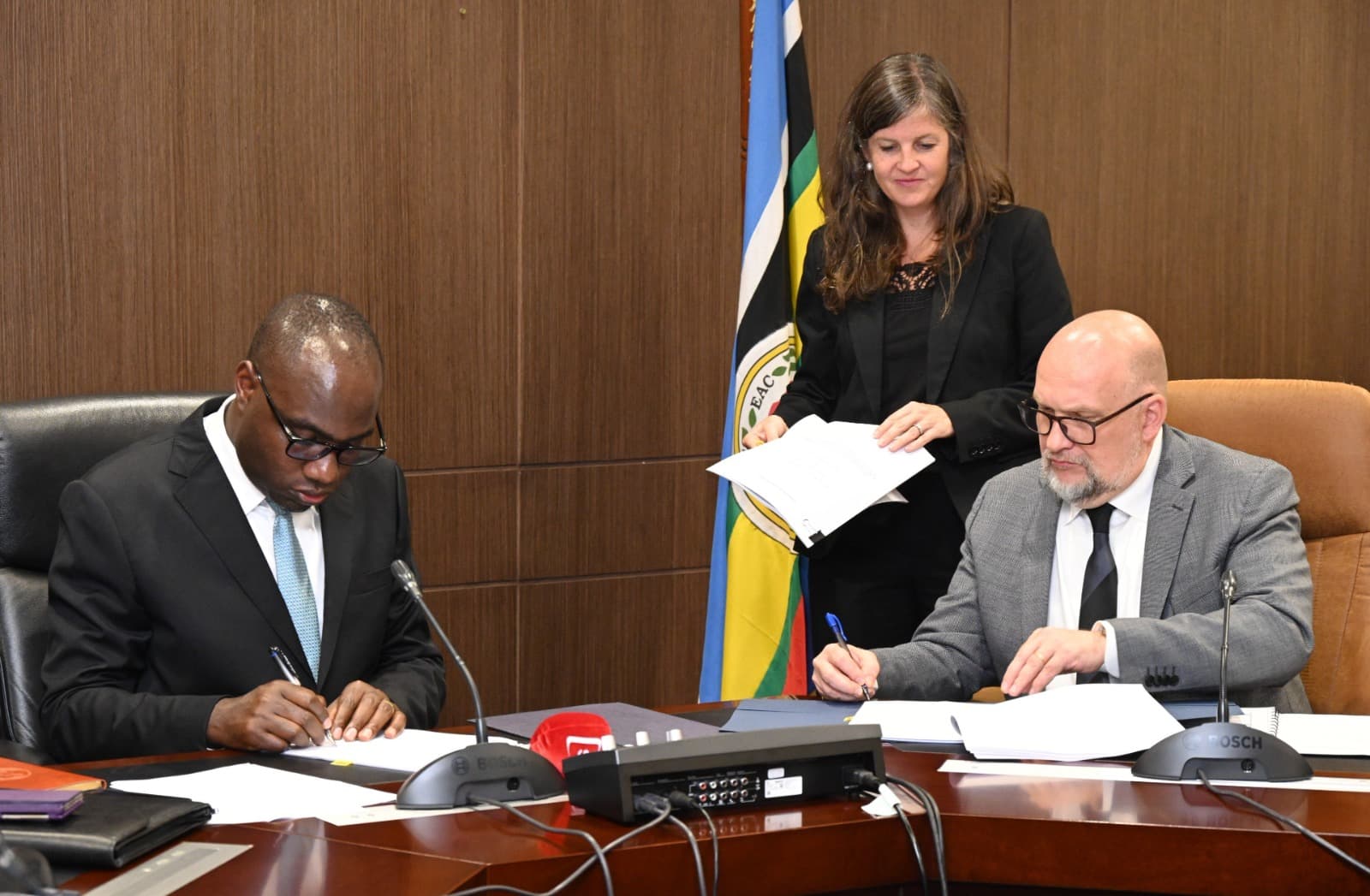
Uganda and the United States have signed a new agreement that will guide about Shs6.42 trillion in US support to Uganda’s health sector over five years, with more of the funding expected to flow directly through government systems.
The Strategic Objective Agreement (SOAG), signed on September 3, 2026, sets the framework for health cooperation between the two countries from 2026 to 2030.
Finance State Minister Henry Musasizi signed on behalf of Uganda, while US Embassy Chargé d’Affaires Mikael Cleverley represented the American government.
The agreement puts into effect commitments made under a Memorandum of Understanding signed on December 10, 2025. Under that arrangement, the US committed about $1.7 billion, equivalent to Shs6.42 trillion, to help Uganda prevent, detect and respond to existing and emerging infectious diseases.
A key change under the new arrangement is the US plan to channel support directly to the Ugandan government.
Musasizi said the approach would give Uganda greater control over health programmes while aligning foreign assistance with national priorities.
He described the agreement as “another significant milestone” in the longstanding relationship between Uganda and the US.
Musasizi said American support has played a major role in Uganda’s response to HIV/Aids, tuberculosis and malaria. It has also supported disease surveillance, outbreak response and health commodity supply chains.
“These interventions have saved lives, strengthened communities and enhanced Uganda’s capacity to respond to public-health emergencies,” he said.
The minister said Uganda welcomed the move towards direct government financing because it supports “strengthening country ownership, aligning external assistance with national priorities, and improving the effectiveness and sustainability of development cooperation.”
However, he said Uganda must also increase its own health spending to sustain the gains.
“The Government of Uganda acknowledges that sustainable health outcomes require increased domestic financing,” Musasizi said.
He said the government would increase funding for the agreed interventions over the five-year period.
Cleverley said the agreement showed US confidence in Uganda’s leadership and health sector. He said the government-to-government financing model would give Uganda greater responsibility for managing its public health priorities.
Health Minister Chris Baryomunsi also welcomed the shift from predominantly off-budget assistance to direct government financing through the Ministry of Finance.
Dr Baryomunsi said Uganda still faces a heavy burden from communicable and non-communicable diseases and needs continued investment in the health system.
He cited Uganda’s reduction in HIV prevalence from 18.5 per cent in the late 1980s and early 1990s to 5.9 per cent. Life expectancy has also increased from about 43 years to 68 years, he said.
Beyond individual diseases, the new partnership will target national health systems, workforce capacity, accountability and Uganda’s ability to plan, finance and deliver health services.