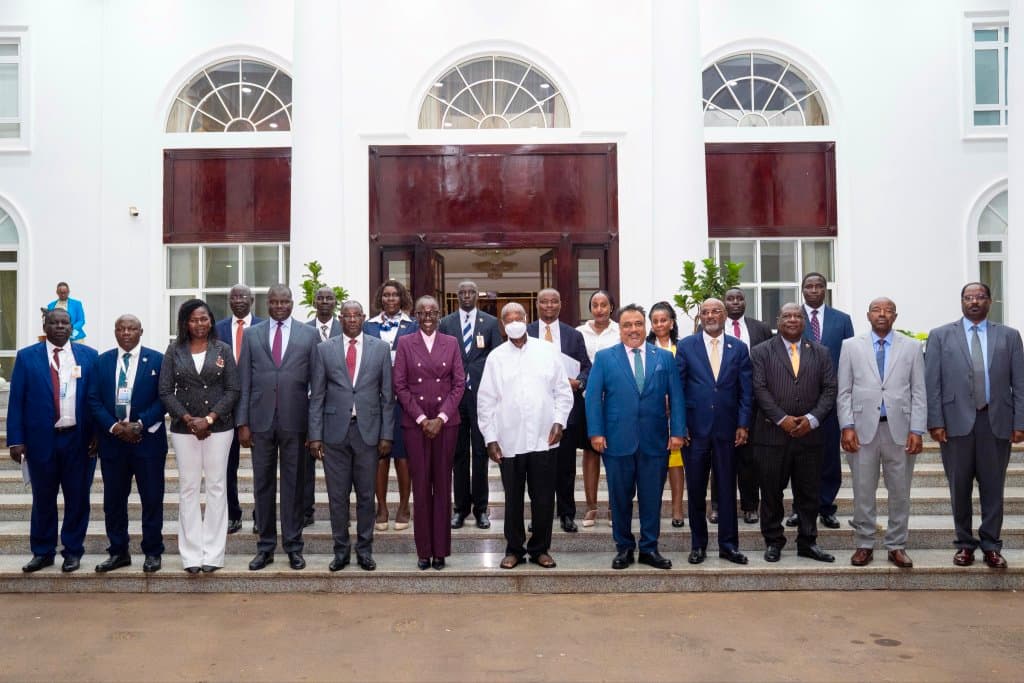
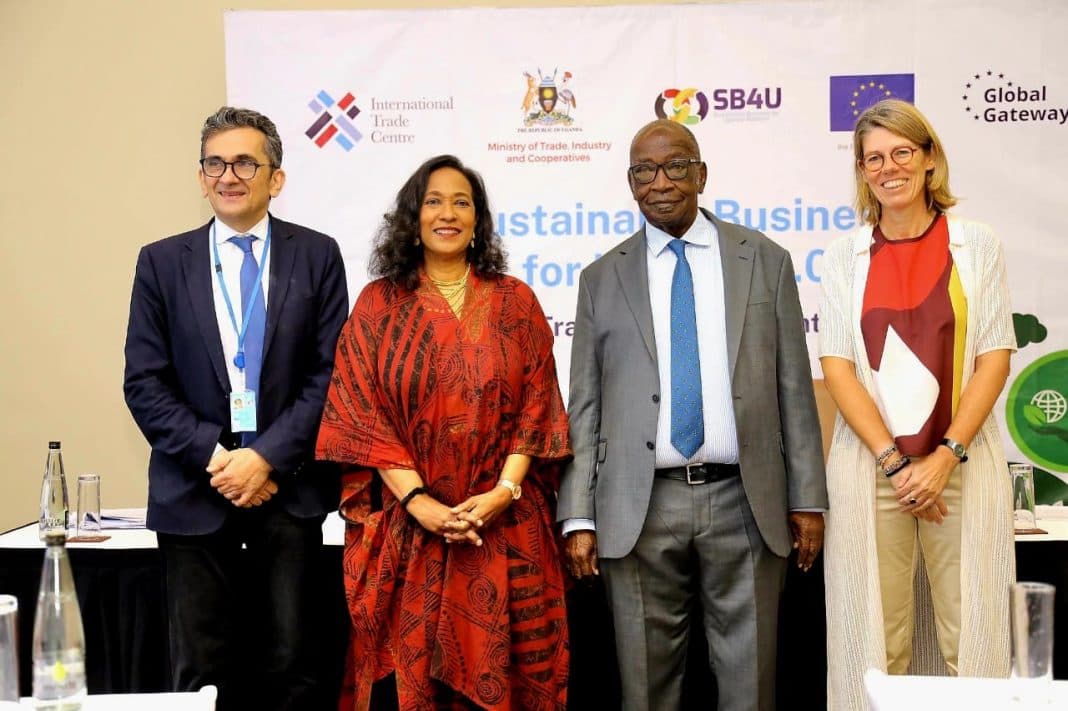
Uganda has launched a UGX 33 billion (EUR 8 million) trade and investment project aimed at accelerating the growth of Small and Medium Enterprises (SMEs), improving export competitiveness, and enhancing access to global markets, especially within the European Union.
The four-year initiative is being implemented by the Ministry of Trade, Industry and Cooperatives in partnership with the International Trade Centre (ITC), with financial support from the European Union (EU).
The project targets the development of a conducive policy and business environment for SMEs to thrive, while also strengthening Uganda’s trade capacity in high-potential sectors.
Speaking during the official launch, the Minister of Trade, Industry and Cooperatives, Francis Mwebesa, said the program will support SMEs to meet international quality standards, embrace e-commerce, and scale innovation.
“This project will significantly contribute to increasing Uganda’s exports to the European Union, which currently stand at USD 1.4 billion,” Mwebesa stated.
The program also aligns with Uganda’s national trade priorities and Africa’s wider agenda under the African Continental Free Trade Area (AfCFTA). It is expected to build SME resilience, improve value addition, and promote private sector engagement in regional and global trade.
The European Union has remained one of Uganda’s key trading partners. Through this project, the EU hopes to deepen economic ties and drive inclusive growth by unlocking trade opportunities for Ugandan businesses.
SMEs form the backbone of Uganda’s economy, accounting for over 90% of the private sector and employing the majority of the population. However, many face structural barriers including limited access to finance, weak compliance with international standards, and low uptake of digital tools.
By tackling these bottlenecks, the project is expected to empower SMEs to scale sustainably, increase exports, and support national development goals.