
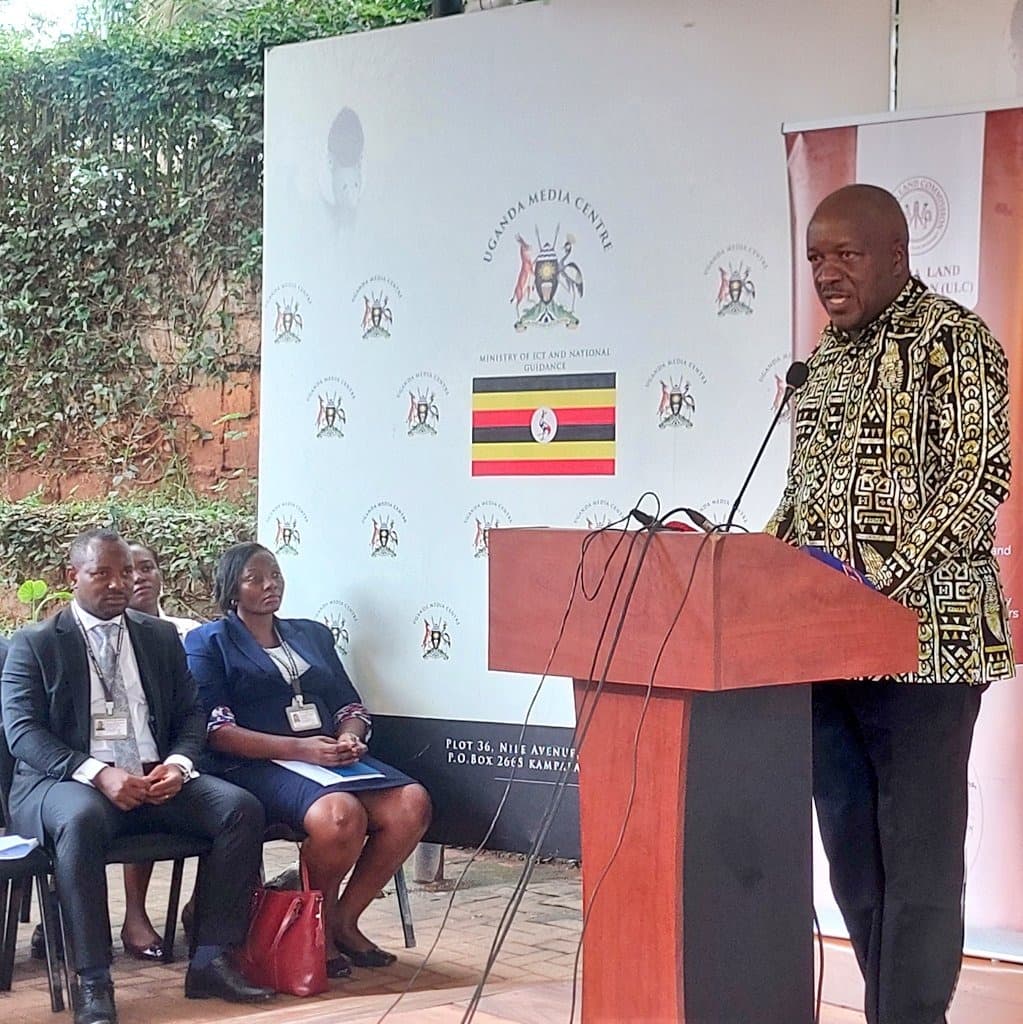
The government is preparing to introduce a nationwide digital land registry aimed at protecting public land from illegal encroachment and increasing revenue for essential public services.
The project, spearheaded by the Uganda Land Commission, will create a central digital database of all land owned by government across the country. The system will rely on Geographic Information System (GIS) technology to map land used by public institutions such as schools, hospitals, police stations, army barracks, prisons and forest reserves.
Officials say the new registry will help resolve many land disputes that have persisted for years due to poor records and unclear boundaries.
Kasenge Tom John Fisher, a commissioner at the Uganda Land Commission, said confusion over ownership among government bodies has often triggered conflicts over public land.
Speaking to Real Muloodi Network, Fisher explained that it has sometimes been difficult to separate land owned directly by the central government from land administered by institutions such as the Buganda Land Board or local governments. He said the digital mapping system will establish clear boundaries and create dependable records.
Authorities also believe the new system will boost government revenue collected from public land.
At present, the Uganda Land Commission earns about Shs7 billion each year from ground rent and leases on government land. Officials estimate that with a digital registry in place, this amount could increase to about Shs12 billion within three years and later rise to nearly Shs40 billion.
Government says the additional funds will support important services such as schools, hospitals and road construction.
Officials have clarified that the programme will not involve evicting people occupying government land. Instead, occupants will be helped to regularise their documentation and pay ground rent where required.
The registry is also expected to reduce the number of land-related cases in courts, improve urban planning and strengthen protection of forests and wetlands that support agriculture and climate stability.
Government ministries have already been directed to submit records of land under their control. City and municipal authorities are now working with the Uganda Land Commission to confirm boundaries, while the Ministry of Lands, Housing and Urban Development is providing technical support for the project.