
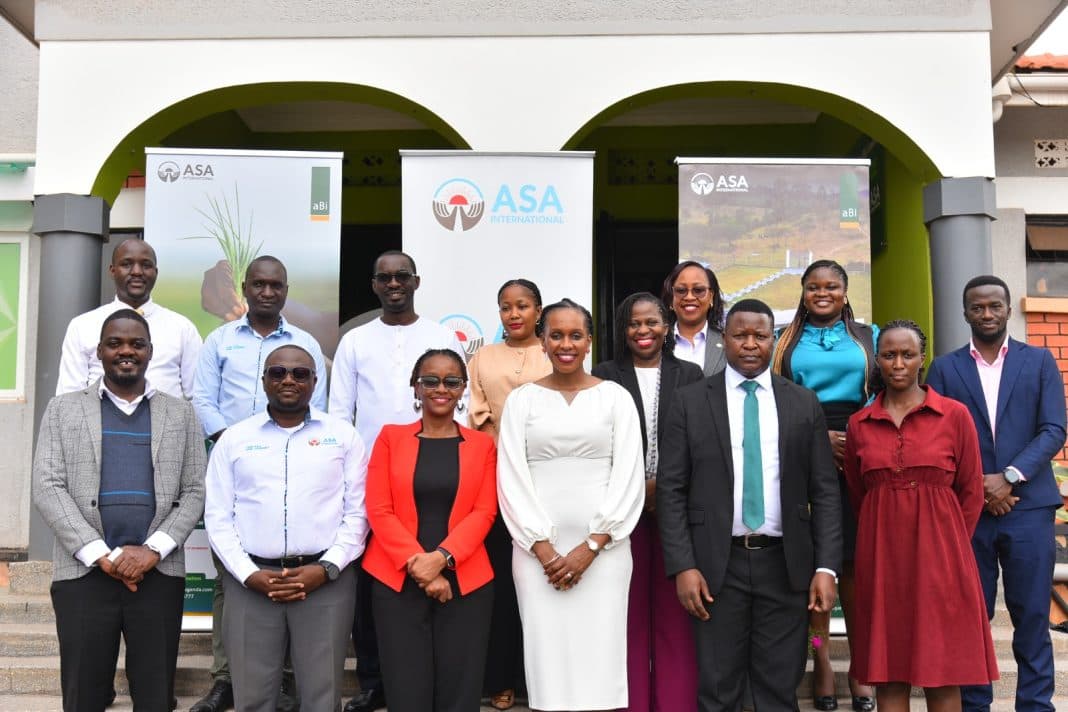
ASA Microfinance Uganda and aBi Finance have launched the Sustainable Pathways for Rural Outreach and Upward Transition into Nature-positive Growth (SPROUT) project, earmarking over Shs12 billion to expand climate-smart financing for farmers in Northern and Eastern Uganda.
The two-year partnership allocates Shs2 billion to build institutional capacity, open new branches, train personnel, and launch digital banking platforms, alongside a dedicated Shs10 billion loan fund for direct lending.
The credit facility targets agricultural enterprises investing in solar-powered irrigation, improved seed varieties, and other climate-resilient farming techniques.
Speaking at the launch in Kampala, aBi Finance Chief Executive Officer Mona Muguma Ssebuliba observed that agriculture secures only 12 percent of Uganda’s private-sector credit despite anchoring the national economy.
She emphasized that funding deficits disproportionately hurt women, who constitute the bulk of the agricultural workforce but face steep barriers in securing capital.
To address regional disparities, ASA Microfinance Uganda Interim Chief Executive Officer Irene Maberi stated that the microfinance institution will open branches across underserved rural corridors.
ASA will deploy a USSD mobile platform to enable rural clients using basic mobile phones to transact without requiring internet connectivity.
The initiative will provide training to 5,000 women agribusiness owners in financial literacy and green management, while upskilling 320 ASA staff members.
aBi Finance Head of Investment Ann Marie Mwaka Sabano noted that the project dismantles traditional lending hurdles, including strict collateral demands and poorly designed loan structures.
Highlighting accountability metrics, aBi Finance Head of Impact and Sustainability Noah Owomugisha explained that the intervention will monitor concrete business growth, revenue generation, and climate resilience among borrowers.
The project targets the disbursement of over 10,000 green loans and 6,000 general credit facilities, aiming to graduate 2,500 women entrepreneurs to higher-tier financing.