
Uganda is seeking a bigger share of the global Information Technology and IT-Enabled Services market as the Government and private sector push to turn the country into a competitive outsourcing hub.
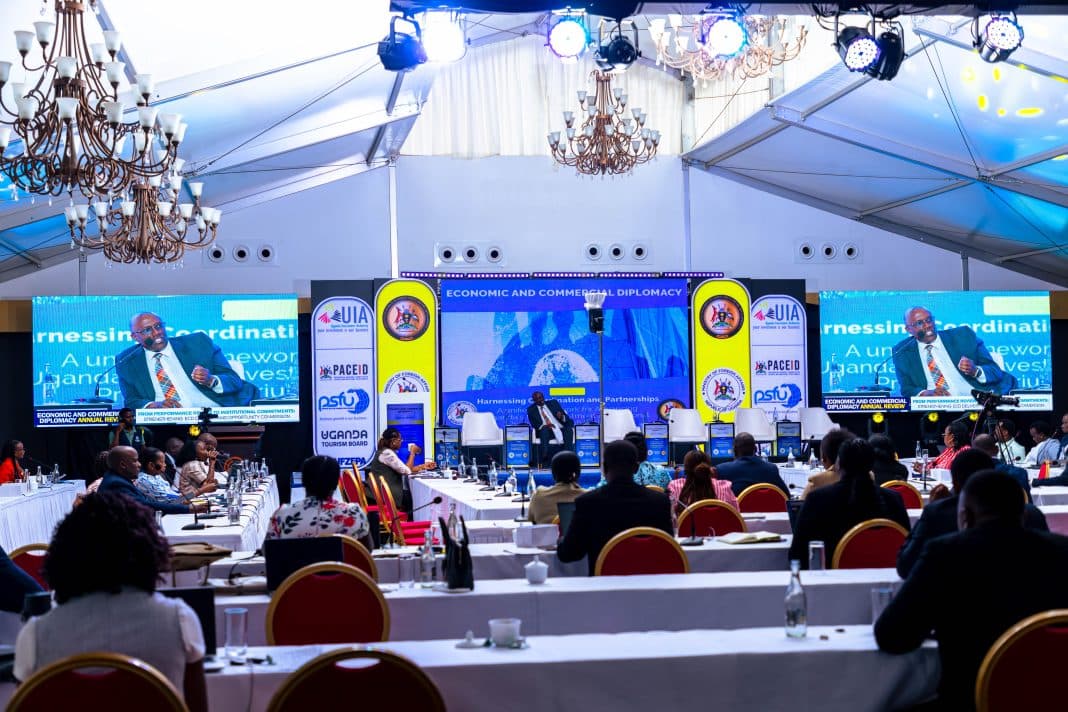
The Uganda Free Zones and Export Promotions Authority convened industry players at Sheraton Kampala Hotel under the theme, “From Potential to Performance: Positioning Uganda as a Competitive Global IT & ITES Export Hub.”
Uganda’s IT and ITES exports stand at $48.5 million. This remains a small share of the global market, valued at about $1.57 trillion.
Brenda Kabasinguzi, the UFZEPA Manager for Export Marketing Services, said Uganda’s IT exports reached $55.4 million in 2023 before falling to the current level.
She said the decline showed the need for more support to strengthen the sector and expand exports.
Kabasinguzi said Uganda ranks 24th in business process outsourcing and 12th in labour competitiveness.
The country wants to increase BPO jobs from about 12,000 to 150,000 by 2030.
UFZEPA plans to support the target through specialised BPO centres and ICT hubs across the country.
UFZEPA Executive Director Hez Kimoomi Alinda said the global shift from physical goods to services gives Uganda a chance to expand its participation in international trade.
He called for reforms in public policy, regulation and service delivery to create a more attractive environment for investors.
“When we look at our policies, when we look at our regulations, when we act in a more corporate and business-like manner as a government, we’ll be able to attract investment in this space,” Alinda said.
Patrick Mugisha, the Commissioner for Business Development and Quality Assurance, represented Trade Minister Sanjay Tanna at the symposium.
He said the meeting marked the start of implementation of Uganda’s 2025 National BPO Policy.
Mugisha described outsourcing as a major source of jobs and export earnings, especially for Uganda’s young population.
He also urged businesses to exploit opportunities under the African Continental Free Trade Area protocol on trade in services.
Mugisha called for more investment in research and development to build intellectual property and strengthen Uganda’s knowledge economy.
Roke Telecom representative Peter Muhumuza called for better digital infrastructure and the removal of tax barriers affecting local exporters.
He said Uganda’s English-speaking workforce gives the country an advantage in the global services market.
Muhumuza also pointed to artificial intelligence as a new opportunity for Uganda.
He said AI data centres require large amounts of electricity and argued that Uganda could use its hydropower potential to attract AI processing centres serving foreign markets.
Muhumuza said digital services also offer an advantage because companies can export them without the transport costs faced by producers of physical goods.
He cited a Ugandan company operating from Lira and serving clients in Japan and Europe.
Stakeholders said Uganda will need better infrastructure, skilled workers, supportive policies, research and stronger public-private cooperation to turn its IT capacity into a major export industry.