
Parliament has adopted a resolution urging the Government to scale up funding, inputs, and extension services for smallholder farmers under the National Smallholder Farmers Transformation and Climate Resilience Programme.
The decision followed an extensive plenary debate where lawmakers emphasized that Uganda’s agricultural deficits stem from weak policy execution and funding shortfalls rather than an absence of legal frameworks.
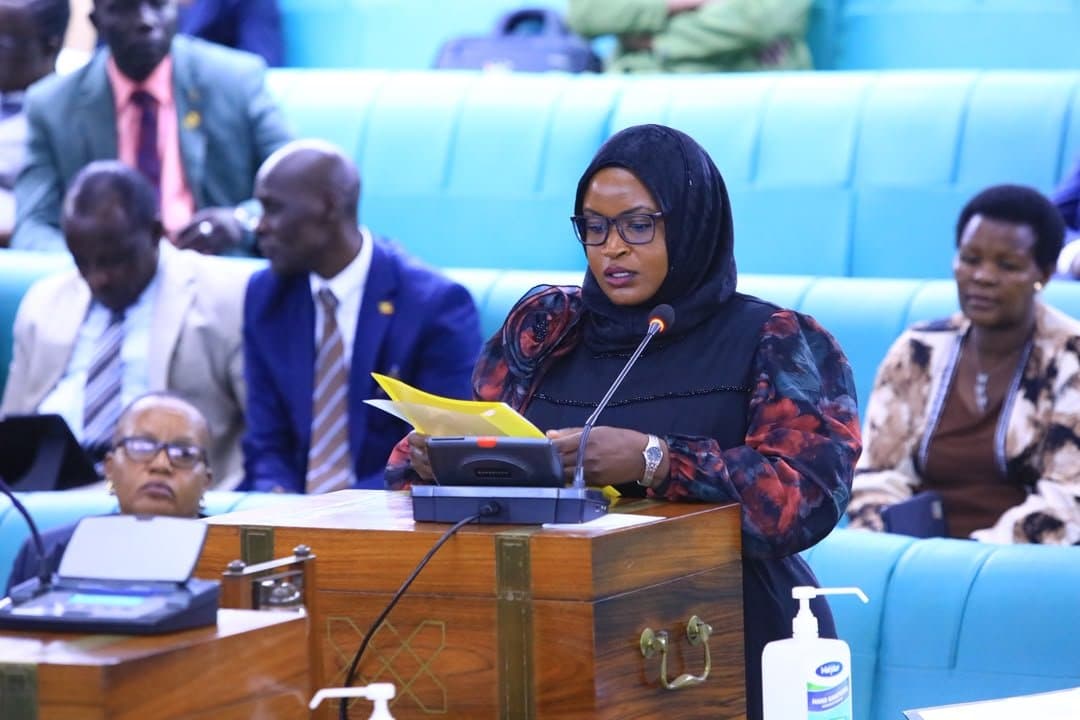
The motion was moved during the plenary sitting on Tuesday, October 6, 2026, by Sironko District Woman Representative, Hon. Asha Mafabi.
While her initial motion sought the formulation of a dedicated statutory framework to govern the resilience programme, it was amended after frontbench officials and backbench MPs pointed out that the Ministry of Agriculture already possesses an adequate suite of laws to support agrarian transformation.
Opposing the creation of a new statute, Kigulu County North MP Hon. Samuel Kungu cautioned against adding regulatory congestion to line ministries without guaranteeing execution.
“Uganda and the Ministry of Agriculture have enough laws. The only issue we have here is policy implementation. We do not want to congest the Ministry with rules which are not going to be implemented,” Kungu stated.
Nyabushozi County MP Hon. Wilson Kajwengye echoed this stance, observing that the country’s agricultural sector continues to stall not from a vacuum of legal text, but due to failures in administering existing policies.
Government Chief Whip Dr. Jane Ruth Aceng highlighted that existing legislation provides all necessary tools to protect and empower smallholder farmers.
She cited a robust statutory inventory already in force, including the Agriculture Extension Policy, the Seeds and Plant Act, the Plant Protection and Health Act, the Agricultural Chemicals Act, the Climate Change Act, the National Environment Act, the Water Act, the Land Act, and the Warehouse Receipt System Act. Aceng added that the Parish Development Model (PDM) already offers structured, affirmative financing to vulnerable agrarian households.
Presiding over the House, Deputy Speaker Thomas Tayebwa affirmed that the core grievances raised in the motion mirror the severe grassroots pressure Members of Parliament face daily across their constituencies.
“Now it is we MPs who are being harassed to provide seedlings,” Tayebwa said, noting that MPs are inundated with citizen requests for subsidized coffee seedlings, tea inputs, and fertilizers due to institutional distribution gaps.
Adjumani District Woman Representative Hon. Jesca Ababiku noted that commercial-scale farmers disproportionately corner government subsidies and credit lines, leaving rural smallholders underserved. She argued that the standard one-million-shilling allocation per household under PDM remains insufficient to cover comprehensive agricultural lifecycles, calling for dedicated interventions covering subsidized land preparation, quality seed multiplication, and localized micro-irrigation systems.
The Minister of State for Agriculture (Animal Industry), Lt. Col. (Rtd) Bright Rwamirama, concurred that the sector's main hurdle is fiscal scale rather than legislative deficiency.
“The farmer needs irrigation. The farmer needs fertilizers. The farmer needs extension services,” Rwamirama said, noting that Parliament’s primary role should focus on appropriating adequate funds to match the required speed of agricultural delivery rather than drafting redundant laws.
Accepting the amendment, Hon. Mafabi urged the House to refer the broader programmatic gaps to the Parliamentary Committee on Agriculture for deeper scrutiny.
She revealed that while Sironko District alone had received over Shs80 billion under PDM disbursements, visible transformation among subsistence households remains modest. She clarified that her initial legislative proposal sought to harmonize multi-sectoral interventions across disparate ministries and agencies to eliminate duplicated resources.
Parliament subsequently passed the amended resolution, directing the Executive to urgently expand budgetary allocations for farm inputs, extension staffing, and climate-resilient water-for-production schemes under the programme.