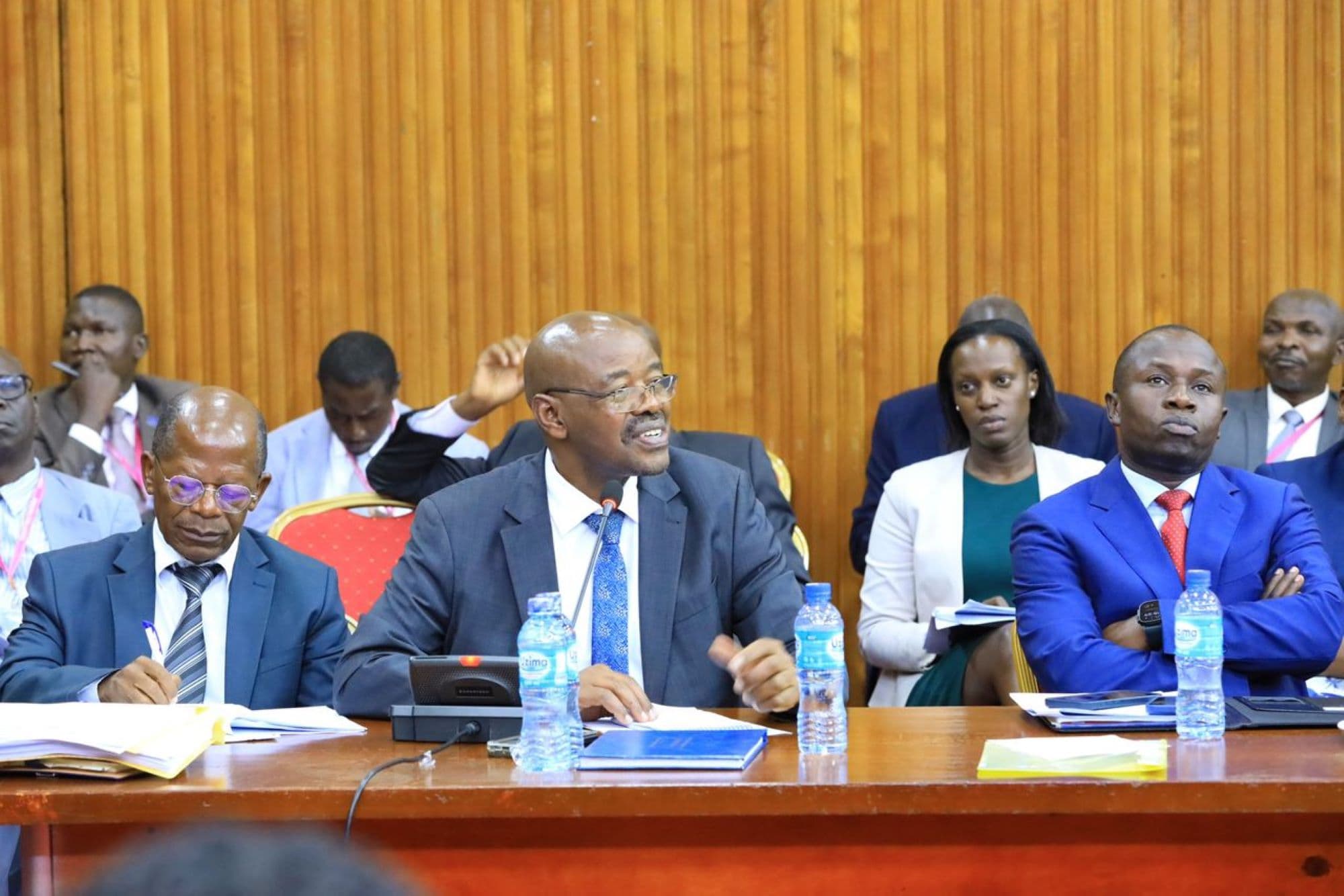
Uncertainty surrounding the roll-out of the new Advanced Level (A-level) school curriculum is set to end, as the Ministry of Finance, Planning, and Economic Development has allocated Shs7.1 billion for its implementation.
The confirmation came after Members of Parliament on the Education and Sports Committee held the Minister of State for Finance (Planning), Amos Lugoloobi, accountable, urging him to ensure the National Curriculum Development Centre receives the necessary funding.
The Ministry of Education introduced a competency-based syllabus for Ordinary Level (O-Level) exams, with the first cohort of students tested by the Uganda National Examination Board (UNEB) last year. These students have now progressed to A-Level.
James Kubeketerya, Chairperson of the Committee on Education, emphasised that the A-level curriculum's implementation was long overdue and must be prioritised.
“This is non-negotiable; the matter cannot be debated. Money should be found to implement the new curriculum,” Kubeketerya stated.
The MPs met with Chrysostom Muyingo, Minister of State for Education (Higher Education), and Lugoloobi to discuss the Ministry's policy statement and budget estimates for the 2025/2026 financial year on Thursday, 03 April 2025.
Michael Timuzigu (NRM, Kajara County) expressed concern that only 15 teachers had been trained by UNEB on how to assess students under the new curriculum.
“UNEB was not given money to train more teachers, yet the new curriculum is already underway. There is an assumption that the 15 trained teachers are teaching others,” Timuzigu explained.
Nathan Itungo (Independent, Kashari South County) highlighted that the new curriculum relies on continuous assessment, but UNEB is struggling due to a lack of funds.
“We have students in senior five, yet we are still facing challenges in implementing the new curriculum,” he added.
In response, Lugoloobi assured the MPs that the Ministry of Finance had allocated Shs18 billion to UNEB for continuous assessments and the marking of national examinations.
“We have supported UNEB, and they have even reduced cases of exam leakages,” Lugoloobi said.
The MPs also urged the Ministers to address the issue of harmonising salaries for all primary and secondary school teachers, particularly in light of recent salary increases for science teachers.
Butemba County MP, Patrick Nyanzi, pointed out that the Ministry of Education had not included this request in the 2025/2026 budget.
“The two Ministers have said that there were plans to increase salaries for arts teachers, even before the salary enhancements for science teachers. Do they have any updates for us to share with arts teachers?” Nyanzi asked.
Lugoloobi acknowledged that the government was facing challenges in bridging funding gaps in the national budget.
“We still have a challenge with mobilising resources,” Lugoloobi said.
The Ministry of Education's projected budget for the next financial year is Shs800 billion, with Shs200 billion expected from external financing. Minister Muyingo noted that most of the additional resources would be earmarked for specific activities, limiting the Ministry's flexibility in addressing emerging priorities.
He highlighted several unfunded and underfunded activities, including the implementation of free and compulsory Universal Primary Education, grant aiding for primary and secondary schools, and the repurposing of primary teachers' colleges.