

The East African Crude Oil Pipeline (EACOP) will invest $15 million over 30 months in order to cultivate local talent. The commitment was announced during a high-profile visit to the Uganda Petroleum Institute in Kigumba (UPIK).
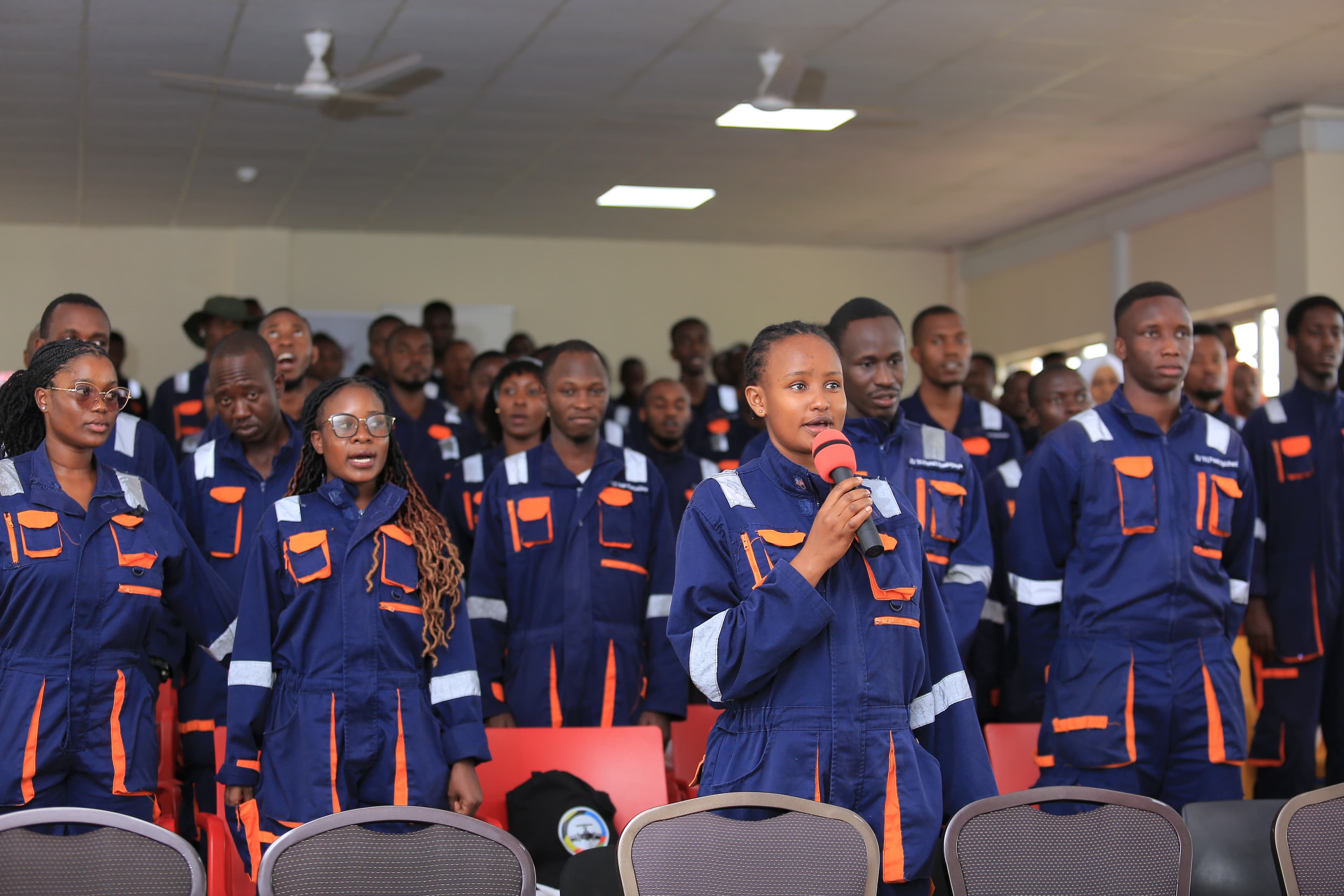
The delegation included Maj. Gen. Paul Kisesa Simuli, the High Commissioner of Tanzania to Uganda, Ernest Rubondo, Executive Director of the Petroleum Authority of Uganda (PAU), and EACOP Managing Director Guillaume Pierart, along with the first group of trainees preparing to manage and operate the pipeline.
The visit underscored EACOP’s focus on national content as a cornerstone of its strategic objectives. Guillaume Pierart highlighted the project’s substantial investment in human capital, saying, “With a $15 million investment over 30 months, this is one of the region’s largest capacity-building programmes.”
He added, “But the real success lies in the return on this investment—not in figures, but in people—the talent and potential of these dedicated trainees.”
The selection process for the trainees was rigorous, with 13,000 applicants in Uganda vying for the opportunity.
Laurent Stephane, Tilenga & EACOP Academy Manager, said, “From this large pool, we selected the best candidates. A year ago, 141 trainees started this journey, and today, all of them remain. No one has been dismissed for poor performance or chosen to leave, reflecting the programme’s success and the trainees' dedication.”
The training is designed to offer global exposure, with trainees rotating through specialised facilities, such as Takatouf Petroleum Oman (TPO) and INSTEP, the Petronas training centre in Malaysia. This hands-on approach allows them to gain real-world experience in a safe setting before joining the EACOP facilities for the pre-commissioning and commissioning phases.
Ernest Rubondo praised the programme’s impact, saying, “Uganda’s Oil and Gas Sector has a policy aimed at creating lasting value. While people often see value in the oil itself, our biggest asset is in skilling young people, creating jobs, and facilitating technology transfer. I’m proud to say that UPIK now matches the capacity of leading institutions globally.”
The programme's success is exemplified by the trainees’ stories, such as Sekera Jacob’s. Once a history teacher, Sekera reflected on her unlikely journey into the oil and gas sector: “EACOP saw my potential, not my background. This experience has taught me about resilience and the power of embracing the unknown. I’ve moved from chalkboards to pipelines, and I won’t stop here.”
Maj. Gen. Paul Kisesa Simuli, High Commissioner of Tanzania, lauded the project’s vision, saying, “This programme will attract investors and create opportunities for our youth, even beyond our borders. I look forward to continued collaboration between our governments, fuelled by shared opportunities like this.”
As of today, the EACOP project is 62% complete, with construction progress at 33%. The pipeline welding stands at 25%, above-ground installations (AGIs) at 54%, the jetty at 60%, tanks at 73%, and the terminal at 26%. This training initiative aligns with EACOP’s long-term vision for Uganda, ensuring that the nation’s natural resources benefit its people for generations to come.