
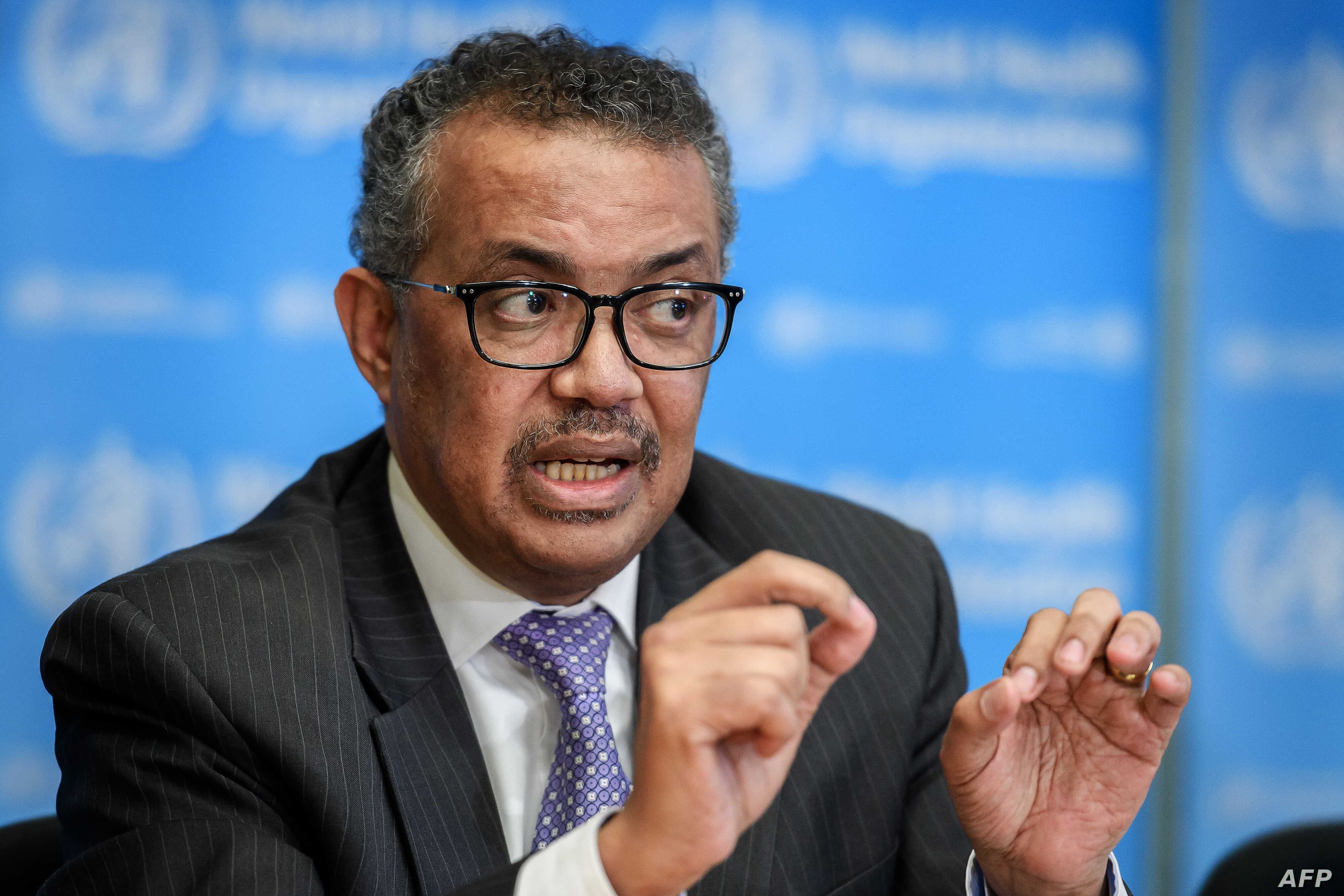
The coronavirus pandemic is now in a "new and dangerous phase", the World Health Organization said, with the disease accelerating at the same time as people tire of lockdowns.
WHO chief Tedros Adhanom Ghebreyesus urged nations and citizens to remain extremely vigilant, as the number of cases reported to the UN health agency hit a new peak.
"The pandemic is accelerating. More than 150,000 new cases of COVID-19 were reported to WHO yesterday -- the most in a single day so far," Tedros told a virtual press conference.
He said almost half of those cases were reported from the Americas, with large numbers also being reported from South Asia and the Middle East.
"The world is in a new and dangerous phase. Many people are understandably fed up with being at home. Countries are understandably eager to open up their societies and economies," he said.
"But the virus is still spreading fast, it's still deadly and most people are still susceptible," he said, with the most vulnerable set to suffer the worst.
Second waves and peaks
The novel coronavirus has killed at least 454,000 people and infected more than 8.5 million since the outbreak began in China late last year, according to a tally from official sources compiled by AFP.
Italy's top health agency on Friday urged caution after last week seeing "warning signs" of new coronavirus transmission, especially over outbreaks of cases in Rome.
WHO emergencies director Mike Ryan said countries needed to be on alert for second waves of infection -- and second peaks within the first wave if it is not properly suppressed.
"You may have a second peak within your first wave, and then you may have a second wave: it's not either or," the Irish epidemiologist said.
While increased numbers of confirmed cases could be down to improved testing, he said unexpected rising hospitalisation and death figures were a better indicator of a resurgence.
"Exiting lockdowns must be done carefully," he said.
"If you don't know where the virus is, the chances are that the virus will surprise you."
Beijing strains
Ryan said countries needed to be more agile and react quickly and precisely to new clusters, and he praised the intensity of investigations going on in Beijing, which is battling a new outbreak.
"When you see a cluster, you have to jump on the cluster... if we want to avoid the blunt instrument of lockdown," he said.
Beijing's fresh coronavirus outbreak emerged at a wholesale market, with the total number of infections since last week now at 183.
Maria Van Kerkhove, the WHO's technical lead on COVID-19, said virus sequences from the new outbreak were already available for study.
"As we understand it, the virus is closely related to the European strain," she said.
Ryan explained that strains were on the move around the world, saying "many of the viruses that circulated in New York were of European origin", while "Japan has reimported cases from Europe".
He said it was "reassuring" that the Beijing outbreak looked like human-to-human transmission, squashing the hypothesis that the virus had jumped the species barrier again from animals.
-AFP