

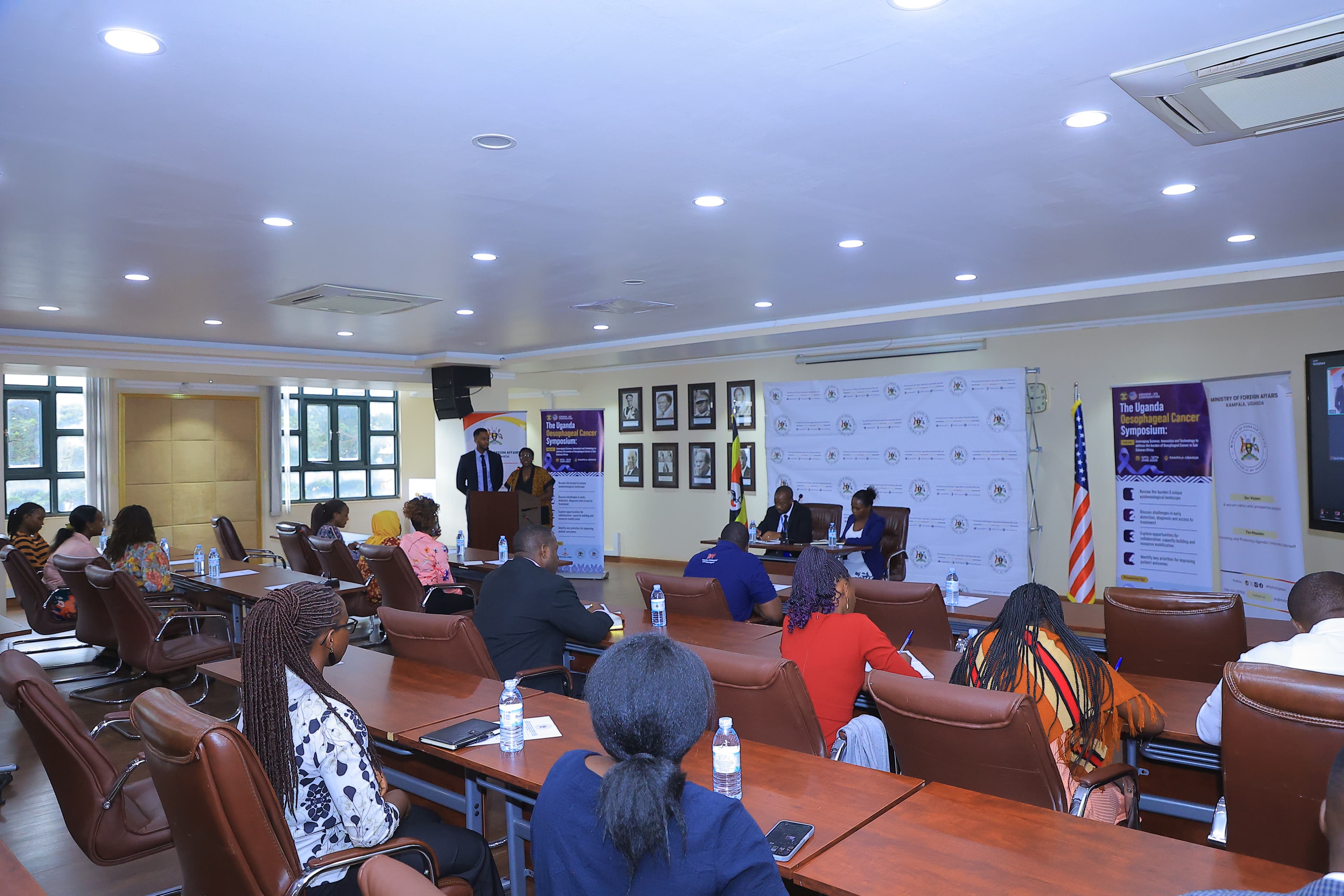
The Government of Uganda has pledged continued support for the African Oesophageal Cancer Consortium (AfrECC) Foundation, praising its work in fighting the disease across the continent.
During a media briefing organised by the Uganda Embassy in Washington, D.C., and the Uganda Cancer Institute, officials said AfrECC’s focus on research and partnerships is helping countries find practical solutions to rising cases of non-communicable diseases like cancer.
Oesophageal squamous cell carcinoma (ESCC) is the most common form of the disease in Africa and affects more people in East and Southern Africa than other regions.
In 2022 alone, over 28,000 people died from the disease, with most diagnosed too late for effective treatment.
Dr Nixon Niyonzima from the Uganda Cancer Institute said Uganda continues to see late-stage diagnoses because of limited screening and low awareness.
He thanked AfrECC for providing self-expanding stents and training in endoscopy, which are helping hospitals respond better.
"About 82% of our patients are diagnosed at advanced stages. That’s a major problem," Dr Niyonzima said. "Smoking, alcohol use, and lack of diagnostic tools make it worse. AfrECC’s support is helping close these gaps."
AfrECC, now a registered non-profit in the United States, has already donated over 1,500 stents, trained medical teams, and started continent-wide research to study the environmental and dietary causes of ESCC.
One of its international partners is Dr Jerome Waye, a long-time expert in endoscopy from the Icahn School of Medicine in New York.
Benon Kayemba, a representative from Uganda’s Embassy in Washington, said partnerships like this show how foreign policy can support better health. “Through AfrECC, we are bringing global expertise to Uganda and helping improve care at home,” he said.
Vivian Kobusingye, a member of the AfrECC team, shared her experience raising awareness about the disease and thanked Ambassador Robie Kakonge and the Embassy for their strong backing.
She also urged journalists to help spread the word about early detection. “Technology can help us educate people, but media professionals must lead the charge,” she said. “We need stories that inform and encourage action.”
Margaret Kafeero, Head of Public Diplomacy at the Ministry of Foreign Affairs, said Uganda is committed to global health partnerships. “AfrECC is putting Africa’s cancer challenges on the global agenda,” she said. “We are proud of our role in building strong health ties with international partners.”
As part of this collaboration, Uganda will host a live stenting workshop on June 11 at Kyabirwa Surgical Centre in Jinja. Patients will get free treatment and local doctors will receive hands-on training.
A larger symposium on oesophageal cancer will follow on June 13 at Four Points by Sheraton in Kampala, bringing together experts in health, research, and policy. The Ministry of Foreign Affairs said the partnership with AfrECC is proof of what can be achieved when science, diplomacy, and local leadership work together.