

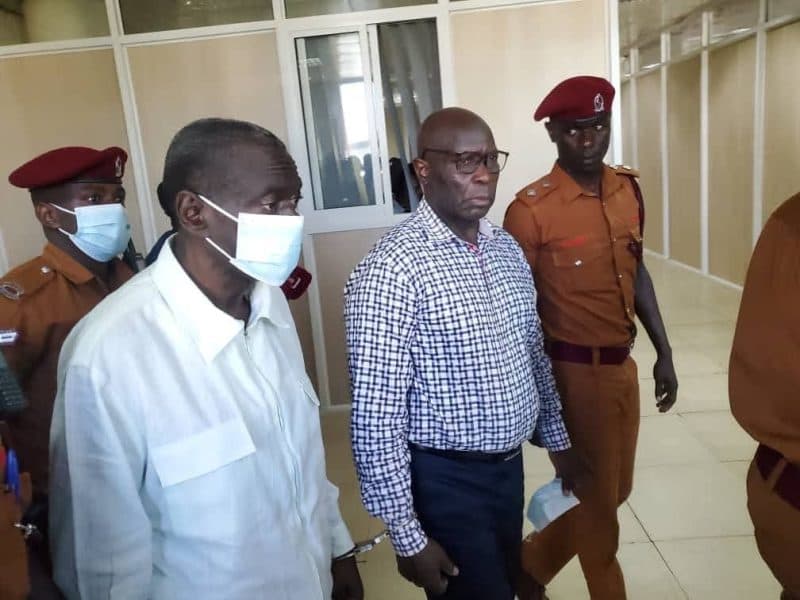
Opposition leader Dr. Kizza Besigye and his aide, Hajj Obeid Lutale, were escorted back to Luzira Maximum Security Prison following the hearing of their habeas corpus application at the High Court in Kampala.
The hearing, presided over by Justice Douglas Singiza, stemmed from an application filed by Besigye’s legal team on February 5, demanding an explanation from the Attorney General and the Commissioner General of Prisons regarding their continued detention.
During the session, Justice Singiza raised concerns over Besigye’s reported illness, stating that he could not proceed while a sick person remained in court.
“This is an administrative order. If a prisoner is sick, I can’t continue with him. He might faint,” said Singiza.
Citing this, the judge ordered that Besigye and Lutale be returned to prison instead of remaining in court.
Meanwhile, state attorneys defended the continued detention of Besigye and Lutale, arguing that they remain in lawful custody as their case has been transferred to civilian courts. The prosecution further contended that the January 31 Supreme Court ruling, which declared the trial of civilians in military courts illegal, did not explicitly order their release.
This stance directly opposes the defense's argument that the two opposition figures are being held illegally. Besigye’s lawyers insist that since the Supreme Court outlawed military trials for civilians, their continued incarceration amounts to unlawful detention.
Following the court proceedings, security personnel swiftly escorted Besigye and Lutale back to Luzira Prison. The High Court is expected to deliver its ruling on the habeas corpus application in the coming days.
President Yoweri Museveni, on Tuesday, called for a swift trial of Besigye, addressing public concerns over his prolonged detention.
“The answer to that is a quick trial so that facts come out. Otherwise, you are promoting insecurity, which is very dangerous for the country,” Museveni stated.
He further dismissed calls for forgiveness and reconciliation, asserting that Uganda’s history and doctrine have always emphasized accountability.