
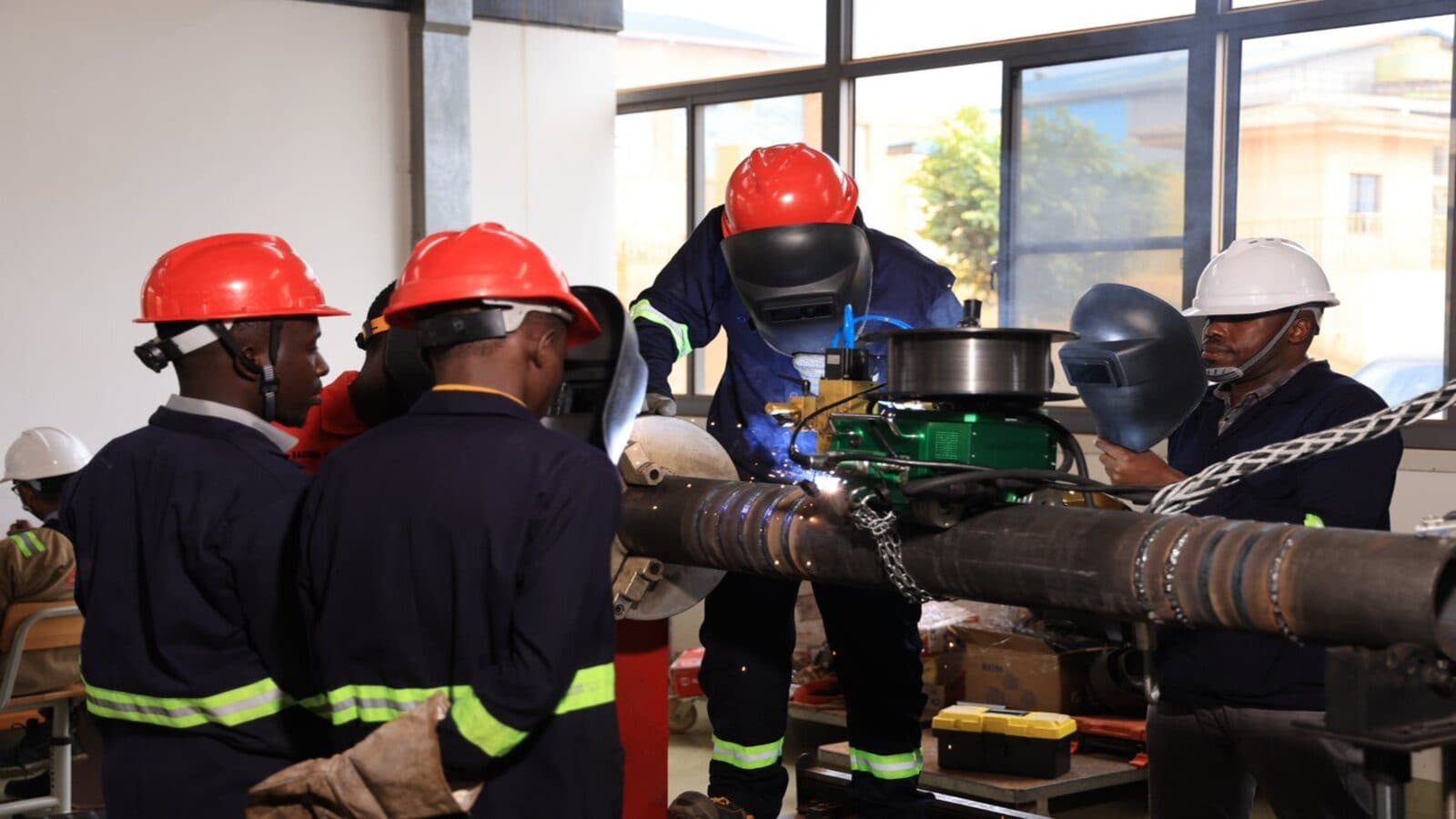
The East African Crude Oil Pipeline (EACOP) company has launched an orbital welding training program to equip Ugandan welders with the technical skills needed for constructing the region’s largest oil pipeline.
The program is part of EACOP’s broader initiative to build local capacity and ensure Uganda meets international standards in oil pipeline welding.
Imran Dilmohamud, an industry expert and lead trainer, introduced the participants to orbital welding—a highly automated technique widely used in the United States, Europe, and China. He said the method is essential for achieving the precision and quality required for a project of this scale.
“Unlike conventional welding, orbital welding is automated, produces consistent results, and reduces material waste,” Dilmohamud explained. “This technology is still new in Uganda, but it is the standard for high-performance pipelines.”
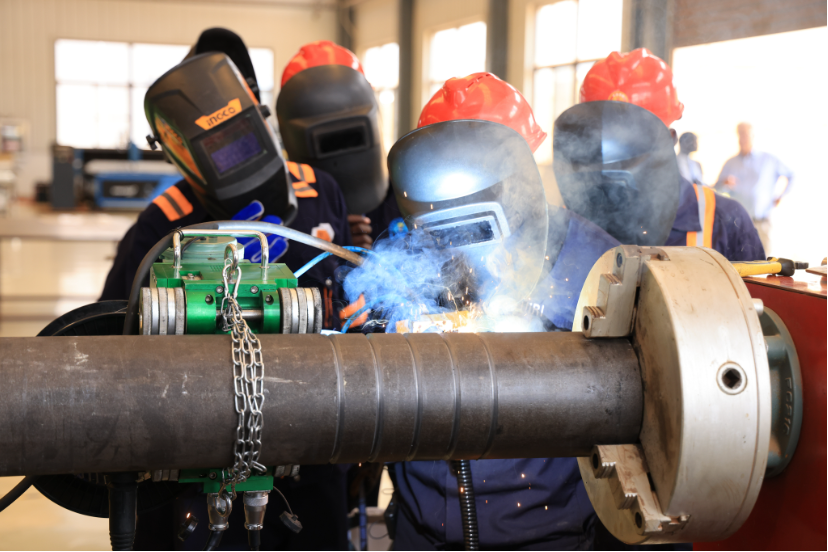
Trainees also learned to use a flux core machine to apply a protective coating that prevents corrosion—a key step in maintaining pipeline integrity. Dilmohamud emphasized the importance of mastering this technique, as it will be the primary method used on-site.
The hands-on training was a first for many local welders, who initially struggled to operate the complex equipment but gained confidence by the end of the sessions.
George William Barbatana, one of the trainees, welcomed the opportunity. “The process is more automated, but it requires a strong welding foundation,” he said. “This is the first time such training is happening in Uganda, and I see great potential for its use beyond pipelines, including in tank and cylinder manufacturing.”
EACOP Deputy Managing Director, John Bosco Habumugisha, commended the participants and underscored the training’s value for Uganda’s oil and gas sector.
“The world has come a long way, and it is imperative that the oil and gas industry embrace new technologies and contemporary techniques as we speed up oil extraction in Uganda,” Habumugisha said. “This program gives participants the opportunity to practice using automated welding equipment, which are essential for building the East African Crude Oil Pipeline.”
He added that the application of microscopic weld analysis ensures precision and efficiency.
Uganda’s oil sector is expected to create up to 160,000 jobs, many of which will require specialised skills. Programs like the orbital welding training aim to prepare Ugandans to play a central role in the country’s energy future.