

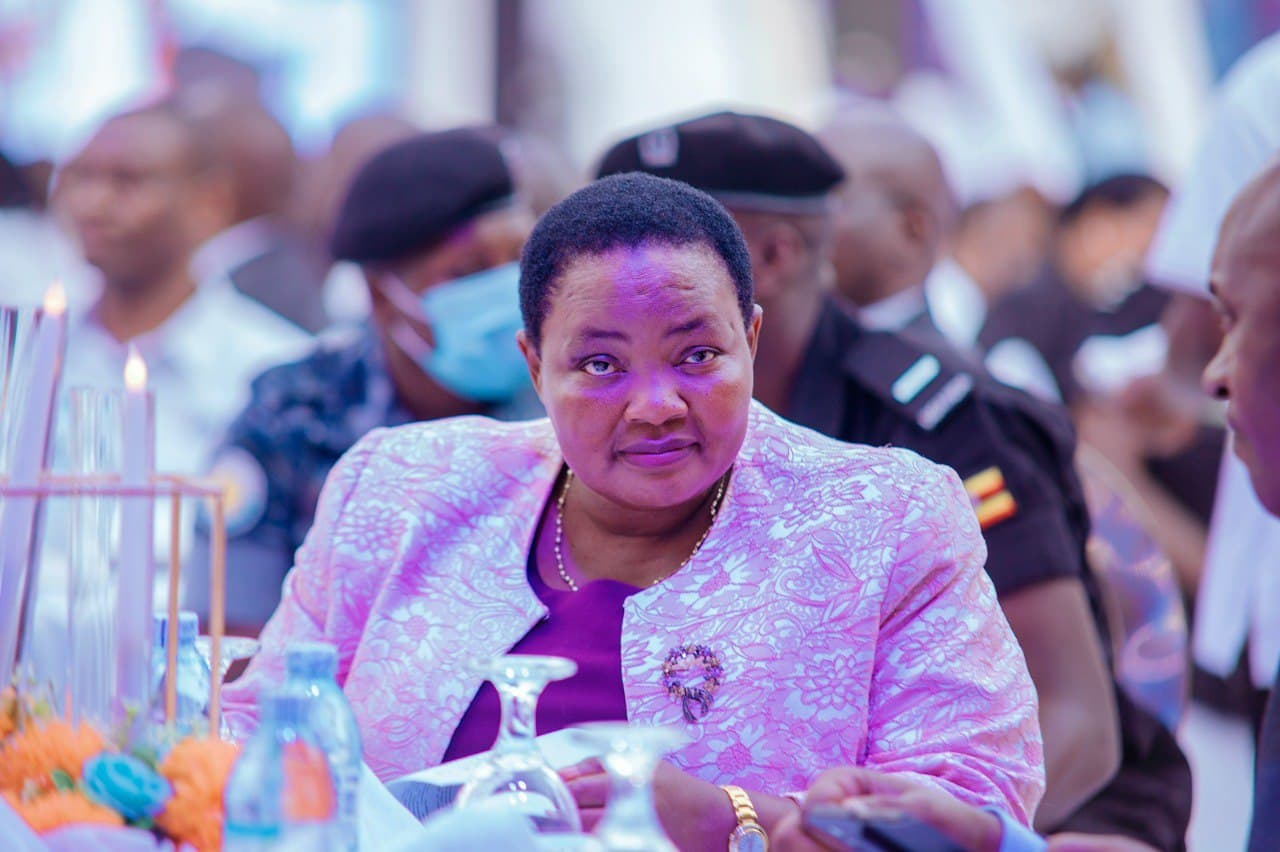
The Prime Minister, Robinah Nabbanja, has urged national actors in the land sector to enforce provisions of existing policies, particularly the National Land Policy of 2013, to promote fair land ownership and management.
Delivering her remarks through the Lands Minister, Judith Nabakooba, at the second National Symposium on Land Governance in Uganda, Nabbanja pointed out gaps in policy implementation and cultural transformation, despite government investment in land registration and community sensitisation.
“We still see customary practices that override statutory laws and discriminate against women. We must ask ourselves what are we doing as leaders, institutions and citizens to dismantle the invisible barriers that deny women their rightful stake in the land they till,” Nabbanja said.
The symposium, held at Parliament on June 27, 2025, focused on ‘Securing Women’s Agricultural Land Ownership: A Political and Development Imperative’.
Nabbanja affirmed government’s commitment to strengthening institutions that support land access and tenure security for women, accelerating gender-responsive registration processes, and promoting legal literacy to simplify access, particularly in rural communities.
“We must ensure that our policies, budgets and laws reflect the needs of women small-holder farmers. This journey requires more than political pledges, it requires systems that are transparent, accountable and gender responsive. We must ensure that land titling processes are simplified, decentralised and inclusive,” Nabbanja added.
She also called on cultural institutions to align tradition with constitutional values and support women’s customary land ownership.
“SDG 5 on gender equity and SDG 2 on zero hunger cannot be achieved unless women have control over productive assets, especially land. We must operationalise these commitments through national action and put women at the center of land governance,” the Prime Minister said.
Christine Kaaya, Chairperson of the Uganda Parliamentarians Land Management Forum, pressed stakeholders to address the backlog in land advocacy and widen the conversation on governance, dispute resolution, and policy development.
“We must also amplify the discussions on land governance, dispute resolution, policies and all related statutory instruments. The debate on land governance should be on each and everyone’s agenda,” said Kaaya, the District Woman Representative for Kiboga.
Francis Odokorach, Oxfam Country Director in Uganda, highlighted that women make up 70 per cent of the agricultural workforce, yet own only a small portion of land, limiting development potential.
“If they have full control over the land and can make decisions, we can expect sustainable development. But, it is not just a development question, it is a political imperative because it is deeply rooted in equity and constitutional values,” said Odokorach.
He urged government leaders to prioritise gender in land policy, assess budget allocations for certification programmes, and improve land information systems to ensure women’s inclusion.