
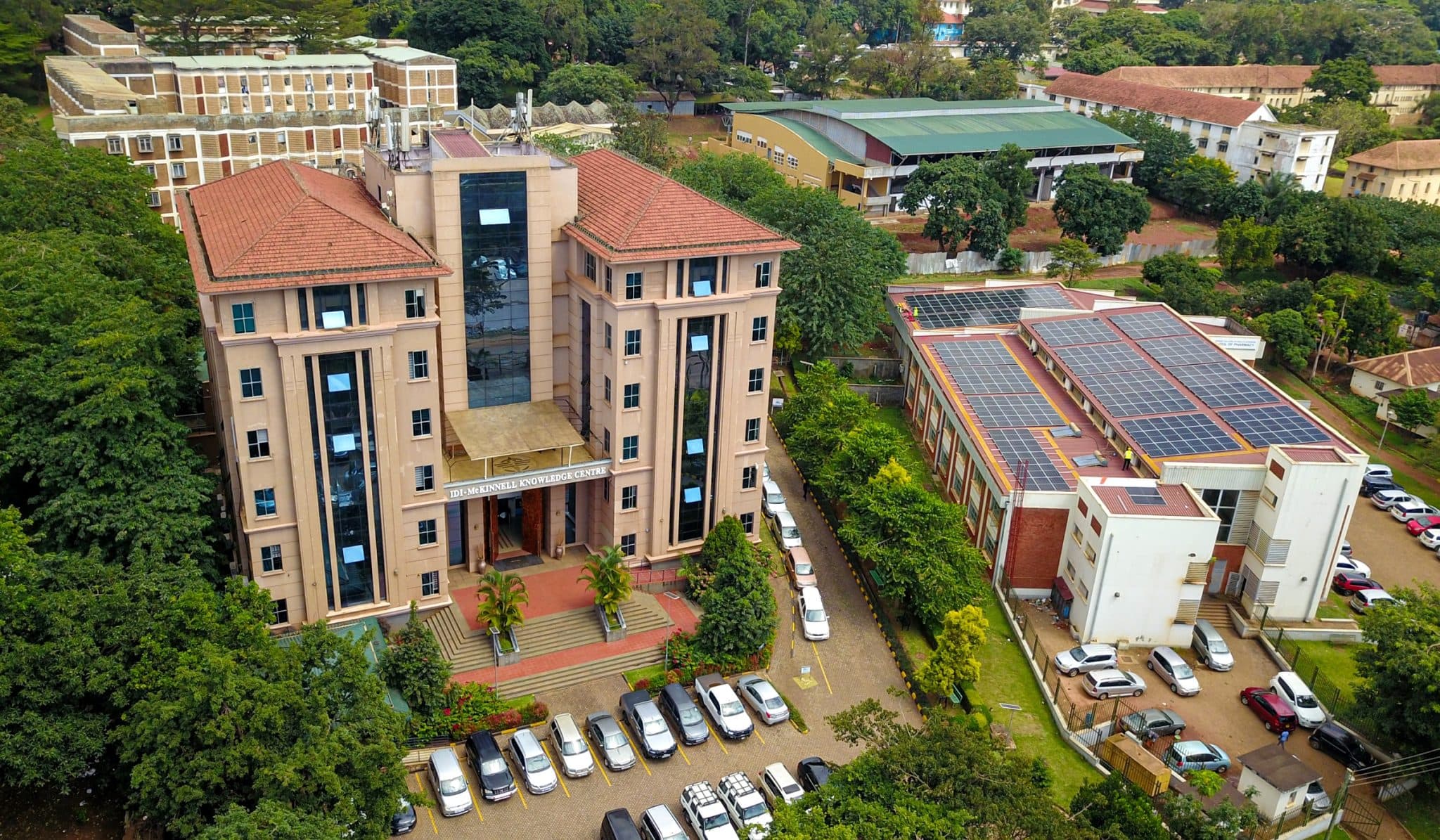
The Infectious Diseases Institute (IDI) at Makerere University has launched a 384kWp solar-powered electricity grid, the largest campus-based solar system in Africa.
The university Vice Chancellor, Prof. Barnabas Nawangwe, inaugurated the system, marking a major step in advancing sustainable research infrastructure and energy access in Uganda, particularly in resource-limited areas.
The launch also featured the unveiling of medical drones designed to deliver life-saving drugs to hard-to-reach areas such as Buvuma and Kalangala Islands. The dual initiative highlights IDI’s drive to fuse technology with public health solutions that deliver tangible results.
Prof. Nawangwe expressed pride in Makerere’s culture of academic excellence and innovation. “Today, I am very proud to be the Vice-Chancellor of Makerere. We continue to shine because of our centres of excellence, like IDI,” he said.
He called for sustained investment in science and technology to combat epidemics, improve health systems, and address Africa’s energy challenges through sustainable options like solar power.
Prof. Samuel Abimerech Luboga, Chair of the IDI Board, thanked the university leadership and applauded the solar project’s environmental and social value. “This project, empowering our campus with renewable energy, demonstrates our commitment to the environmental, social and governance agenda,” he said.
He pledged the Board’s continued oversight to ensure every IDI investment, from solar panels to data labs, drives impact and accountability.
Susan Lamunu Shereni, IDI’s Head of Finance and Administration, reported that IDI has installed solar systems in 150 health facilities across Uganda. “IDI was founded to support Sustainable Development Goal 3, good health and wellbeing, but in doing so, we’ve addressed other SDGs as well,” she said.
She noted the solar system operates even on cloudy days and is expected to save $85,000 annually, achieving a full return on investment within five years. “We will also reduce our carbon footprint by about 25,000 kg,” she added.
The project is valued at $380,000 and strengthens energy reliability in delivering critical healthcare services.
IDI also introduced its Medical Drones Project through its Academy, a partnership between Makerere University and the Ministry of Health. Project coordinator Patrick said the initiative targets hard-to-reach regions like West Nile and Kalangala.
“We’ve been delivering ARVs to Kalangala for nearly four years,” he said, noting a 100% mutation treatment rate in the first 24 months and 95% viral suppression.
The event drew key figures from Uganda’s academic and medical research community, including Dr. Robert Kalyesubula, Dr. Andrew Kambugu, Prof. David Serwadda, and the IDI senior management team.
Together, the solar and drone projects reaffirm IDI’s position as a continental leader in health innovation, merging science, energy, and equity to serve the greater good