
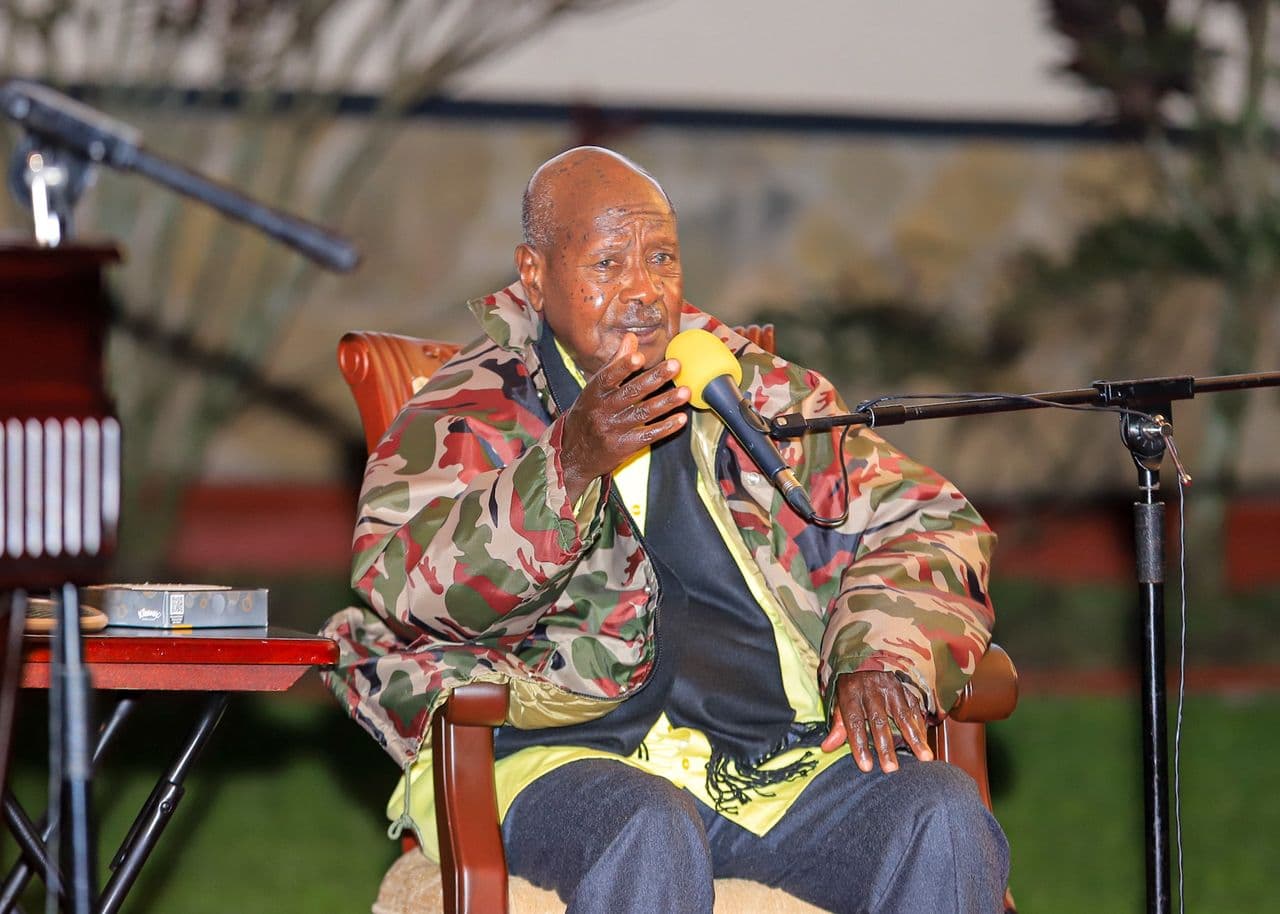
On a quiet Friday night at Arua State Lodge while addressing journalists, President Yoweri Kaguta Museveni leaned back in his chair, reflecting on Uganda’s long journey from war to wealth. “There was no proper political participation ever since independence. Security had collapsed, and so had the economy. As we speak today, all that has been fixed,” he said, his voice calm but firm.
For Museveni, the story of West Nile is one of transformation, from a conflict-scarred corner of Uganda to a region steadily rising on the pillars of peace, infrastructure, education, and economic growth. As the 2026 general elections approach, he is asking the people of West Nile to vote massively for the National Resistance Movement (NRM), a party he says has delivered tangible results and a clear path to prosperity.
From War to Wealth
During his campaign trail across the sub-region, Museveni said he has witnessed a growing appreciation of NRM’s message. In districts like Maracha and Yumbe, the President met residents eager to discuss the Parish Development Model (PDM), youth skilling, and community development.
“In Maracha, we reconnected with the population. They were angry about poor service delivery and nearly mobbed a deputy RDC, but we resolved it. I showed them that I’m on their side and they were satisfied,” he said.
Museveni blamed some of the gaps in service delivery on a weak communication chain between leaders and the citizens. He said many leaders still speak “above the people”, a legacy of colonial-style education and urged them to master the language of the grassroots.
He emphasized that the next phase of development must focus on household wealth creation. “You ask me for roads, hospitals, schools and I have delivered. But now, I ask you to generate income at the homestead level,” he said. “When I return here after 2026, I want to see every family in West Nile earning a stable income.”
Farming and Industrial Growth
Museveni encouraged West Nile residents to diversify agriculture and embrace value addition. He cited cassava as a strategic crop for both food and cash, adding that an industrial park will soon process cassava, coffee, and fish for export.
“Cassava is good for West Nile. It is food, but also has cash value. We’re already using it to make starch and ethanol in Acholi. But I also want to see more coffee, cocoa, dairy, and fish farming here,” he said.
He cautioned against misusing government programs like the PDM, noting that audits were underway to ensure transparency. “If money was stolen, we shall find out,” he warned.
Pan-Africanism for Prosperity
President Museveni also connected local prosperity to broader regional integration. He described Pan-Africanism as both “cleverness” and an economic necessity, especially for border regions like West Nile.
“Pan-Africanism is about market access,” he said. “The Banyankole don’t buy my milk because they have their own. But South Sudan, Congo, and other neighbors are buying from us. That’s why we need the East African Federation.”
He explained that a united regional market would allow Ugandans to trade freely, just as goods move across states in the United States or provinces in China. “Federation means you move goods from Kabale to Arua without taxes. That’s how business grows,” he said.
Priorities and Infrastructure
Asked about upgrading Arua Airfield into an international airport, Museveni said the government must “prioritize among priorities.” For now, he noted, finishing key road networks remains the top focus.
“We shall do the airfield. Even private investors can come in, like they are doing with Kidepo Airport. But for now, the road from Nebbi to Goli to Zombo is the one we must finish first. Because the road means agriculture,” he explained.
He said Uganda’s development plan is designed to ensure that infrastructure directly supports wealth creation and industrial growth.
Security, Education, and the Future
On border security, the President said he had ordered a review of the situation along the South Sudan frontier. He urged leaders to focus on empowering communities instead of debating new administrative boundaries. “Appointments or administrative units are not the issue,” he said. “What is crucial for West Nile is awakening the population to know where wealth comes from.”
Museveni reiterated that the next NRM term (2026–2031) will emphasize science, technology, and ICT without neglecting traditional sectors. “Computers are important, but they are facilitators. You need things to compute,” he said.
He advised young innovators to merge technology with agriculture and industry. “You cannot eat computers. Don’t abandon cassava because you’re excited by the internet. Let’s use ICT to speed up what we already do,” he added.
Vision 2026–2031
Museveni outlined five priorities for West Nile’s next phase of growth:
- Universal Free Education: Ending illegal school fees and ensuring school retention.
- Household Wealth Creation: Supporting families to shift from subsistence to commercial farming.
- Industrial Development: Establishing a value-based industrial park.
- Regional Integration: Promoting trade under the East African Federation.
- ICT and Innovation: Expanding youth skills and digital productivity.
“West Nile has come from war to peace, from isolation to integration. The next step is wealth,” Museveni concluded. “That is why I ask you to vote NRM — not just for what we have done, but for what we are going to do next.”