

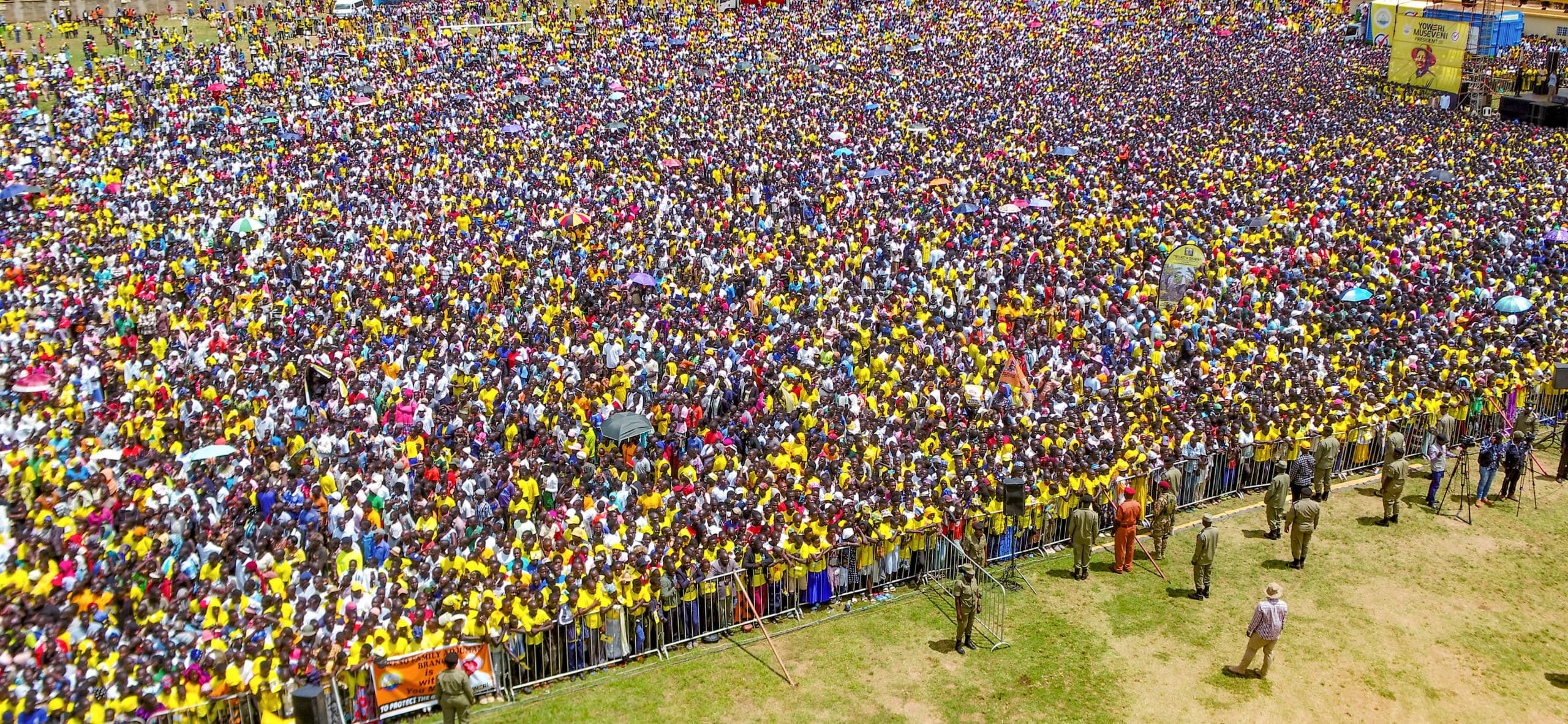
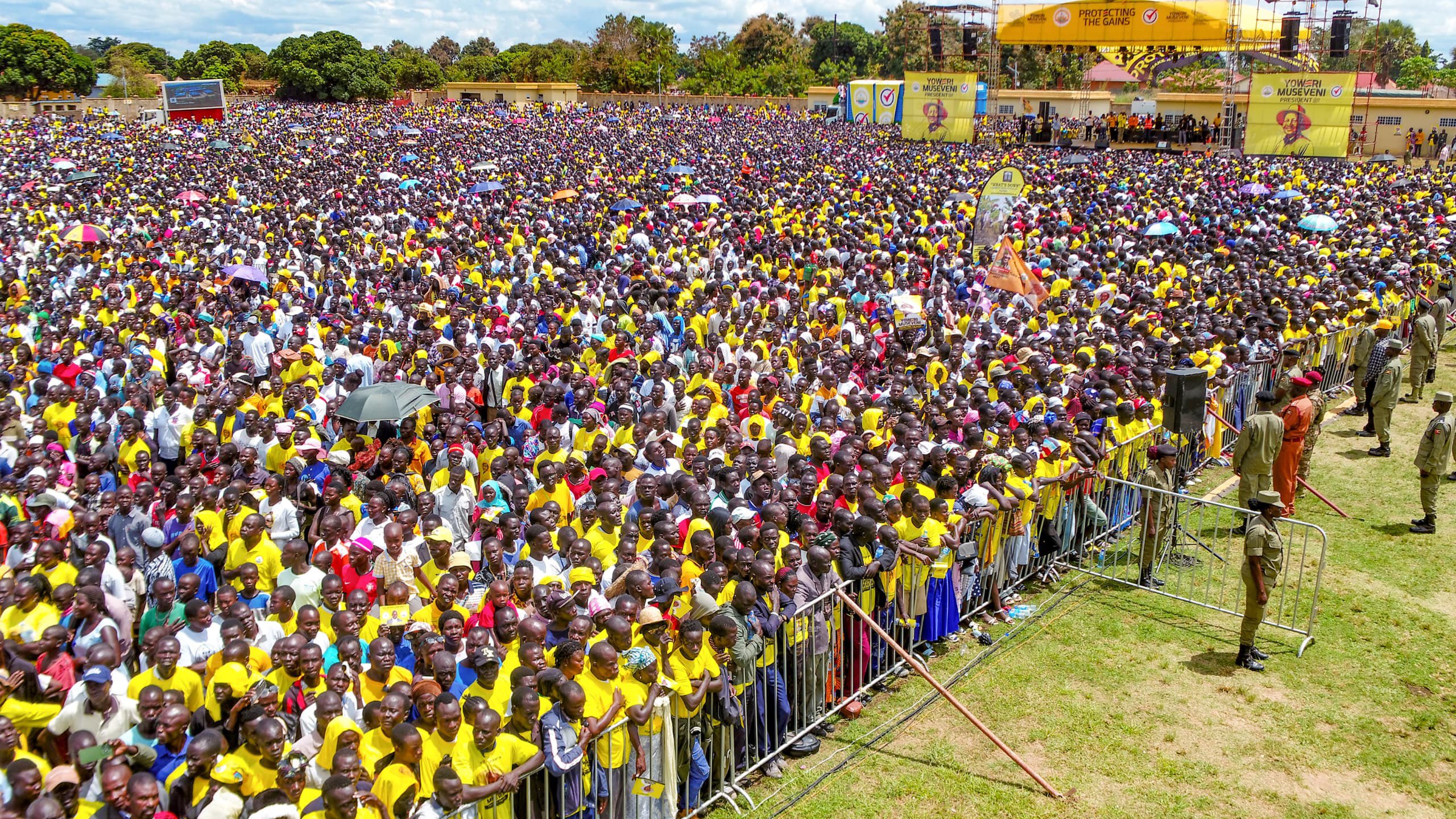
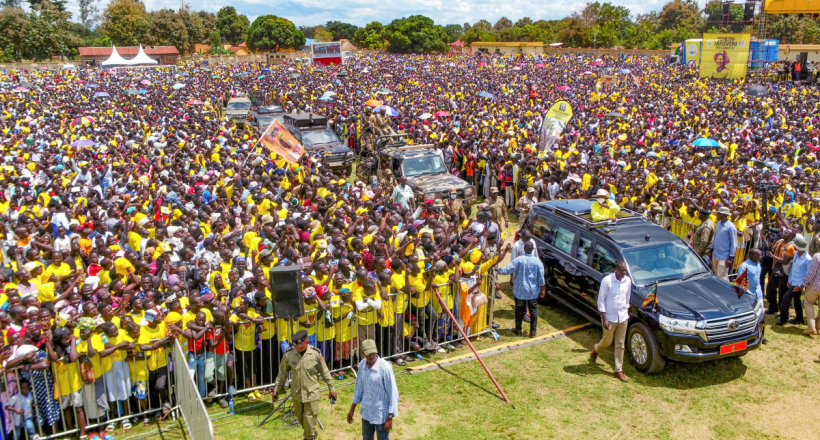
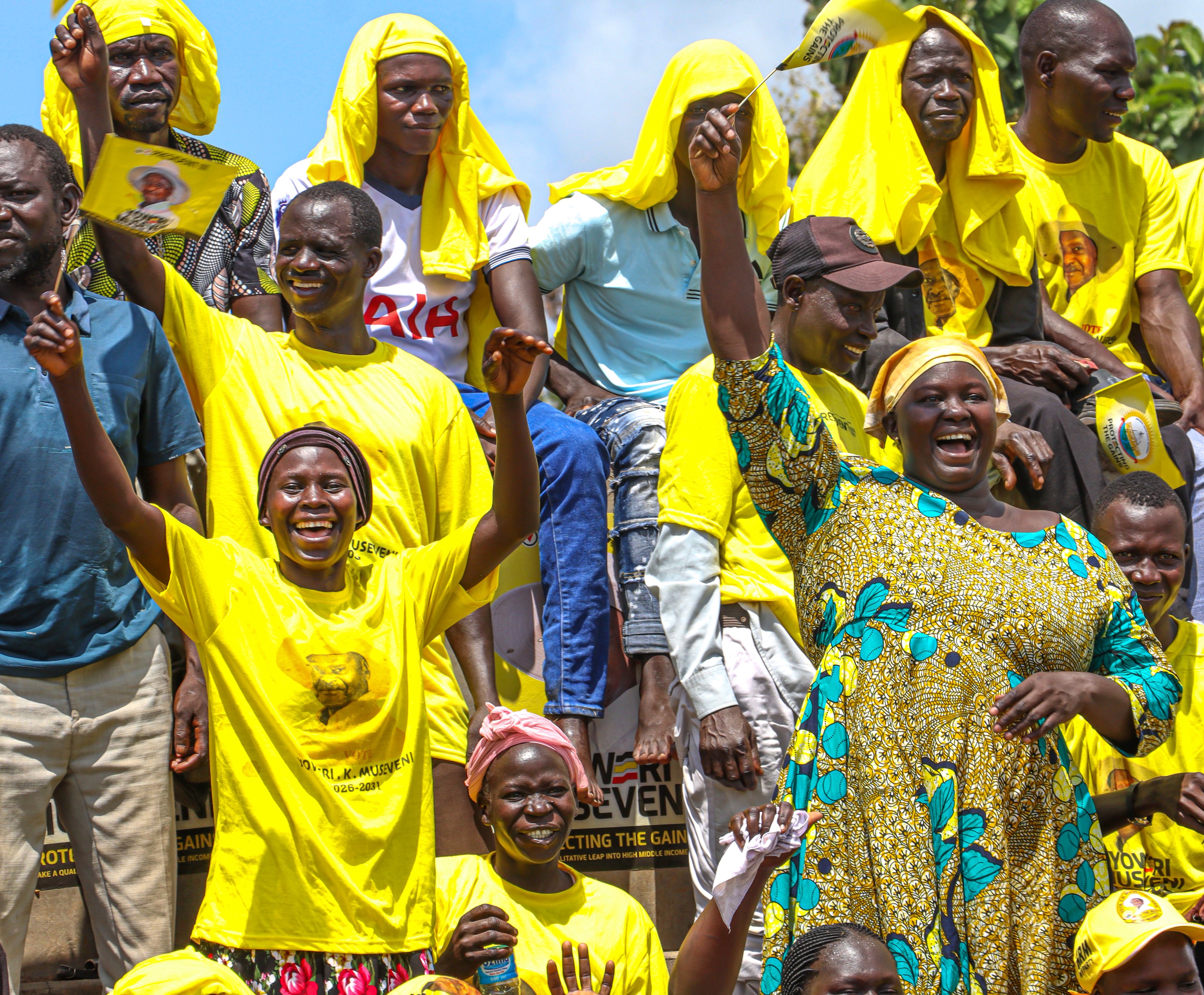
At Paridi Stadium in Adjumani Town Council, a sea of supporters dressed in yellow waved flags and chanted slogans, awaiting President Yoweri Kaguta Museveni’s closing address. The atmosphere was both celebratory and reflective, marking the end of his weeklong campaign rallies across West Nile.
President Museveni, the National Resistance Movement (NRM) Presidential flagbearer, used the Adjumani rally on Monday, October 20, 2025, to make a case for patience and prioritization in national spending. He urged Ugandans, especially public servants, to understand that the country’s transformation depends on consolidating development foundations before increasing salaries.
“We are not against the salaries of public servants. But first of all, peace, the roads, electricity, health, and schools, then we can add on other things,” he said.
His remarks came amid renewed calls from teachers for higher pay, but the President argued that development must be sequenced carefully.
“Is it correct to pay public servants more money when the roads are not done? Is it fair?” he asked, drawing applause from the crowd.
From Sacrifice to Stability
Museveni recalled how the Uganda People’s Defence Forces (UPDF) had endured years of low pay while safeguarding the country, emphasizing that national peace had always been the foundation for prosperity.
“We in the UPDF have been fighting for no pay or low pay for the last 55 years because we could not demand a high salary from our mother, Uganda, when we knew she did not have enough money,” he said.
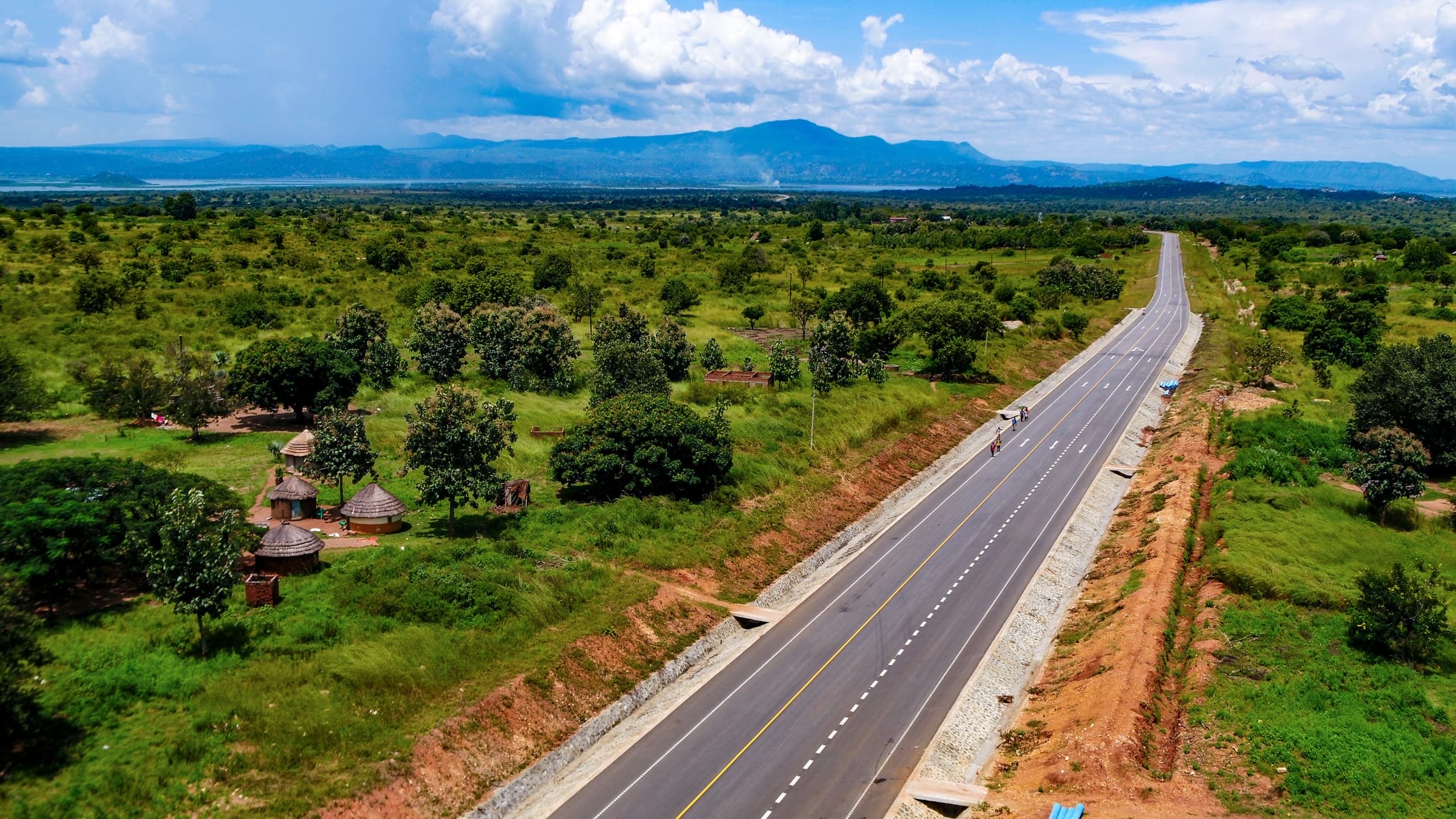
The President said Uganda’s resources must serve everyone through investment in roads, power, schools, and hospitals before luxuries like salary hikes can follow. He cited the poor state of the Pakele, Pabo and Adjumani, Obongi roads as examples needing urgent attention, while highlighting progress on the Gulu, Atiak, Adjumani road network.
“Once we agree on the budgeting, what comes first, things will move. If there’s extra, then we can do other things,” he said.
A Nation Transformed
Reflecting on Uganda’s history, President Museveni described the country’s current peace as “a historic achievement unmatched in over a century.”
“It’s the first time in 100 years that the whole of Uganda is peaceful,” he said, tracing the nation’s troubled past from the Bacwezi dynasty to post-independence conflicts and eventual NRM stability.
He credited the NRM’s ideology of unity and inclusivity, opposing wrong and supporting right regardless of tribe or religion for building strong institutions like the army, judiciary, and police.
“That’s why we can win elections nationally in the first round,” he said.
Building People, Not Just Infrastructure
Turning to social transformation, Museveni noted that Uganda’s growing population was proof of progress.
“In 1969 and 1970, the whole of Madi, which includes Moyo, Adjumani, and Obongi, had only 90,000 people. Now, Adjumani alone has 300,000. Why? Because of immunization,” he said.
He reaffirmed his commitment to free education, warning school heads against charging illegal fees.
“Since 1996, I have been telling you about free education, but some people don’t listen and continue to charge money. That’s why children drop out,” he said.
The President also highlighted vocational training efforts through his Presidential Skilling Hubs, including the Olia Hub in Adjumani.
“I have already sent 50 million shillings to their SACCO per district for those who finished the six-month training,” he said.
He proposed a new initiative to support unemployed university graduates, saying government would create a fund for those jobless beyond two years.
Wealth at the Household Level
Museveni emphasized the need for Ugandans to focus on private wealth creation alongside public development. He pointed to the Parish Development Model (PDM) as the government’s most comprehensive approach to fighting poverty.
“Each year, we shall bring 100 million shillings per parish. In five years, that’s 500 million. If you borrow one million and pay back with a small interest, that money will stay in your parish and grow,” he said.
He also suggested creating funds for local and religious leaders to participate in income-generating activities.
“I’m proposing we add Shs 15 million for parish leaders and start a fund for religious leaders, Muslims, and Christians, so they also engage in wealth creation,” he added.
Oil and the Future
Looking ahead, the President said Uganda’s oil production set to begin next year would further boost development funding.
“The British tried to find our oil from 1920 to 1956 but failed. When NRM came, we discovered it, and it will start flowing next year,” he said.
Voices of Endorsement
The rally drew senior NRM figures who praised Museveni’s leadership and the massive turnout in Adjumani.
NRM Secretary General Richard Todwong described the President as “a symbol of stability and progress,” saying, “In President Museveni, we vote for hope, stability, good health, and the future of our children.”
Hamson Obua, NRM Vice Chairperson for Northern Uganda, likened the people’s gratitude to the biblical leper who returned to thank Jesus.
“The turnout today shows that West Nile has come to say thank you for the peace and transformation you brought,” Obua said.
Adjumani District NRM Chairperson, Akuku Charles, pledged full support for the President’s re-election.
“Your Excellency, the people of Adjumani are fully behind you,” he said. “We ask for more tractors to increase land under cultivation and improve our livelihoods.”
A Call for Steadfastness
President Museveni’s final message was one of unity and patience, a reminder that peace and steady progress are the cornerstones of prosperity.
“We must agree on priorities,” he said. “Let’s build the roads, power, schools, and hospitals first, then the rest will follow.”