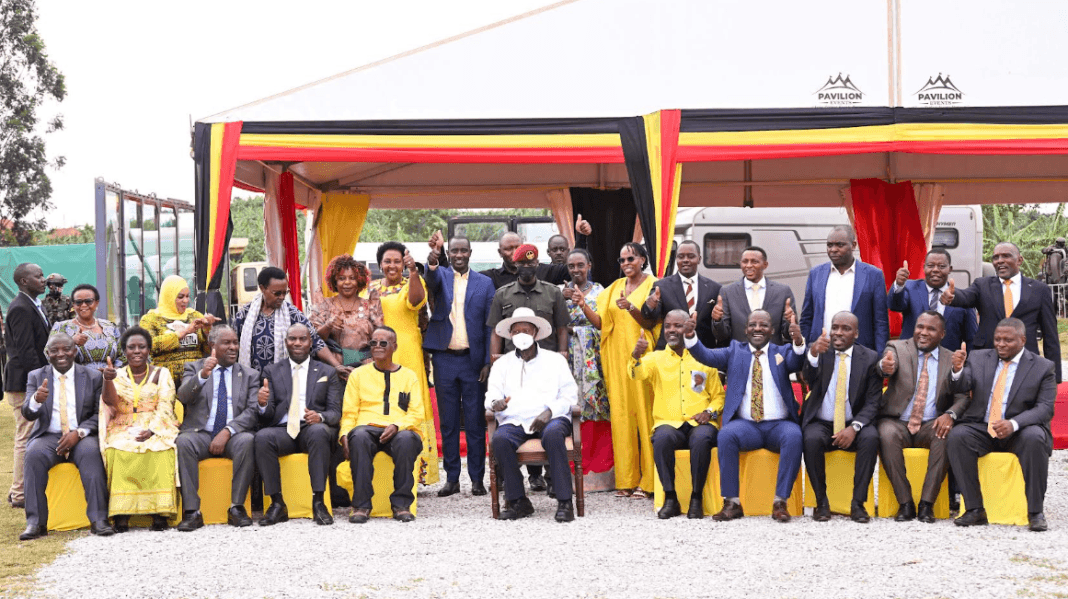
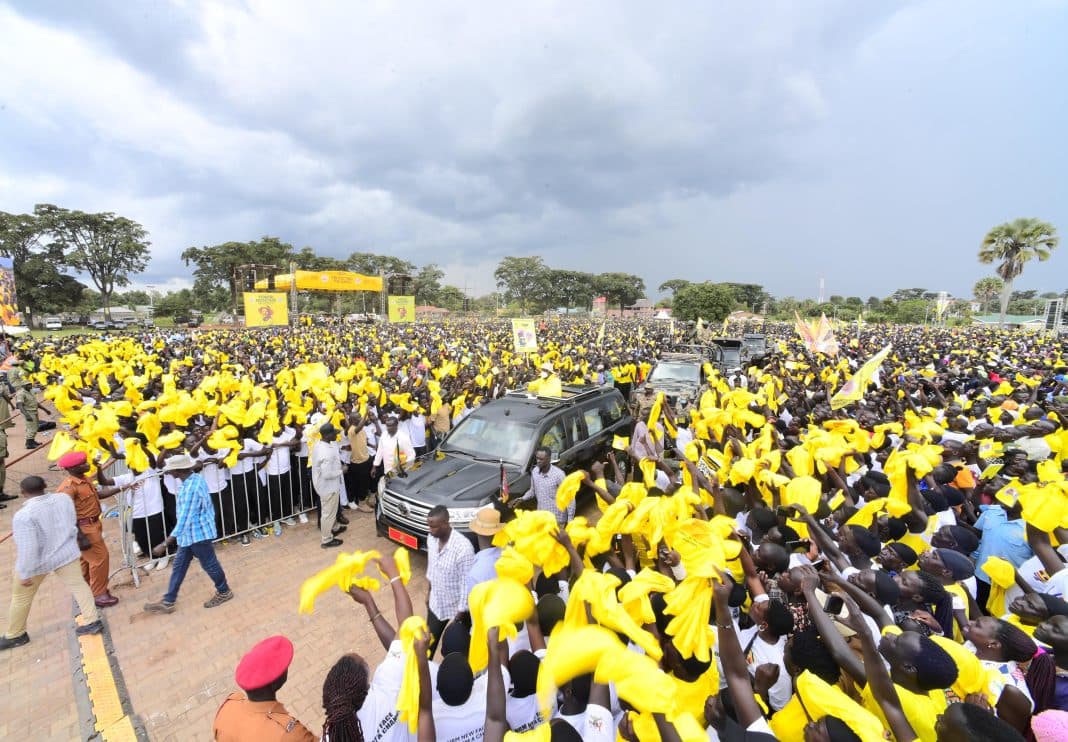
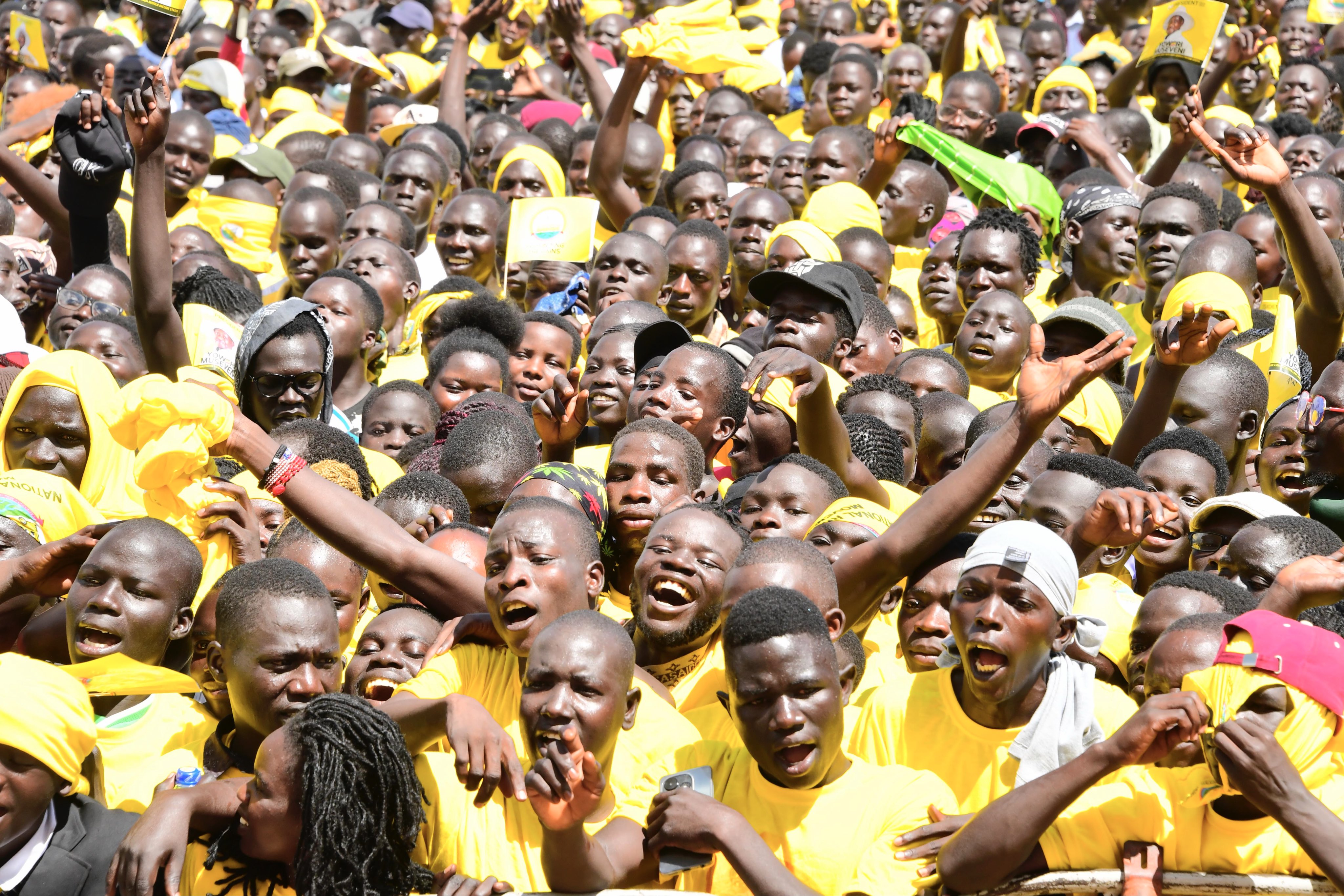
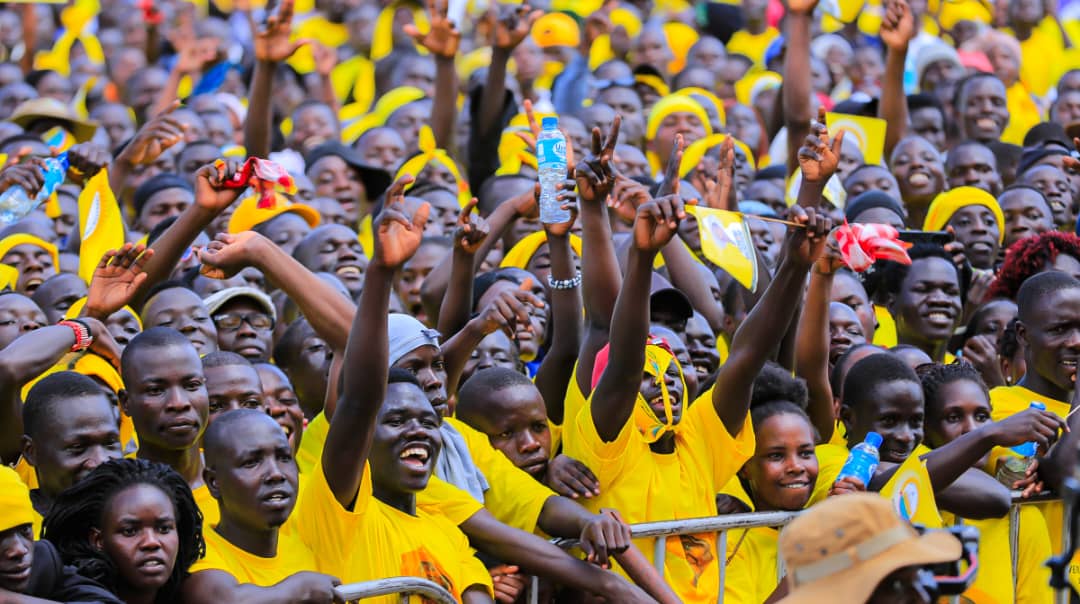
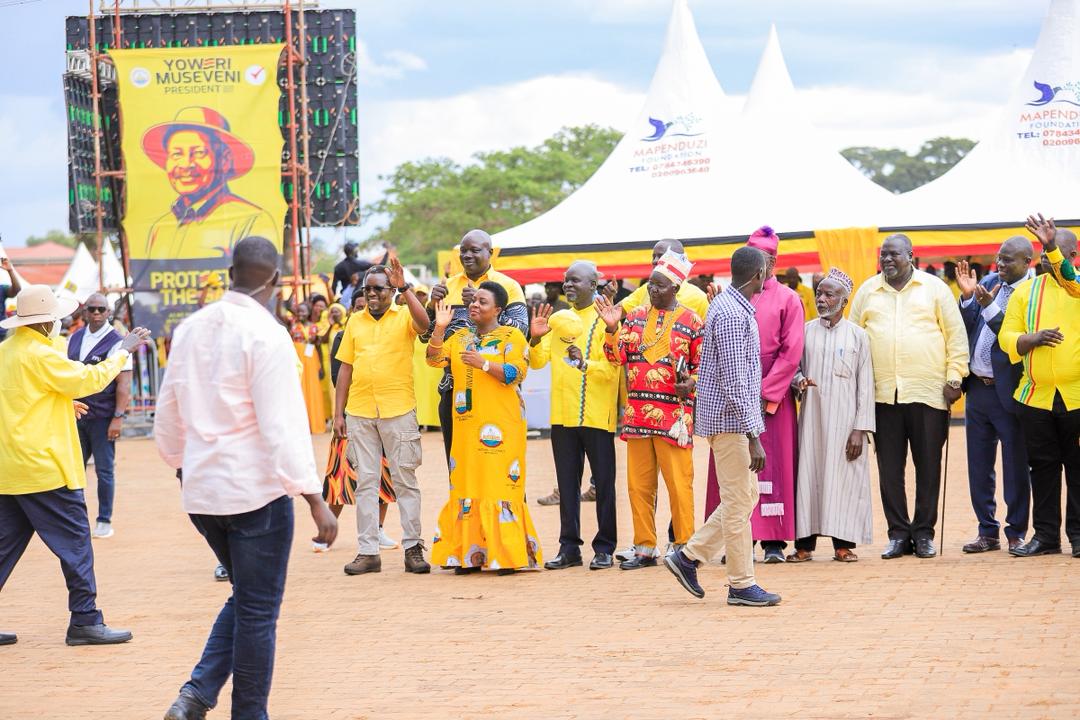
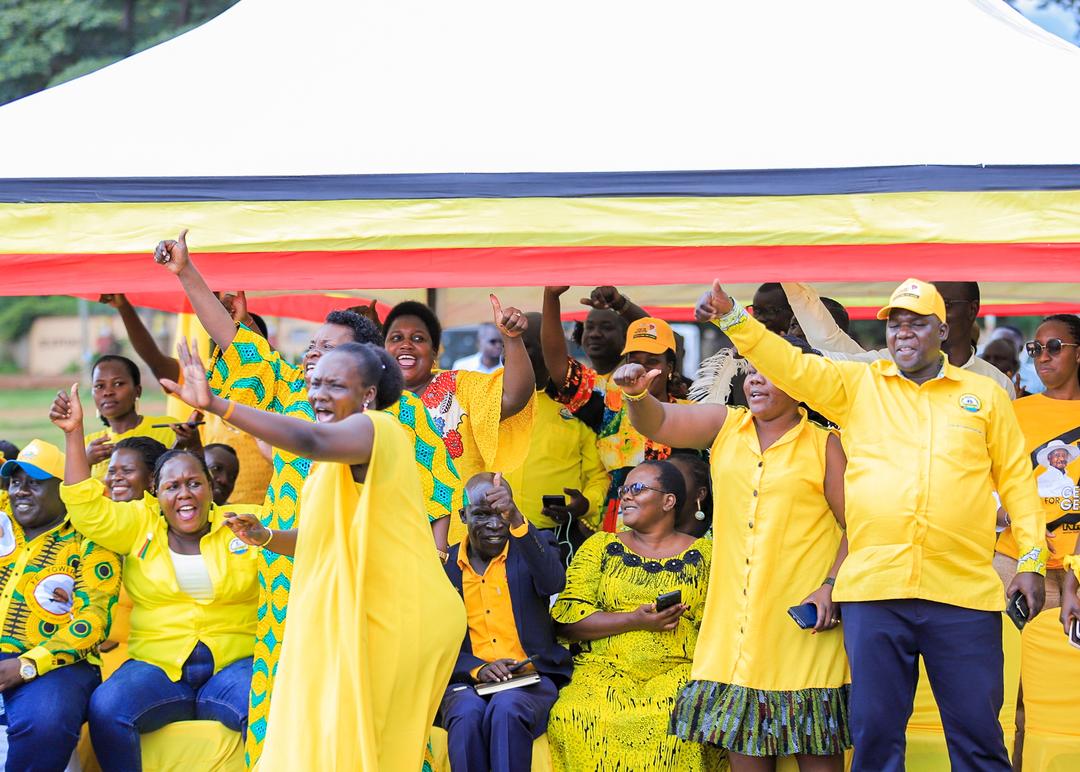
As dawn broke over Gulu City, the usually calm Kaunda Grounds turned into a sea of yellow as thousands of residents gathered to welcome President Yoweri Kaguta Museveni. The air was thick with excitement. Songs, drums and chants of “NRM oyee!” echoed through the crowd as the President, the National Resistance Movement (NRM) presidential flag bearer, took to the stage.
Standing before the jubilant supporters, President Museveni began with warmth and gratitude, reflecting on the country’s transformation from decades of instability to sustained peace.
“Uganda was at war for a long time, but now NRM has been able to achieve peace, supported by you. It was not accidental that we achieved this peace, it’s because of the unity of politics and building strong national institutions like the army,” he said.
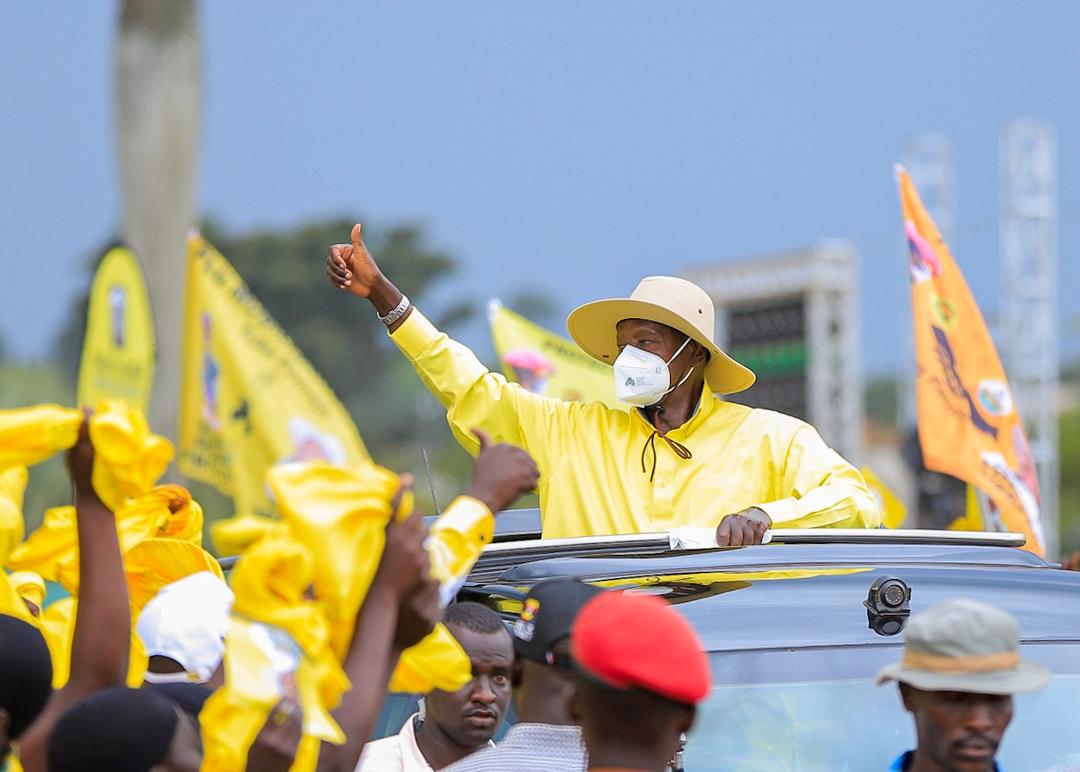
The President emphasized that peace remains the bedrock of Uganda’s progress and a prerequisite for all development. “Without peace, nothing else can stand, not schools, not hospitals, not businesses,” he said, urging residents to safeguard the gains made under the NRM government.
Museveni detailed how government investments in infrastructure continue to open up opportunities across the Acholi sub-region. “We have worked on roads like Kampala to Gulu, Karuma to West Nile, and Olwiyo to Kitgum and beyond. We are also going to work on the roads connecting Awere-Corner Kilak to Patongo,” he said.
He explained that electricity, telecommunications, piped water and railways form the economic backbone of Uganda’s growth, while schools and hospitals represent the country’s social infrastructure. “Both must move together for development to be complete,” he noted.
Turning to wealth creation, the President urged citizens to embrace modern production methods and government programs that target poverty reduction. “Our people work a lot but in the traditional way and they get little because they do things which are outdated. We must get out of poverty by listening to our programs of utilizing small land and differentiating between development and wealth,” he said.
Museveni reaffirmed the government’s commitment to continue supporting initiatives like NAADS, Operation Wealth Creation, Entandikwa and the Parish Development Model (PDM). “All the money we have been spending was to help you get out of poverty. We are going to continue those programs,” he said.
He outlined practical measures to strengthen livelihoods, including fish farming and livestock restocking. “In the coming government, we are going to emphasize fish farming at the edge of swamps, instead of putting it in the center, so that water can also be used for irrigation. Now, as part of wealth creation, the areas of Teso, Lango, and Acholi had cows destroyed by wars. We directed that each homestead receives five cows, and that position has been agreed on,” he said.
Addressing youth unemployment, Museveni challenged the perception that jobs only exist within government. “When people talk about jobs, jobs come from wealth. If we don’t create wealth, you can’t create jobs. Government jobs are very few, about 480,000 but factory jobs alone now employ 1.3 million people,” he said.
He also emphasized regional integration as vital for industrial growth. “Uganda produces over 5 million tonnes of maize a year but consumes only one million. Without the East African market, our maize industry would collapse. That’s why NRM emphasizes regional integration for economic purposes,” he noted.
Gulu City NRM Chairperson, Gifter Aber, praised the President for championing women’s empowerment and inclusive development. “We appreciate Your Excellency for giving us women opportunities to contest and for accepting the free education policy in the region,” she said. “The modern market in Gulu City has transformed local trade, while expanded health centers and schools are ensuring that citizens access essential services.”
Aber outlined tangible progress made under government programs. Gulu District has received Shs 14.4 billion through the Parish Development Model, benefiting over 14,000 households, while Gulu City received Shs 9.8 billion, reaching nearly 10,000 households. Across both areas, 54 Emyooga SACCOs with over 41,000 members have accessed Shs 2.1 billion to boost community savings and enterprises.
She further noted improvements in education and healthcare. Gulu now has 88 government primary schools, 12 secondary schools, and a strengthened health system anchored by Gulu Regional Referral Hospital, which boasts an ICU, CT scan, and two oxygen plants. “Eighty-seven percent of villages in Gulu District now have access to safe water, with irrigation schemes supporting farmers against climate shocks,” she added.
Aber said these achievements reflect the NRM government’s commitment to rebuilding the north through peace, infrastructure, and empowerment.
The rally, held under the theme “Protecting the Gains, Making a Qualitative Leap into High Middle Income Status,” drew Members of Parliament, NRM Central Executive Committee members, religious and cultural leaders and thousands of supporters, all united by a shared vision of continuity and progress.