

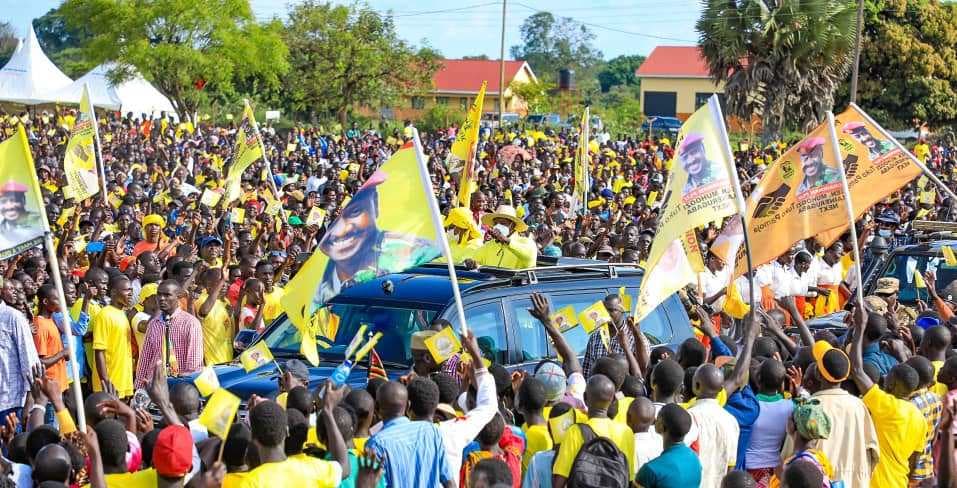
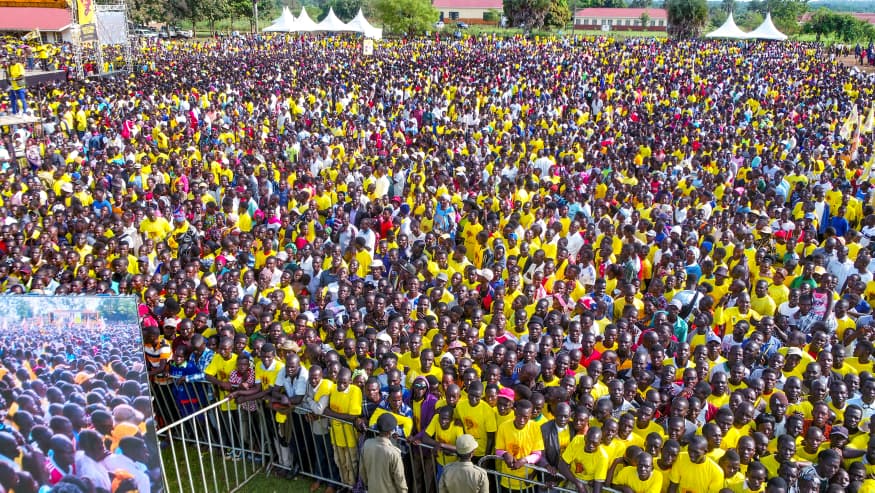
At Kalaki Primary School grounds, thousands of residents from across the Teso subregion gathered chanting “Museveni oyee!” But amid the excitement of campaign songs and speeches, one message stood out, a call to value Uganda’s peace and democracy as rare global treasures.
First Lady and Minister of Education and Sports, Maama Janet Kataaha Museveni, told the jubilant crowd that Uganda’s democracy has become one of the most peaceful and orderly systems in the world.
“There is no place like Uganda on earth,” she said. “There are no people who do elections in peace and calm like Ugandans do. We must thank God for using this President and the NRM government to build such a strong foundation, and we should never take it for granted.”
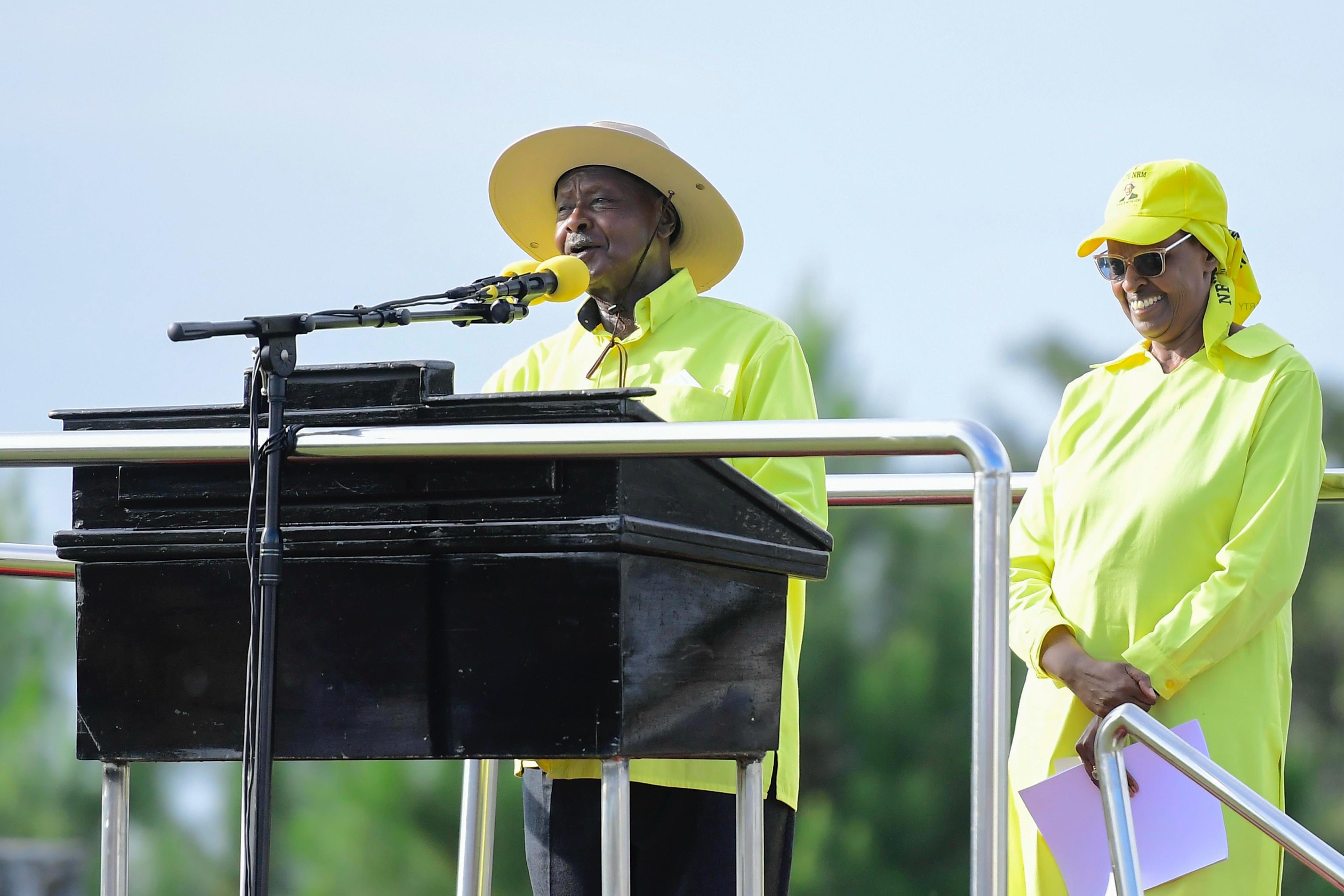
She credited the country’s long stretch of peace and unity to President Yoweri Kaguta Museveni’s leadership and the National Resistance Movement (NRM) government, saying these have laid a foundation upon which national prosperity continues to grow.
“Because of this foundation, Uganda has enjoyed peace, unity, and stability,” she said. “Every adult has the responsibility to protect this peace and development. When the time comes, I urge you to vote for this President and the entire NRM team so that Uganda continues to walk in peace and build a proud homeland for generations to come.”
Building Prosperity on Peace
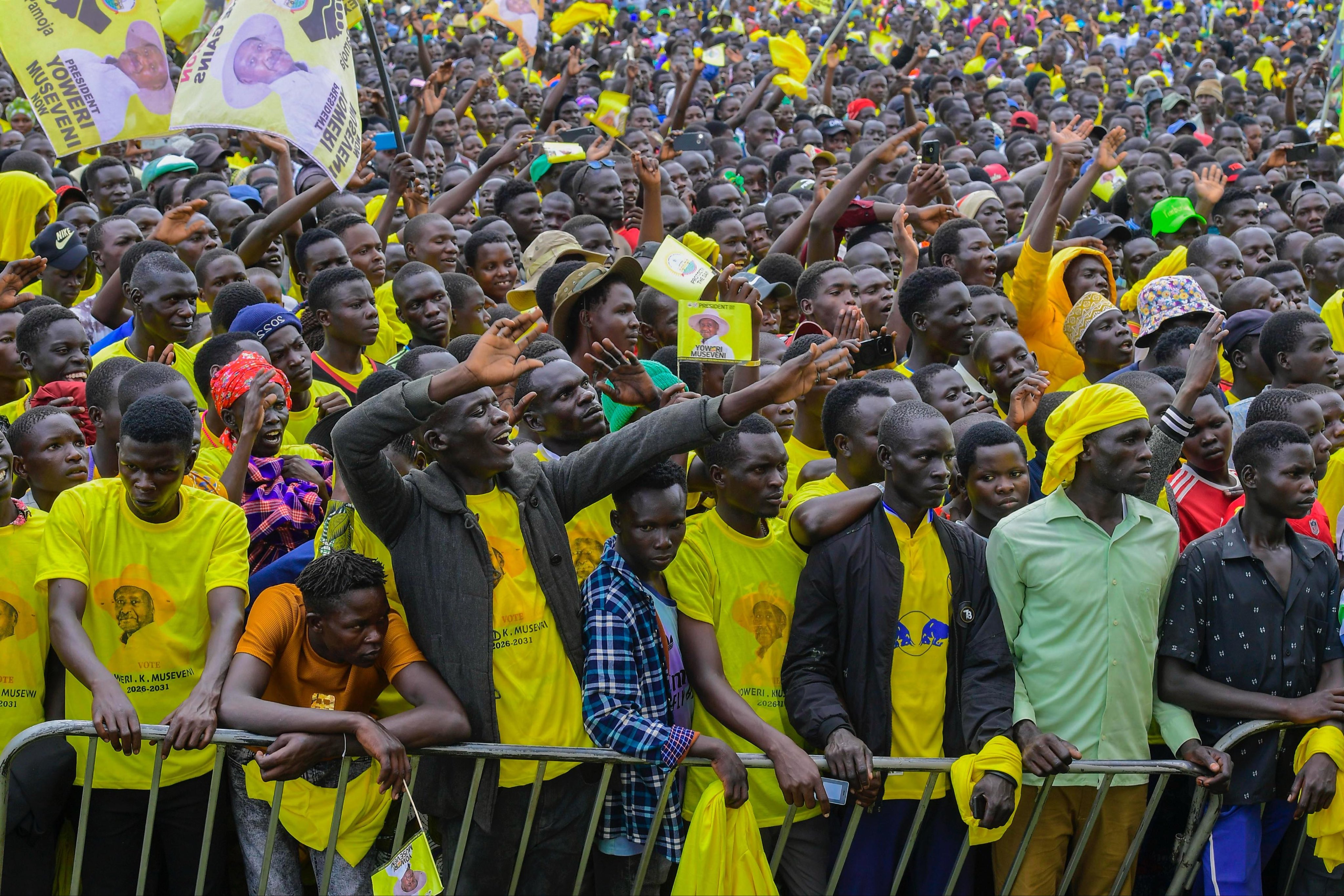
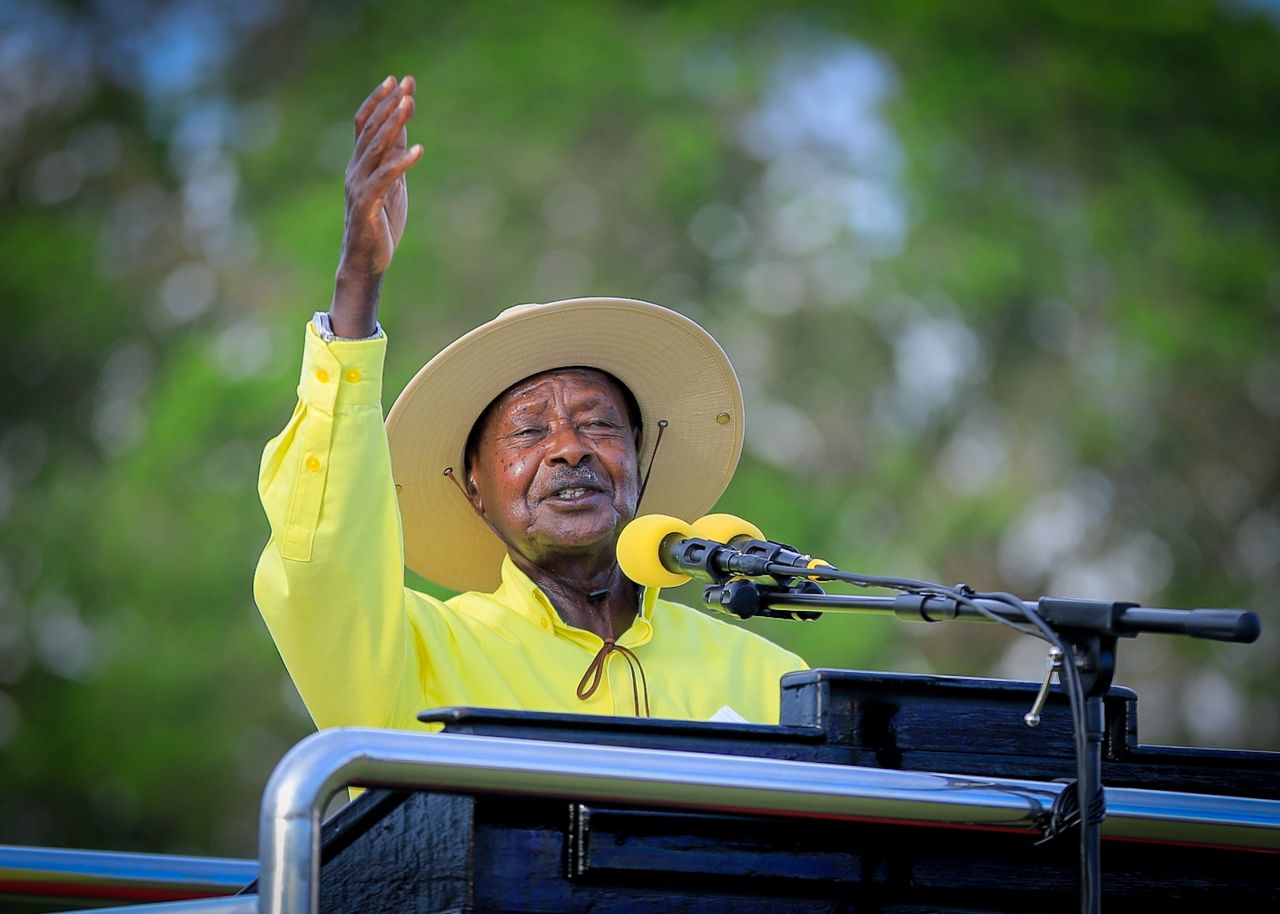
When he rose to speak, President Museveni placed his message firmly on the NRM’s long-standing philosophy of peace first, then prosperity. He told supporters that the NRM’s 2026–2031 Manifesto focuses on peace, infrastructure, and wealth creation, which remain the pillars of Uganda’s socio-economic transformation.
“Peace is the first and greatest contribution of the NRM to Uganda,” Museveni said. “For many years, this region and other parts of the country suffered under rebels and cattle rustlers. But that is now history. The peace we have today is for the whole of Uganda.”
He praised the people of Teso for their courage during times of conflict, particularly the Arrow Boys who joined forces with the army to restore stability. The President said their sacrifices made it possible for development to reach Kalaki and beyond.
From Words to Work
Museveni emphasized that prosperity cannot come from speeches alone but from productivity and discipline.
“When we brought peace, it was not an end in itself,” he explained. “Peace was to allow our people to work, produce, and develop. Stop working for only the stomach, work for the pocket.”
The President said no region will be left behind in Uganda’s “qualitative leap” to middle-income status. He urged citizens, especially public servants, to perform their duties diligently.
“When you are given work by government, you are doing it for yourself, your family, and for those who will come after you,” he said. “Let us continue building our shared inheritance, Uganda, our homeland.”
Development at Work in Teso
Museveni outlined several ongoing infrastructure and service delivery projects in Teso. Funding has already been secured for the Katine–Ochero road, with plans to extend it to Amolatar and Dokolo. The Soroti–Amuria–Obalanga–Otuke–Abim road continues to enhance connectivity, while the Buyende–Kagwara–Kaberamaido ferry is operational, awaiting new landing sites.
On social services, the President said water access in Kalaki District now stands at 80.8 percent, while neighboring Kaberamaido District boasts 91 percent coverage. He also announced the Lake Kyoga Multi-Purpose Groundwater Flow and Water Supply Project (Phase One) to expand clean water and irrigation.
Museveni acknowledged ongoing concerns about electricity reliability in Teso and pledged to investigate the aging transmission lines responsible for power fluctuations. He also cautioned against shoddy construction in government projects, saying poor supervision denies future generations a better Uganda.
“This homeland is the only one we have,” he said. “If we don’t work properly, we are cheating ourselves and those who will come after us.”
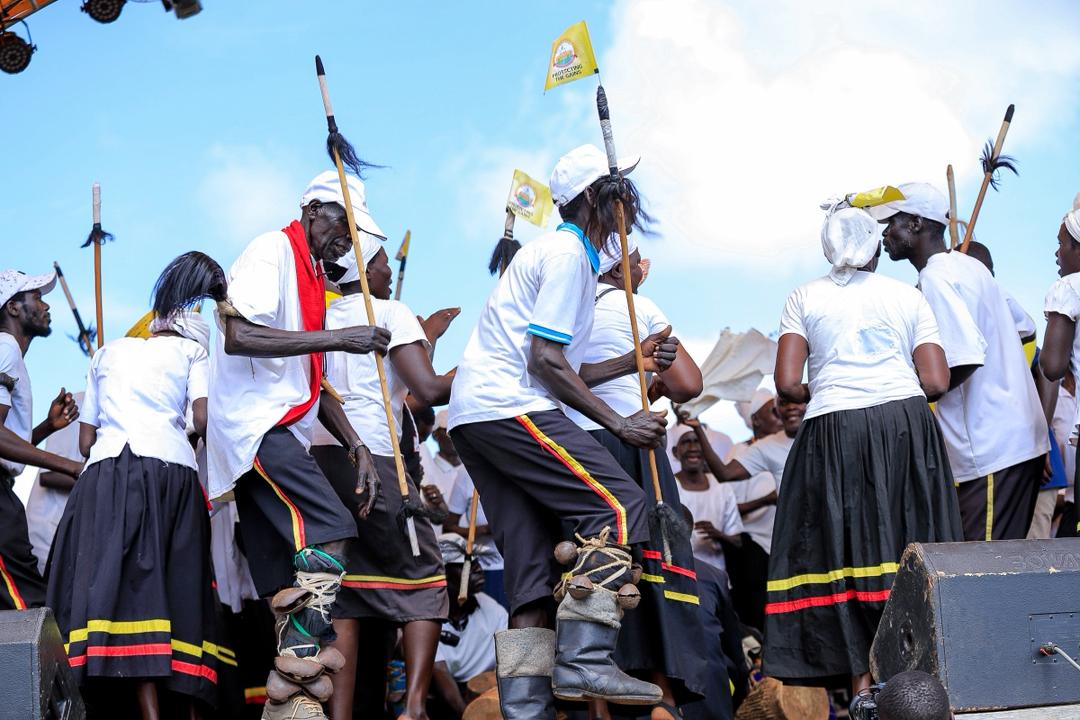
As the rally ended, chants of “Eyalama noi!” swept through the crowd, a mix of gratitude and resolve. For many in Kalaki, the day was more than a campaign stop; it was a reminder of how far Uganda has come, and how peace, once elusive, has become the heartbeat of its democracy.