


The Diocese of Kigezi has partnered with the National Agricultural Research Organization (NARO) to launch an ambitious Hass Avocado Program aimed at transforming the Kigezi region’s economy by making Hass avocado its leading cash crop by 2035.
The program, unveiled in Kabale, seeks to boost household incomes and promote sustainable farming across the six districts of Kabale, Kisoro, Kanungu, Rubanda, Rukiga, and Rukungiri.
According to the Diocesan Secretary, Kigezi has long lacked a unifying cash crop, a factor that has slowed household income growth and limited the region’s economic potential.
“This partnership will help us mobilize farmers, institutions, and communities to embrace Hass avocado as a source of sustainable income and food security,” he said. “It is an initiative that benefits everyone, regardless of faith or background.”
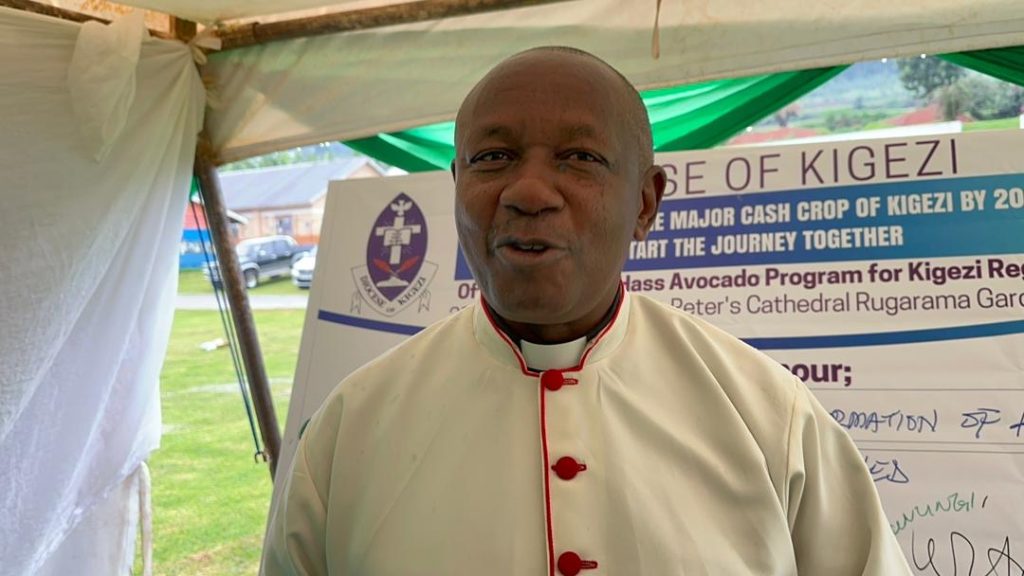
Under the program, the Diocese will mobilize households, churches, and commercial farmers to plant at least 150,000 Hass avocado seedlings annually, with a target of one million mature trees by 2035.
Dr. Rolland Agaba, Director of Research at NARO, described the initiative as a game-changer for Kigezi’s economy, which remains one of Uganda’s poorest regions after Karamoja.
“A farmer with one acre of 128 Hass avocado trees can earn about UGX 18 million within four years, and between UGX 150 million and UGX 200 million after six to eight years if well managed,” Dr. Agaba explained.

He added that Hass avocado is a high-value, climate-smart crop that enhances both economic resilience and environmental conservation by protecting soil and supporting reforestation.
District leaders across Kigezi welcomed the program, commending the Diocese for taking a practical approach to improving livelihoods and promoting agribusiness.
Major General Sabiiti Mutebile, an early adopter of Hass avocado farming, applauded the initiative but cautioned farmers about emerging challenges.
“We must deal with fake seedlings and theft of produce,” he said, urging authorities to regulate the sector and protect farmers from exploitation.
The Diocese pledged to collaborate with local leaders, agricultural experts, and security agencies to ensure that the program succeeds and benefits all farmers in the region.
“This is not just a farming project, it is an economic transformation agenda for Kigezi,” the Diocesan Secretary emphasized.