

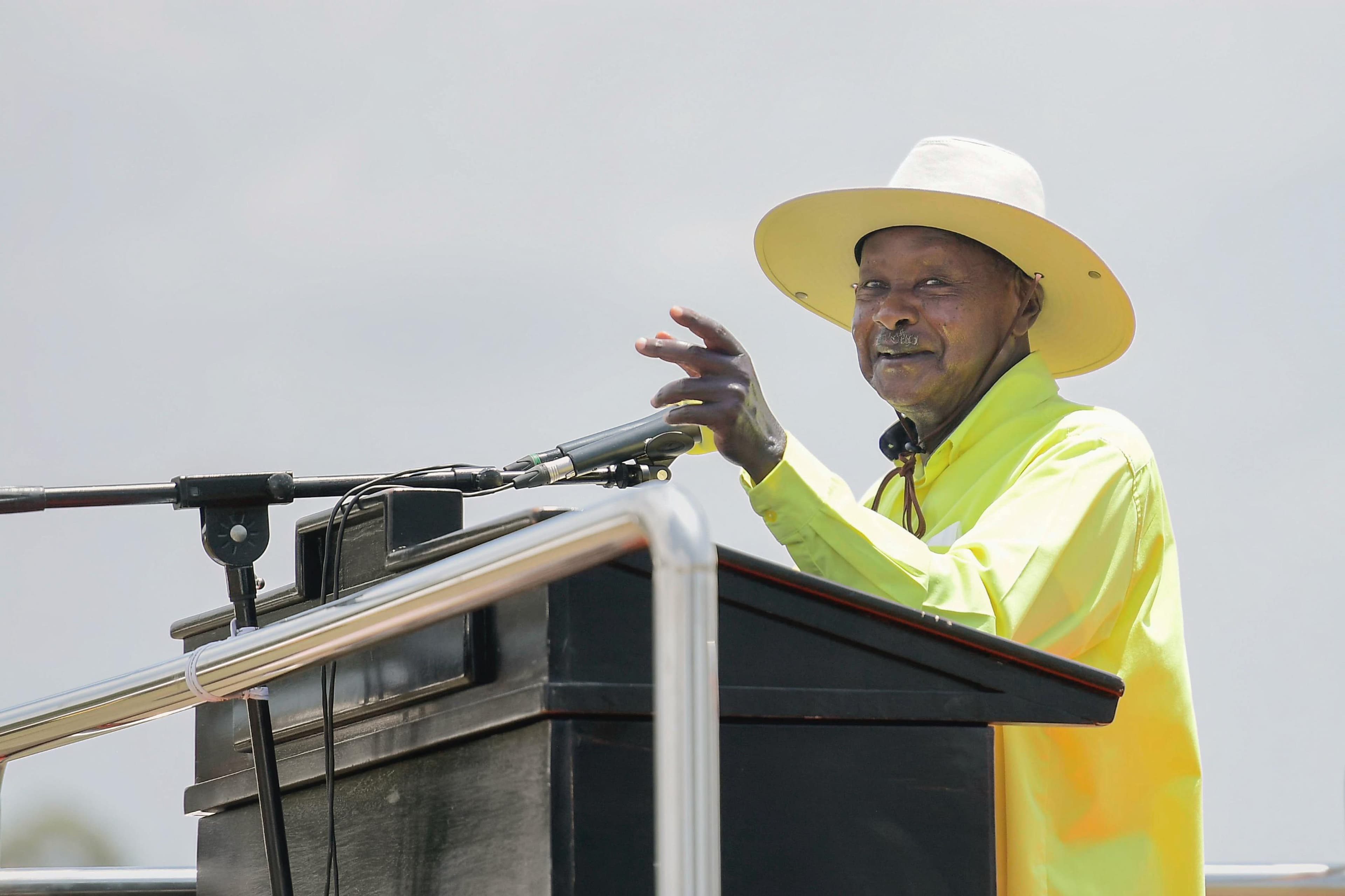
As the Manafwa hills were casting the afternoon shadows, President Yoweri Kaguta Museveni stood before thousands of supporters at Bugobero High School, his voice steady but reflective. “I thank God for saving me and others in 1973 when Amin’s soldiers surrounded us,” he began, recalling the night when two of his comrades were killed in Mwambe’s house. “I survived by His grace.”
That near death moment, he said, shaped his lifelong mission to build a Uganda anchored on peace, unity, and development. Decades later, those ideals now define the National Resistance Movement (NRM), whose legacy he came to recount as he campaigned in Manafwa District on his second stop in the Bugisu Sub-region.
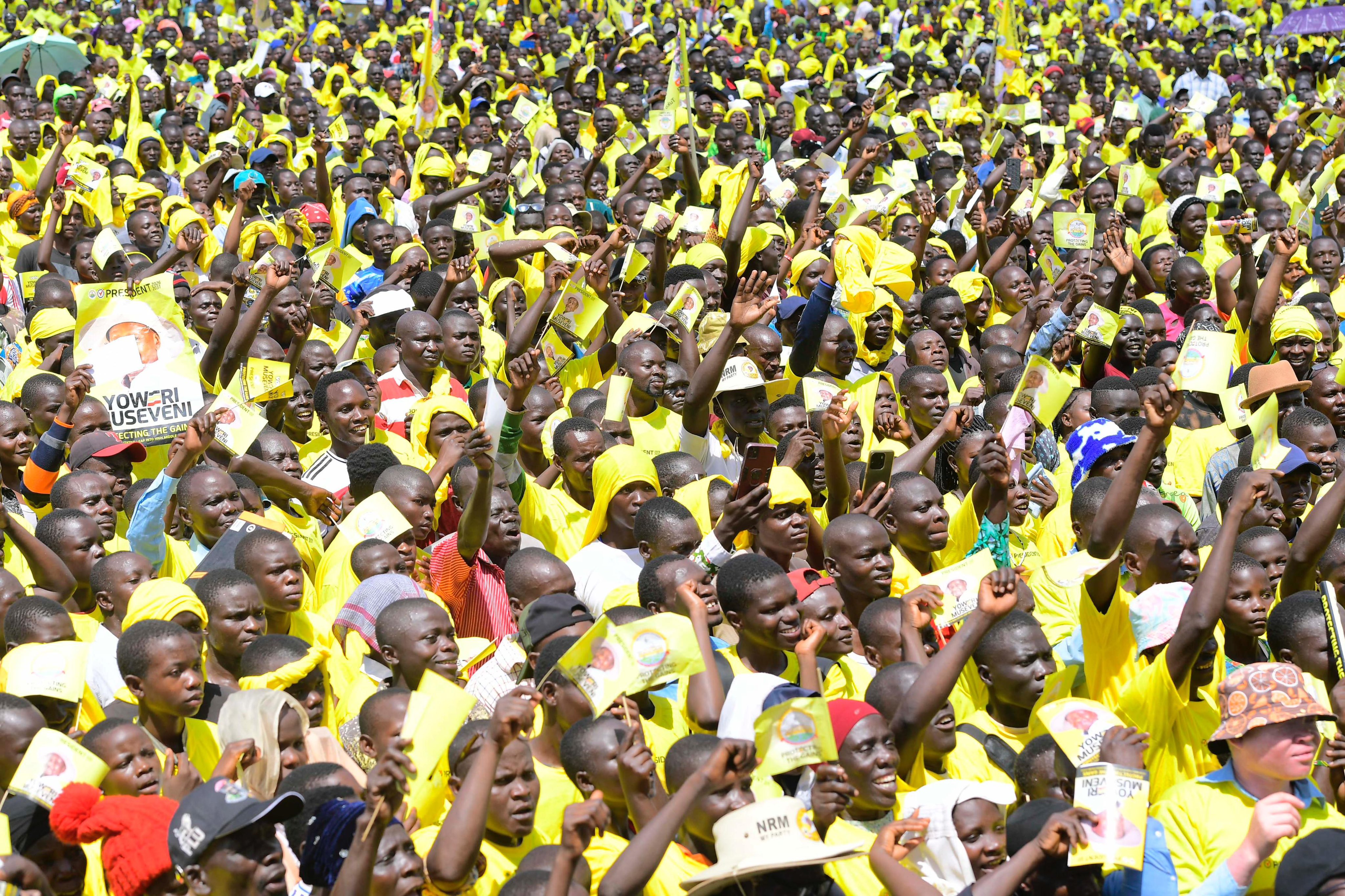
Addressing supporters waving yellow flags, Museveni presented the NRM manifesto for 2026–2031, summarizing what he called “the seven major contributions the Movement has made to Uganda since 1986.”
“That peace you hear people talking about was not easy to bring,” Museveni said. “We achieved it because we rejected the politics of tribes and religion. When we recruit for the army or police, we do not ask about tribe or religion, that is why Uganda is stable.”
Building Peace and Infrastructure
Museveni emphasized that peace remains the NRM’s greatest achievement, the foundation upon which all other progress stands. From there, he moved to what he called the second pillar: development. He said Uganda’s growth story lies in its expanding economic and social infrastructure, good roads, electricity, schools, and hospitals.
In Manafwa, Museveni said, access to safe water now stands at 96%, with 1,262 out of 1,309 villages covered. “Only 47 villages remain,” he noted, adding that new piped water systems in Bubwaya, Majali, Lwakhakha, and Butiru have transformed daily life for thousands.
He pledged continued investment in water projects, including the 76% complete Manafwa Town Council Water Supply System.
Expanding Education Access
On education, Museveni said Manafwa has 61 government primary schools and 10 government secondary schools, with plans to ensure every parish has a primary school and every sub-county a secondary school. Six new Seed Secondary Schools are under construction to close the gap.
He also revisited his long-standing fight for free education.
“We started free education in 1996, but head teachers have been sabotaging it,” he said. “That is why I introduced skilling hubs to show that free education is possible.”
He added that the Presidential Skilling Initiative is empowering youth with practical trades like tailoring, bakery, and carpentry, turning school dropouts into entrepreneurs.
Improving Healthcare
Regarding healthcare, Museveni acknowledged the challenges Manafwa faces, noting that the district has only two Health Centre IVs and four Health Centre IIIs. Government, he said, plans to construct new health centres in underserved sub-counties such as Buwangani, Buwaya, Bukoma, and Sibanga, while upgrading Ikaali Health Centre II to Health Centre III.
Ongoing projects include the completion of staff houses at Bukewa HCIII and renovation of the outpatient department at Ikaali HCII. “We are committed to improving immunization, equipping all health units, and building more staff houses,” he said.
Focusing on Wealth and Jobs
Turning to the economy, Museveni told residents that roads alone do not end poverty. “You people here in Bugobero have a good tarmac road, but you do not sleep on tarmac,” he said to laughter. “When you return home, the poverty you left in the morning is still there. That is why development must go hand-in-hand with wealth creation.”
He urged residents to adopt the four-acre model of commercial agriculture, growing coffee, fruits, and rearing livestock for income. “Jobs come from wealth creation and industrialization, not from government offices,” he emphasized.
Museveni also announced plans for the establishment of the Manafwa Industrial Park, saying the area’s rich mineral deposits including vermiculite and iron ore will attract investors and create employment for the youth.
A Message of Continuity
Museveni closed his speech with five words that, he said, sum up the NRM’s legacy and vision for the next five years: “Peace, development, wealth, jobs, and free education.”
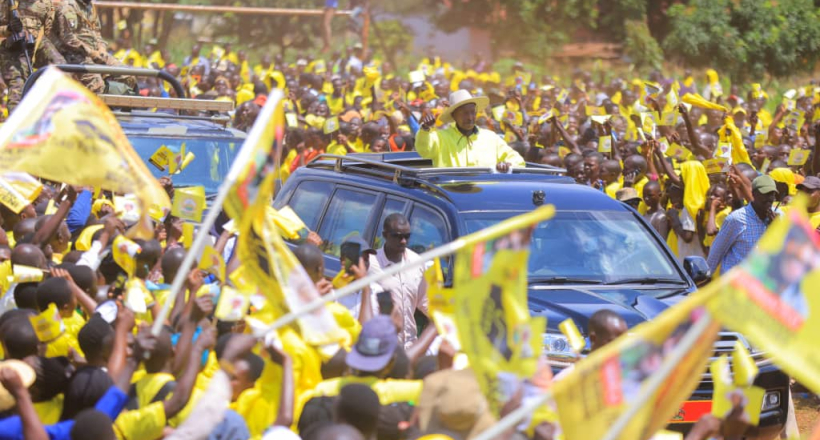
As the crowd roared in approval, the President waved his trademark hat, promising to return with more results than rhetoric. For the people of Manafwa, it was both a reminder of the journey taken and a pledge for what lies ahead.