
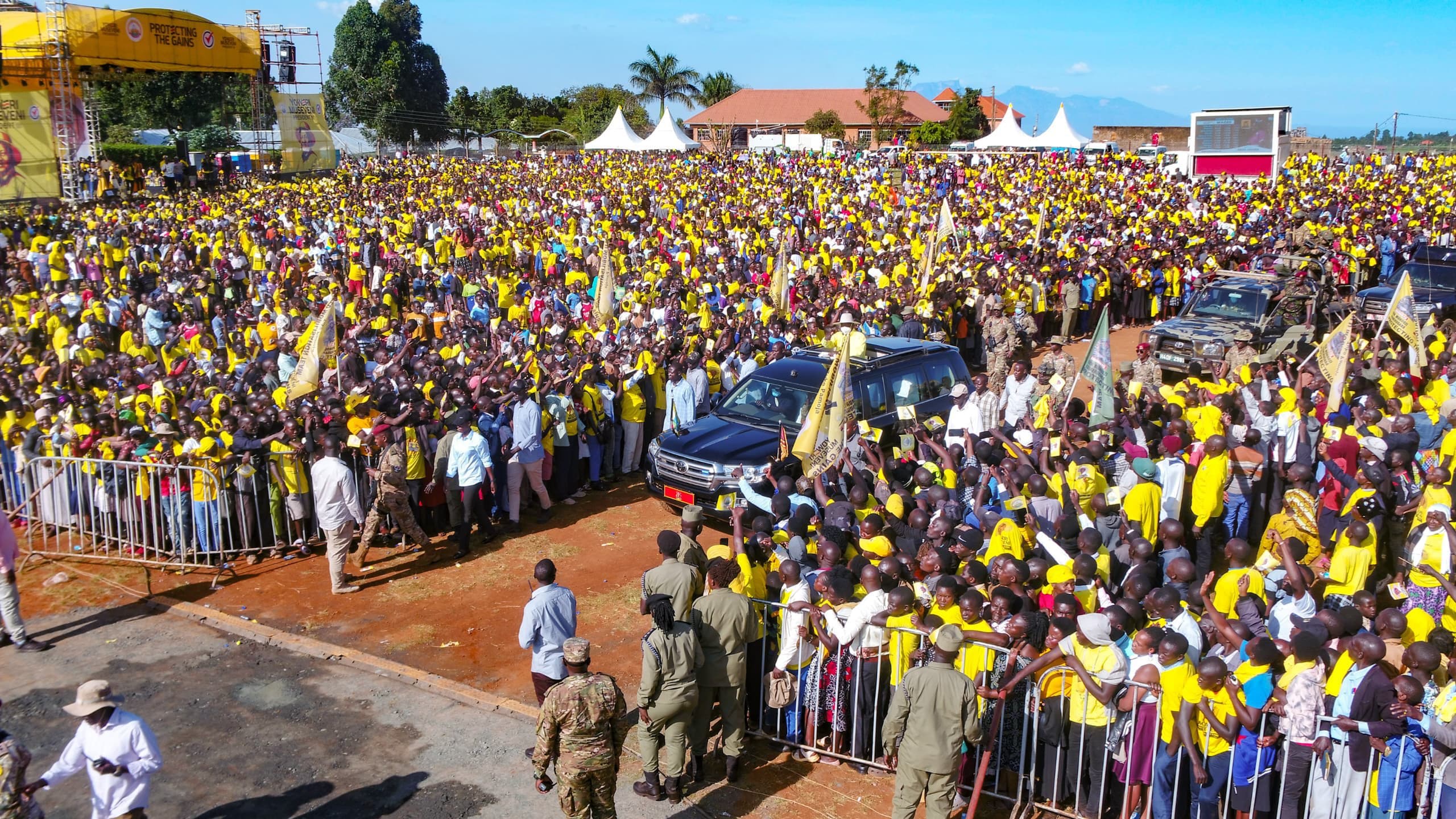
As the mist lifted over the rolling hills of Sebei, President Yoweri Kaguta Museveni addressed a gathering of journalists and local leaders, as he drew parallels between Sebei’s breathtaking landscape and Uganda’s development journey.
“This land is blessed with altitude, climate, and scenery,” he said. “These are not decorations; they are resources. Like organs of the human body, if you interfere with one, you interfere with life itself. That’s why we must protect this environment and use it wisely.”
From that environmental reflection, the President transitioned seamlessly into a message of continuity, urging the people of Sebei Sub-region to stand firmly with the National Resistance Movement (NRM), which he described as the most reliable engine for Uganda’s progress over the past four decades.
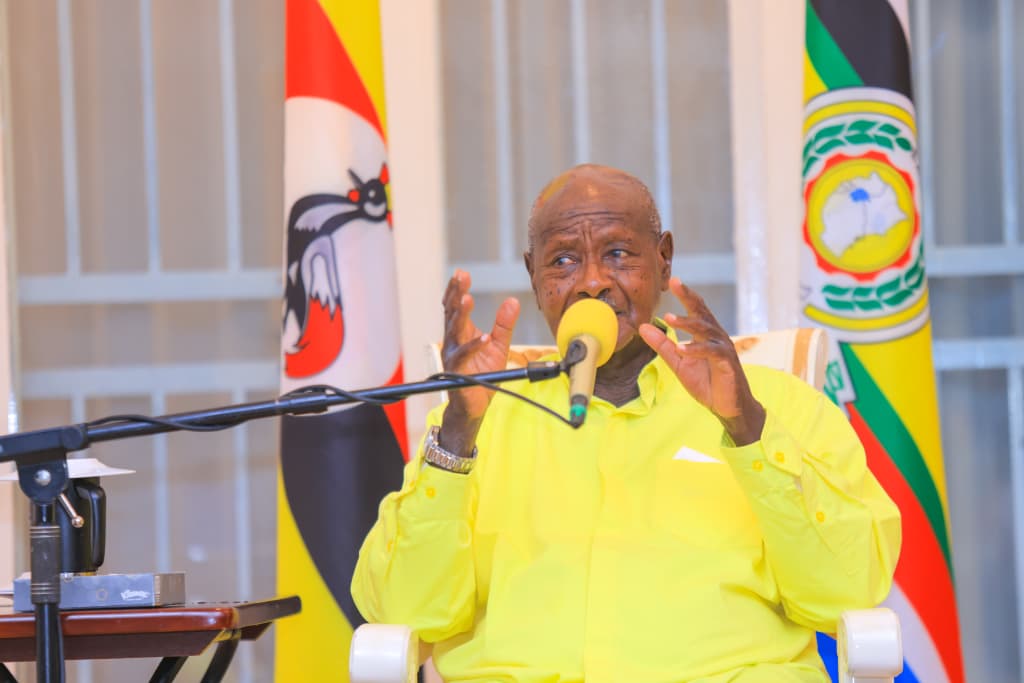
Speaking during an interaction with journalists from the sub-region on Tuesday night, Museveni outlined seven major achievements of the NRM since 1986: peace, development, wealth creation, job generation, service delivery, expansion of markets, and regional political integration.
Peace and Stability as the Foundation
Museveni described peace as the most enduring legacy of the NRM, crediting it for enabling every other aspect of Uganda’s transformation. “Peace is not by accident. It comes because we believe in patriotism and love for Uganda,” he said.
He cited the successful disarmament of Karamoja, where more than 41,000 illegal guns were recovered, as proof of the government’s commitment to security and stability. “Our unity and functioning institutions especially the army are products of ideological clarity,” he added.
Development and Infrastructure
The President noted that under NRM leadership, Sebei and other regions have benefited from major infrastructure expansion, including roads, electricity, and schools.
“Kapchorwa was not connected. Electricity used to stop in Mbale. There was no tarmac road. Now you can see the change,” he said. “Such progress was impossible before the NRM took power.”
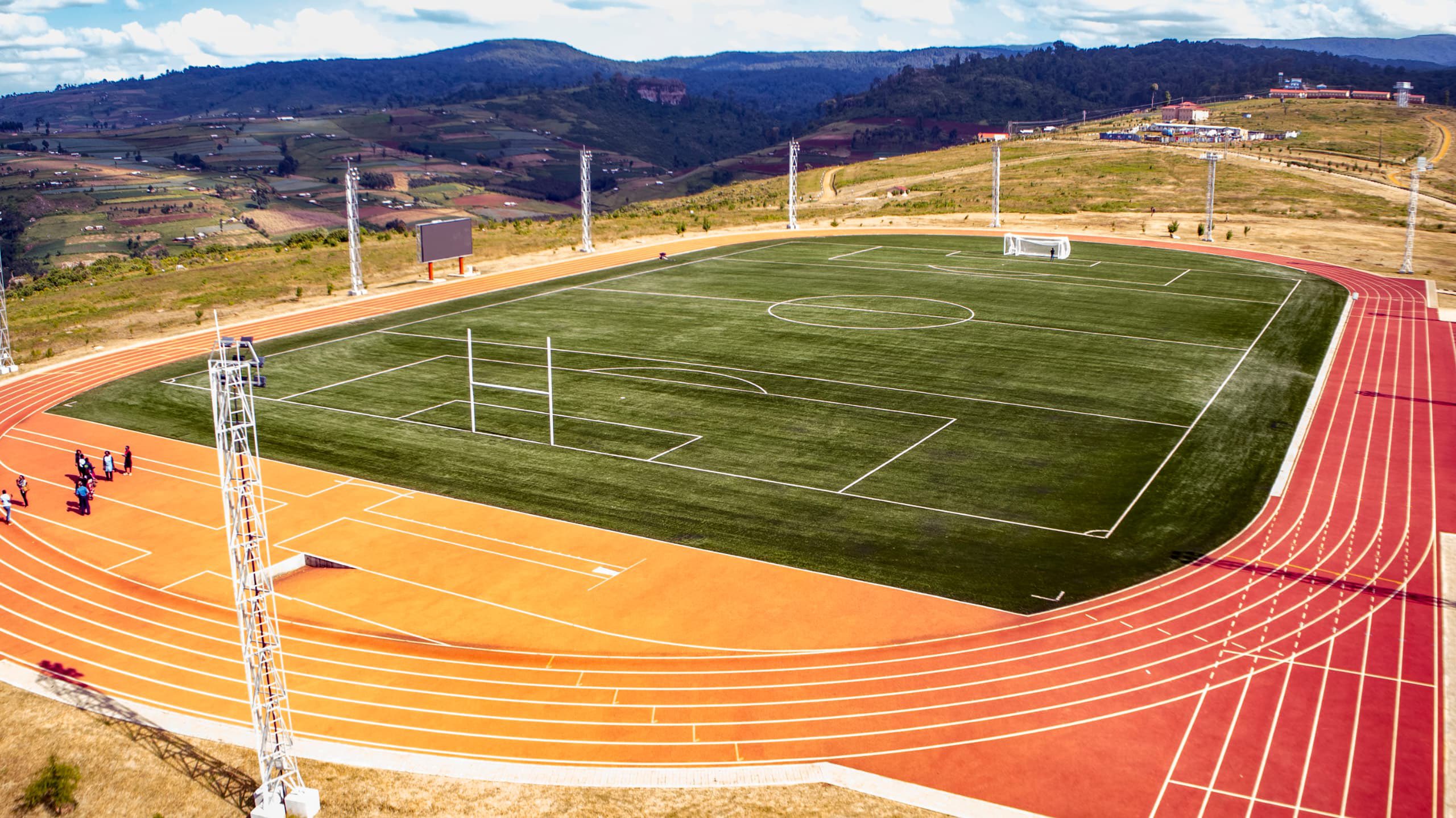
He pointed to the Teryet National High Altitude Training Centre as an example of government projects that not only attract athletes but also stimulate investment in hotels, transport, and services. “Our role is to create the enabling environment; the private sector’s role is to take advantage of it,” he said.
Wealth Creation and Economic Transformation
Museveni reminded Ugandans that lasting development begins with wealth creation at the household level. He drew on Uganda’s pre-colonial past to illustrate his point.
“Before Europeans came, everyone had a miyoga, a productive skill like blacksmithing or carpentry,” he said. “There was no unemployment. Unemployment is a colonial phenomenon.”
He cautioned against overreliance on foreign aid or non-productive sectors. “If people have no purchasing power, there’s no tax revenue. Wealth is the most dynamic part of development,” Museveni said, calling for greater focus on productivity in agriculture, manufacturing, and trade.
Jobs in the Modern Economy
Museveni said job creation depends on expanding commercial agriculture, services, and ICT, not government payrolls. “Government jobs are only 480,000, yet the population is 50 million,” he said. “The rest must come from production.”
Education, Health, and Service Delivery
The President emphasized that the NRM’s philosophy has always been “education for all, not education for some.” He cited Universal Primary Education and health reforms as proof of the government’s commitment to equal opportunity.
He added that the government is exploring national health insurance and other models to make essential services more accessible.
Expanding Markets and Regional Integration
Museveni said Uganda’s growing production capacity demands a broader market. “Now that we produce sugar, milk, and cement in surplus, the internal market is not enough. We need the regional and African market,” he said.
He underscored the importance of East African regional integration, saying Uganda’s prosperity is tied to continental unity.
Political Federation for Africa’s Future
Reiterating his long-held vision, Museveni said Africa’s survival in a globalized world depends on political federation. “Even Mwalimu Nyerere and Tom Mboya said this before. Africa must unite or remain weak,” he said.
He credited the NRM’s ideology-driven leadership for steering Uganda through challenges that crippled other post-colonial states. “Our party has logic, a mission, and a history. That’s why we have succeeded where others failed,” he added.
As the evening settled over Sebei’s peaks, Museveni’s message was both a reflection and a rallying call. “Please, continue supporting the NRM so we can move forward together,” he said, his voice echoing across the highlands where peace, progress, and promise continue to define Uganda’s path.