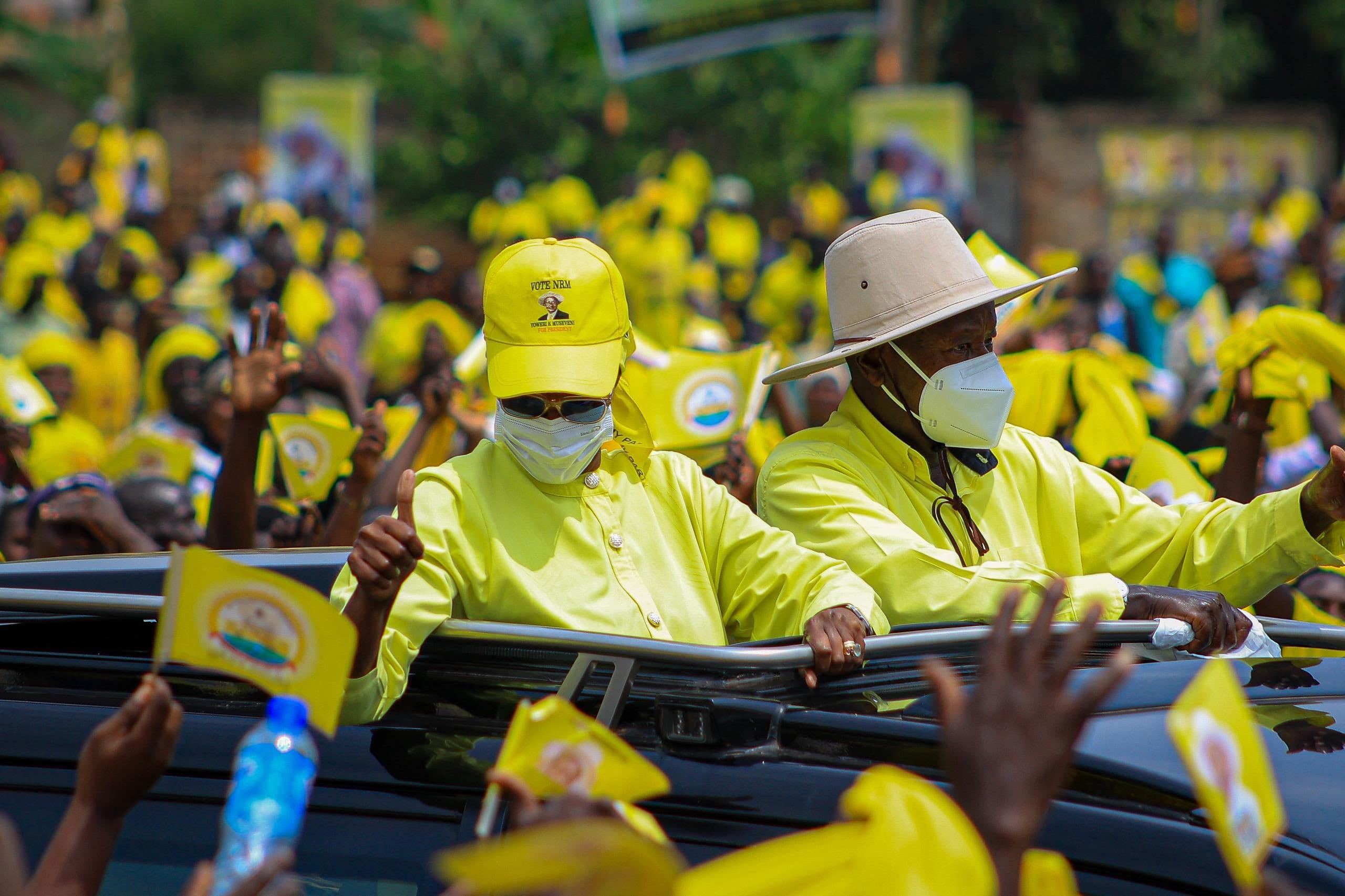
As the sun dipped over Bulo Sub-County, President Yoweri Kaguta Museveni stepped onto the campaign stage with a familiar message sharpened by four decades in power: Uganda’s story, he said, is no longer about promises, but about proof.
Fresh from the Christmas break, Museveni who is the National Resistance Movement (NRM) flagbearer and First Lady Maama Janet Museveni used their first rally of the season in Butambala District to frame the election contest as a choice between continuity and uncertainty. Before thousands of supporters and NRM leaders, the President reminded residents that the Movement’s record rests on what has already been delivered.
“Uganda was once ungovernable; today we are united across tribe, religion and gender,” Museveni said.
He pointed to tangible gains in social services as evidence of that transformation. Museveni noted that all seven sub-counties in Butambala now have at least one health facility, a milestone he linked directly to political stability. He also pledged to establish a permanent Presidential Skilling Hub in the district and to improve the Mitala Maria–Bulo–Kanoni road, framing infrastructure as both an economic enabler and a dividend of peace.
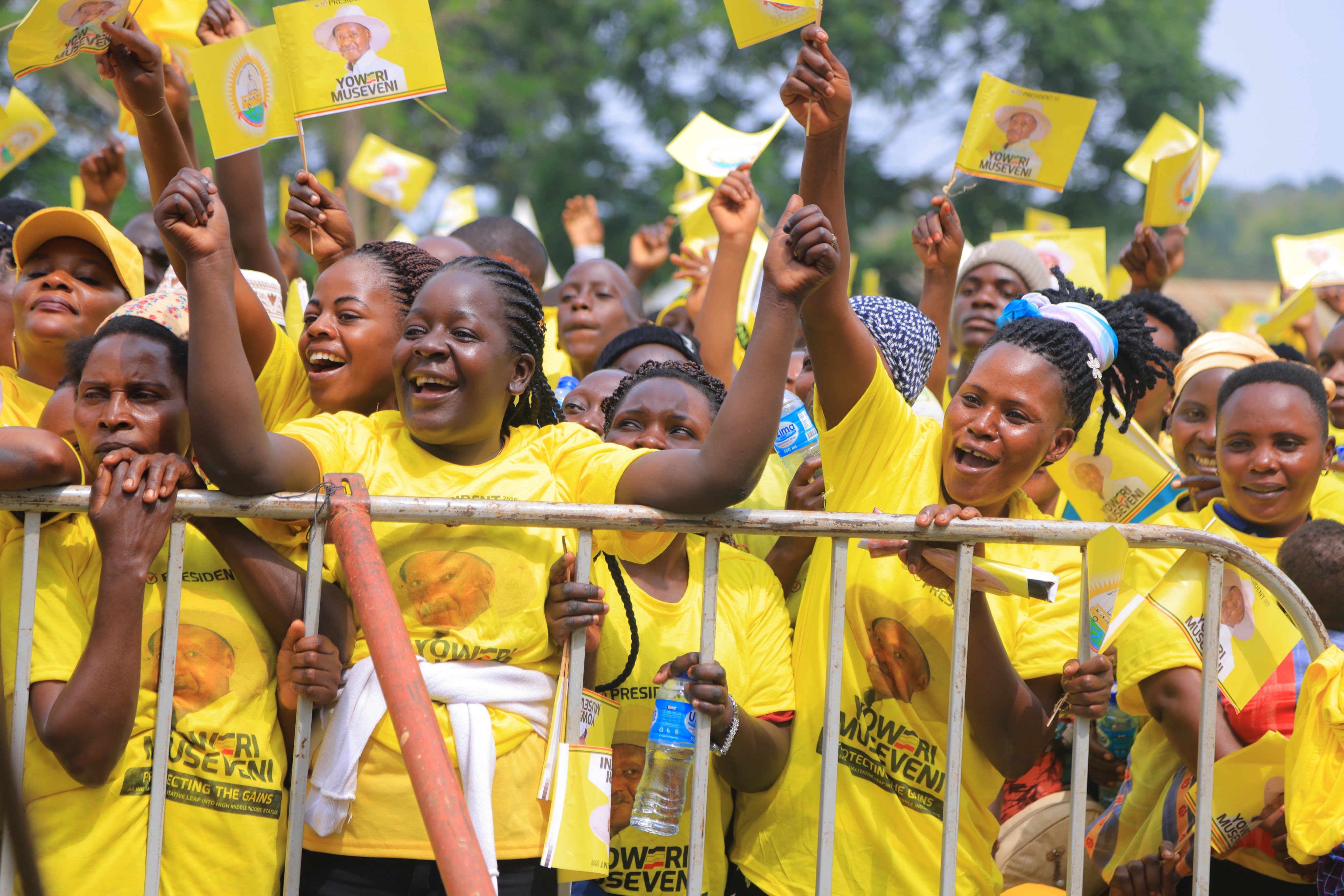
For Museveni, however, roads and clinics alone are not enough. He urged residents to actively participate in the money economy, arguing that household-level wealth creation is the most durable shield against poverty. To illustrate his point, he cited Rashidah Namubiru, a beneficiary of the Parish Development Model (PDM) in Butambala.
“Rashidah started with goats and land and has multiplied her income and livestock,” Museveni said. “This is the way to defeat poverty.”
The example reinforced the NRM’s campaign narrative that prosperity begins with individual initiative supported by state programmes. Museveni reminded the crowd that while government creates an enabling environment, most jobs remain in the private sector.
“All sub-counties now have electricity and 82 percent of the population has access to safe water,” he said. “Even if you have a small piece of land, you can rear goats, chicken, pigs, or do fish farming.”
The call for continuity was echoed more bluntly by Maama Janet Museveni, who issued a direct electoral appeal. She asked the district to deliver 70 percent of the vote to the NRM, urging supporters to translate rally enthusiasm into ballots.
“I am requesting for 70 percent of the vote,” she said. “Remember that the numbers that have come here for the rally should be the same numbers that go to vote when the time comes.”
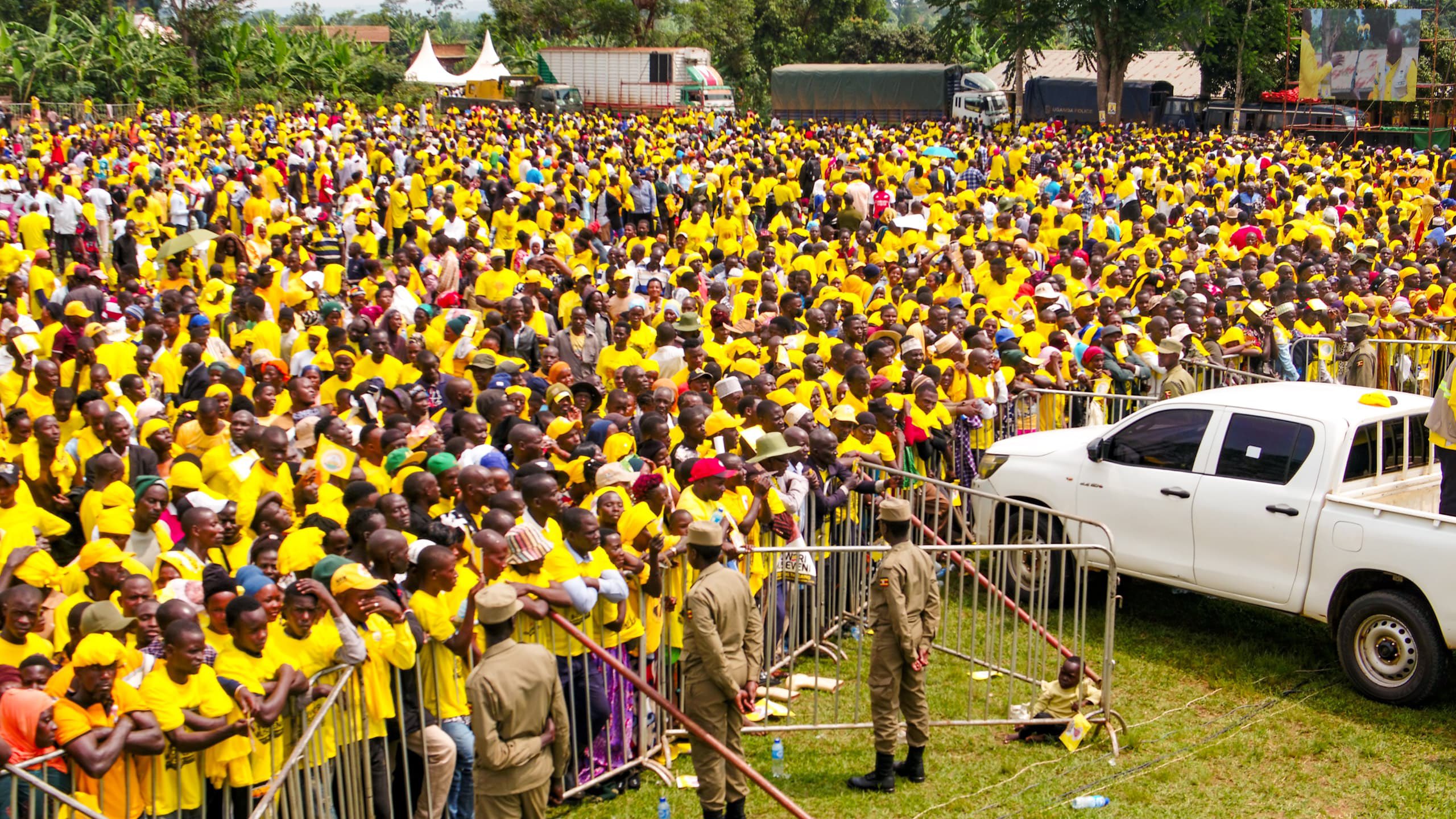
Maama Janet framed the vote as a referendum on unity and stability, warning that political disunity could reverse development gains. She pointed to instability in neighbouring countries as a reminder of what Uganda risks losing.
“When we become disunited, we cannot protect our development,” she said. “We want your children to find this solidarity when they grow up.”
The rally also served as a platform for reinforcing party discipline. Al-Haji Moses Kigongo, the NRM Vice Chairperson, urged leaders to remain focused and truthful, cautioning that indiscipline weakens both the party and the country.
“What has brought us here is to request for the votes,” Kigongo said. “Leaders should be truthful; what you say is what you should deliver. Let us think about our country first before individualistic gains.”
Beyond rhetoric, the Butambala rally revealed the NRM’s broader campaign strategy: anchor political mobilisation in visible service delivery, personalise economic success stories, and frame peace as the foundation upon which all progress rests. By blending appeals to unity with practical examples of wealth creation, Museveni positioned the election not as a leap into the unknown, but as a decision to consolidate gains already made.
As the crowd dispersed, the message lingered clearly in the air: for the NRM, votes are not just political currency, but an endorsement of a long-running project built on peace, participation and gradual economic transformation.