

The government is considering subsidising private developers to accelerate construction of affordable housing across Uganda, as part of efforts to slow the expansion of informal settlements in urban and rural areas.
The proposal places affordable housing at the centre of the country’s urban planning and economic development strategy, with authorities seeking to lower construction costs and widen access to decent housing for low- and middle-income households.
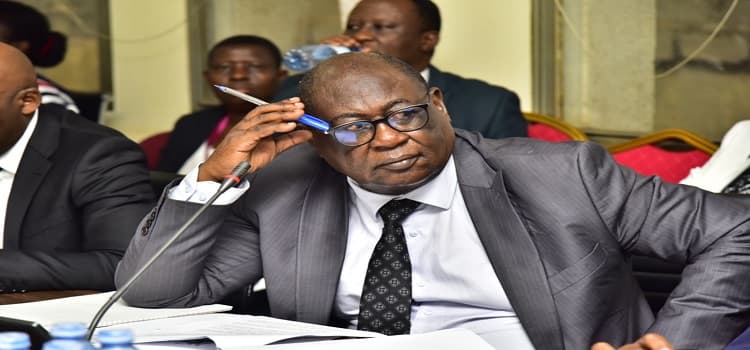
The Minister of State for Lands, Sam Mayanja, unveiled the plan while presenting the Ministry’s Budget Framework Paper for the Financial Year 2026/2027 to the House Committee on Lands on January 28, 2026.
Mayanja said the Ministry plans to inject Shs350 billion into the National Housing and Construction Company (NHCC) to strengthen its ability to deliver affordable housing, especially in growing urban and peri-urban centres.
“The Ministry recommends capitalization of the National Housing and Construction Company to support the provision of low-cost housing in urban and peri-urban areas,” Mayanja said.
He added that, “Government should additionally provide concessional guarantees to de-risk housing investment”.
The Minister said government intends to rely on public-private partnerships to mobilise financing and technical expertise from private developers to support affordable housing construction.
Public-private partnerships have previously been used in Uganda’s housing sector, including large-scale redevelopment projects that combined government and private sector investment to modernise housing estates.
Mayanja said Shs80 billion is required to support land acquisition for affordable housing projects planned on 12 identified sites across the country.
The Ministry also plans to introduce a mortgage liquidity facility to improve access to housing loans by offering better interest rates and more flexible terms than current financing options.
Officials from the Ministry told Members of Parliament that high housing costs remain a major driver of unplanned settlements, particularly in fast-growing urban areas.
“The current housing is very costly and that explains why we have mushrooming slums. If we are not careful, most of our urban areas are turning into slums. We want to support the private sector to come in and invest,” said David Wamai, the Assistant Commissioner for Finance and Planning at the Ministry.
The Ministry also plans to strengthen collaboration with Shelter Afrique Development Bank to access cheaper and long-term housing development financing. Officials said government requires Shs250 billion to clear outstanding obligations with the bank to unlock additional funding.
However, Members of Parliament raised concerns about regional balance in the proposed interventions.
The Chairperson of the Committee, Gyavira Ssemwanga, said most planned projects appear concentrated in the central region.
Committee Vice-Chairperson, Andrew Oulanyah, urged the Ministry to prioritise northern and eastern Uganda, noting the large volumes of untitled land in those regions.
“You are speaking mostly about the central region. For instance, in land registration and titling, we have over 10 million hectares of land in the northern and eastern regions. Can we this time move out to other areas?” Oulanyah asked.
Gyavira also questioned whether the proposed Shs970 billion allocation for land titling is sufficient given the scale of untitled land nationwide.
Parliament is expected to review the proposals and make recommendations as scrutiny of sector budgets for the 2026/2027 financial year continues.