

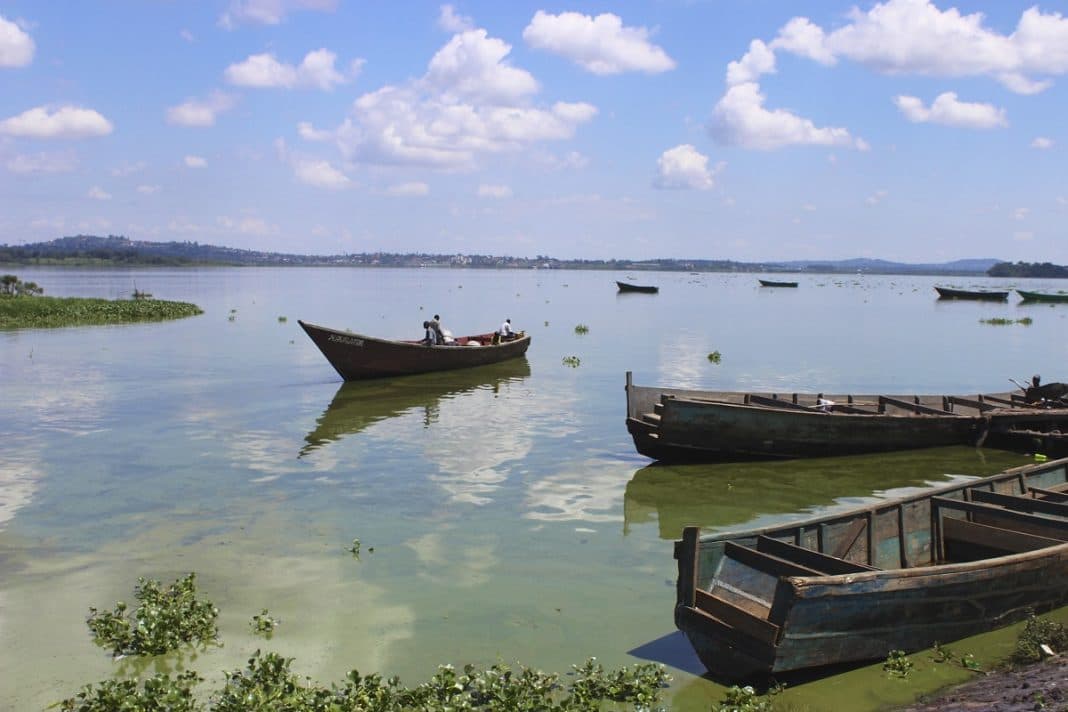
The foul smell reported in parts of Lake Victoria, particularly around Inner Murchison Bay in Kampala and sections of Entebbe, is the result of decaying algal blooms driven by pollution, rising nutrient levels and heat, the Ministry of Water and Environment has said.
In a statement issued on Tuesday, the ministry said excessive nutrients entering the lake have triggered rapid algae growth in heavily used bays, with the stench emerging when the algae die and decompose.
Lake Victoria and its basin support more than 45 million people in the region by providing water for domestic use, transport, hydropower generation and livelihoods. However, officials say some Ugandan bays, including Inner Murchison Bay, Kitubulu and Nakiwogo in Entebbe, are under growing environmental stress.
The ministry attributed the problem to pollution from surface runoff carrying silt, plastics and human waste, discharge of municipal sewage from surrounding settlements, industrial effluent and runoff from agricultural land. The pressure has been compounded by the degradation of wetlands that previously filtered pollutants before water entered the lake.
Data from the Water Quality Monitoring Network, which operates 23 monitoring stations in Inner Murchison Bay and 10 in Entebbe Bay, shows rising levels of nitrogen and phosphorus. These nutrients accelerate algal growth, which later depletes oxygen in the water during decomposition.
“When the algae break down, they consume oxygen and release gases such as hydrogen sulphide and ammonia, which cause the strong smell,” the ministry said.
Officials noted that the stench has been more pronounced in recent weeks due to dry conditions and higher temperatures, which speed up decomposition. The resulting low oxygen levels also pose a threat to aquatic life and increase the risk of fish kills.
To mitigate the situation, government is restoring degraded wetlands within the lake’s catchment areas to improve natural filtration and reduce nutrient inflows. Enforcement of the 200-metre buffer zone along Lake Victoria has also been prioritised to protect the shoreline from encroachment and pollution.
The ministry said continuous water quality monitoring will guide response measures, while industries within the lake basin are being encouraged to adopt cleaner production methods, recycle wastewater and reduce effluent discharge.
Authorities have urged communities, local governments and businesses around Lake Victoria to reduce pollution, warning that without sustained intervention, foul odours and ecological degradation in the lake’s bays could worsen.