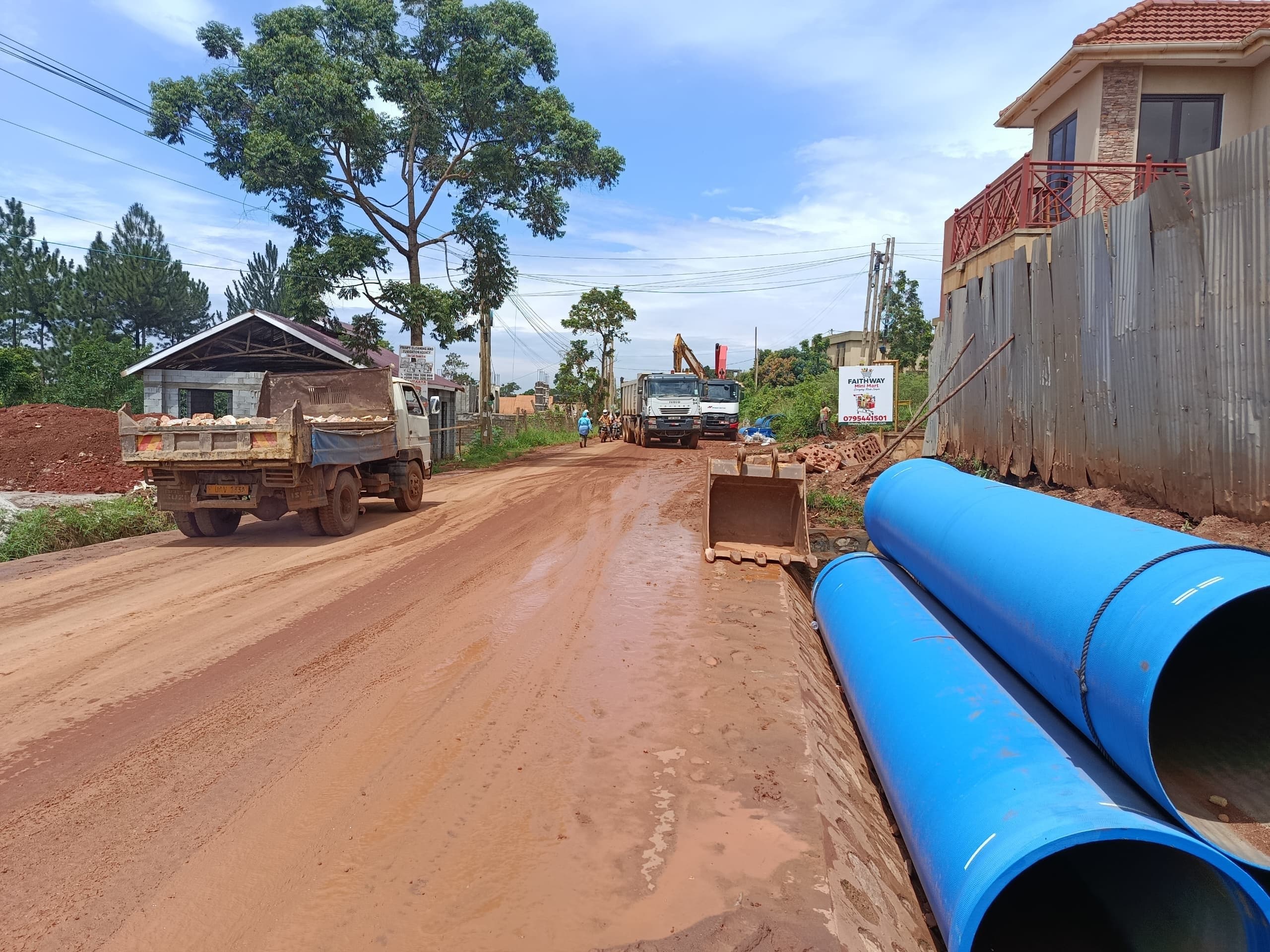
The National Water and Sewerage Corporation (NWSC) is advancing efforts to extend reliable water supply to more communities in the Greater Kampala Metropolitan Area through ongoing network rehabilitation and expansion works.
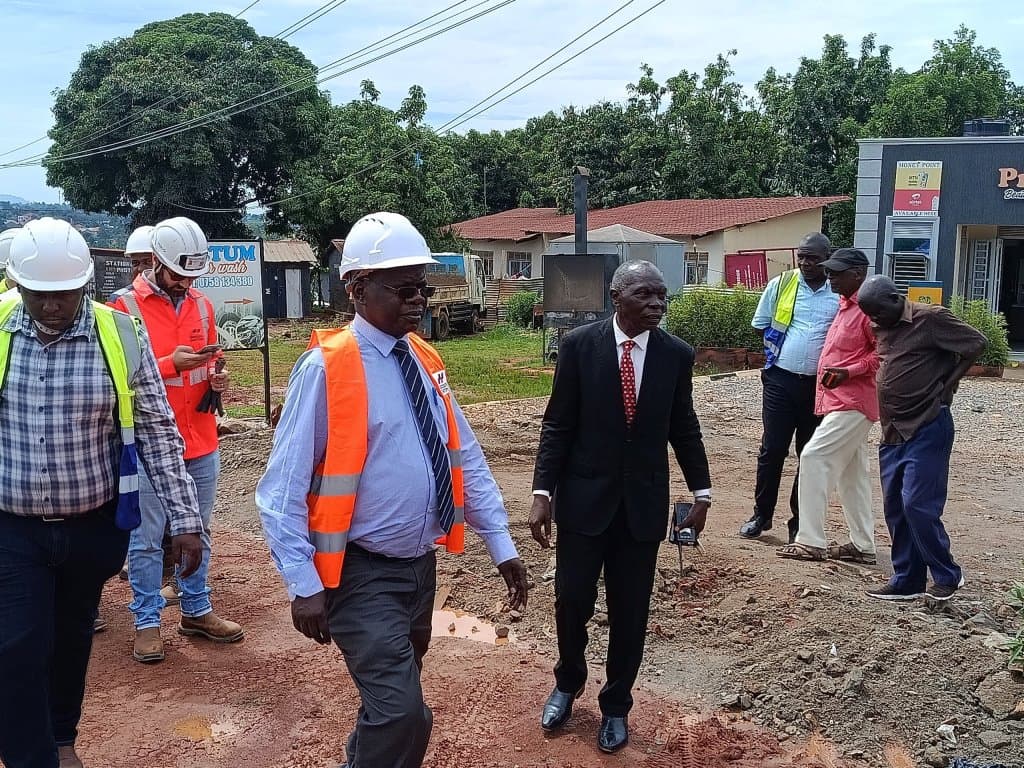
NWSC Deputy Managing Director for Technical Services, Eng. Johnson Amayo, inspected construction sites along the Kira–Namugongo–Nsasa corridor under Package 2B of the Greater Kampala Metropolitan Area (GKMA) Water Supply Network Project.
During the inspection, Eng. Amayo directed the contractor to ensure that all areas affected by construction are properly restored to their original condition after the works are completed.
The project seeks to expand and improve water distribution networks across Kampala, Wakiso, Mukono and Buikwe districts to meet growing demand through 2040.
It also aims to address distribution constraints that have limited the effective utilisation of the Katosi Water Treatment Plant, which has a production capacity of 160 million litres per day.
According to the project details, the plant currently operates at approximately 52 per cent of its capacity because of historical distribution bottlenecks. Package 2B is intended to ease these constraints and improve water delivery to rapidly growing urban and peri-urban communities in North and West Kampala and surrounding areas.
Communities Expected to Benefit
The project is expected to extend or improve water supply across several other communities served by NWSC's distribution branches including Wakiso, Gayaza, Nansana among others.
Project Targets 2027 Completion
The project commenced in February 2025 and includes approximately 70 kilometres of transmission mains, alongside the construction of new water reservoirs and booster stations.
Full completion is scheduled for 2027, although some sections are expected to begin delivering improved water supply before the end of 2026.
Once completed, the expanded network is expected to improve the distribution of treated water, ease supply constraints and support the needs of communities experiencing rapid population growth across the Greater Kampala Metropolitan Area.
The initiative forms part of efforts to align water distribution infrastructure with increasing demand and make better use of existing treatment capacity.