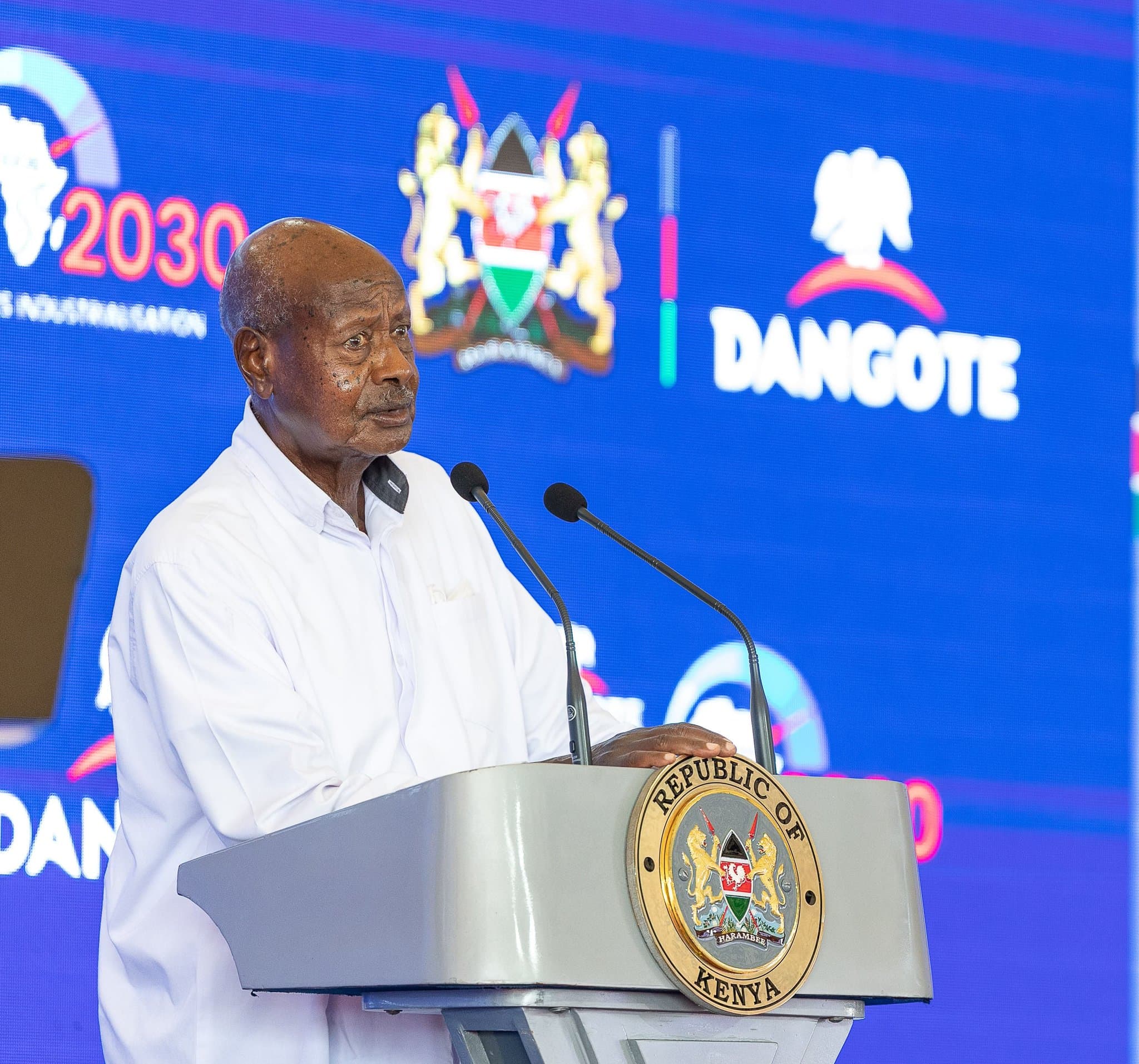
President Yoweri Museveni has reaffirmed Uganda’s commitment to building its own oil refinery as Nigerian businessman Aliko Dangote launched a major refinery project in neighbouring Kenya.
In a statement posted on X after gracing the groundbreaking ceremony in Lamu County, Museveni said the region had room for more refineries. He also maintained Uganda’s commitment to its energy partnership with Tanzania.
“Uganda’s refinery will be built, and our cooperation with Tanzania on Tanga stands. There is no harm in having more refineries in the region,” he said.
“What Africa needs is value addition, industrialisation and bigger integrated markets.”
His assurance comes as Dangote’s proposed $16 billion refinery adds another major project to East Africa’s petroleum industry. The Lamu facility is designed to process 700,000 barrels of crude oil a day and is scheduled for completion in 2030.
Uganda plans a smaller refinery at Kabaale in Hoima District, with capacity to process 60,000 barrels a day. The government signed an implementation agreement with United Arab Emirates-based Alpha MBM Investments on March 29, 2025. The investor will hold a 60 per cent stake, while the Uganda National Oil Company will retain 40 per cent.
Uganda’s cooperation with Tanzania also extends beyond crude oil exports. In August 2026, the two countries backed an agreement involving their national oil companies and Vitol Bahrain to develop the Tanga Regional Energy Hub. The proposed hub covers petroleum storage, refining, transport, trading and distribution.
Museveni thanked Kenyan President William Ruto for inviting him to the Lamu ceremony. He praised Dangote’s rise from an importer to an industrial investor, describing him as “a national and continental asset”.
“I am happy to see Africa waking up and moving away from the 70-year betrayal of exporting raw materials,” he said.
The President linked the refinery projects to his broader call for African countries to process their resources and expand regional markets.
“East African political integration must ultimately be treated as a matter of strategic survival,” he said.