
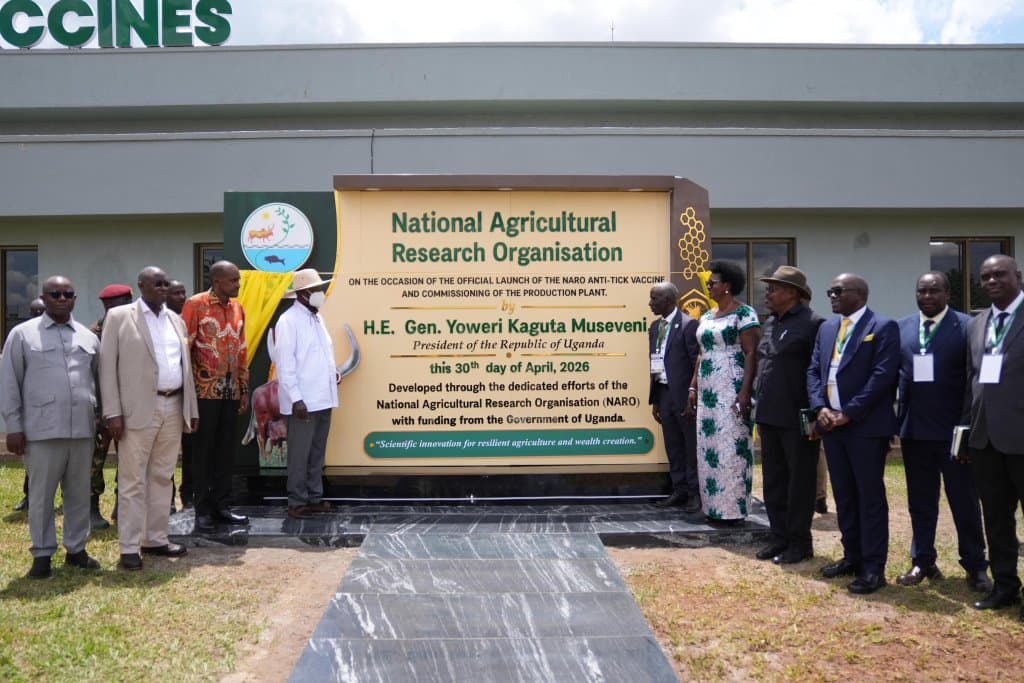
President Yoweri Kaguta Museveni has commissioned the first locally developed anti-tick vaccine, a breakthrough for Uganda’s livestock industry.
The President unveiled the vaccine, named NAROVAC-ATV1, on Thursday at the National Livestock Resources Research Institute (NaLIRRI) in Namulonge. This scientific advancement offers a permanent solution to tick-borne diseases that have plagued Ugandan cattle keepers for decades. The vaccine works by triggering an immune response in the animal that proves fatal to ticks upon feeding.
“The cow now kills the tick,” President Museveni stated.
This innovation seeks to phase out the use of toxic and increasingly ineffective chemical acaricides. By eliminating the need for frequent spraying, the vaccine significantly lowers the overall cost of livestock production. President Museveni described the achievement as a cornerstone of Uganda’s shift toward a science-led economy.
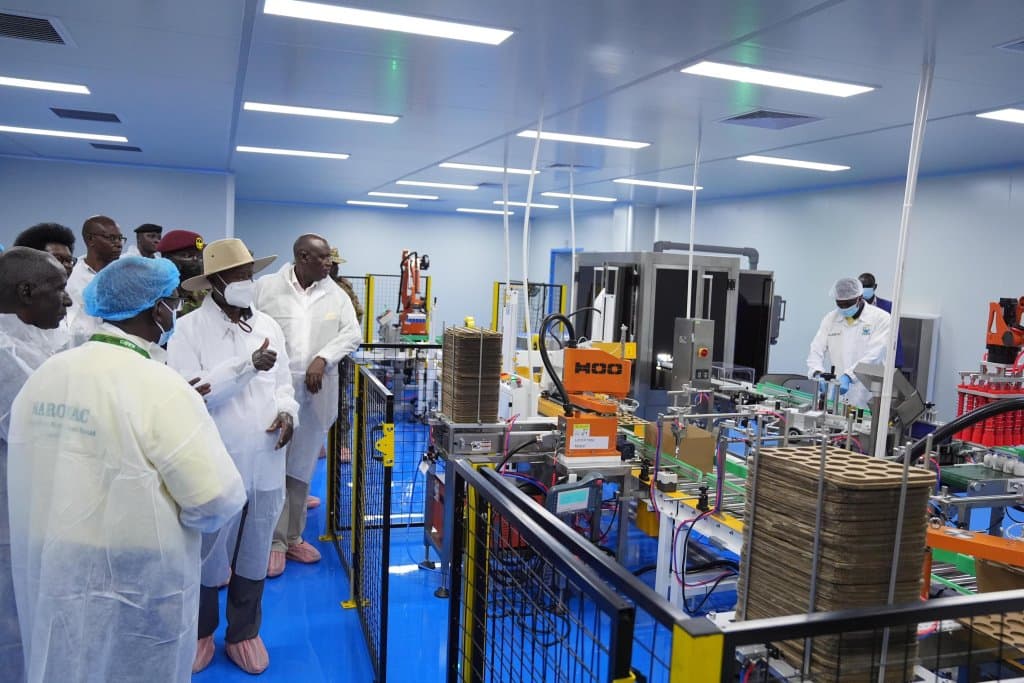
The President congratulated the team of Ugandan scientists behind the project for their persistence and technical expertise. He reaffirmed that the government will continue to prioritize funding and infrastructure for national research. This development aligns with the state’s broader strategy to modernize agriculture through indigenous technology.
“This innovation reduces reliance on toxic acaricides and lowers the cost of livestock production,” the President noted.
Livestock experts believe the rollout of NAROVAC-ATV1 will improve the quality of Ugandan beef and dairy products for international markets. Government officials expect the vaccine to save the country billions of shillings lost annually to animal mortality and tick-related illnesses. The successful launch highlights Uganda’s growing capacity to solve complex agricultural challenges using domestic research facilities.