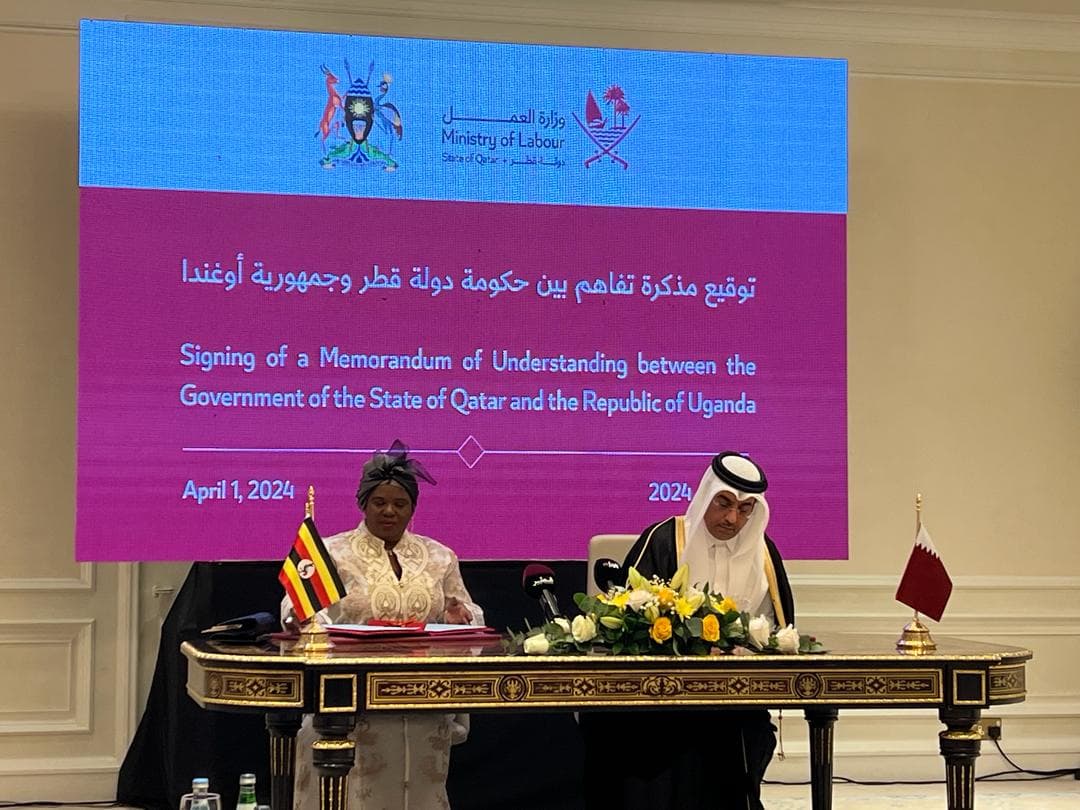
The Minister of Gender, Labour and Social Development of Uganda Betty Amongi Akena and Ali Bin Samikh Al Marri, Qatar's Minister of Labour, entered into a bilateral labour agreement that aims to streamline and secure the process of labour externalisation between Uganda and Qatar.
During the signing ceremony on Tuesday, April 3, Amongi expressed her gratitude towards Minister Al Marri for the warm reception given to the Ugandan delegation, highlighting the existing positive relationship between the two nations.
The agreement was deemed necessary due to the presence of over 30,000 Ugandan workers in Qatar, illustrating a growing trend in labour migration that necessitates formal and regulated channels.
Both ministers have agreed to the immediate formation of a joint technical committee to ensure the swift implementation of this agreement, with a review meeting scheduled for May 27, 2024, to evaluate the progress made during the initial phase.
A key focus of the agreement is the externalisation of skilled, semi-skilled, and domestic workers, ensuring that their rights and welfare are protected. This involves close monitoring of recruitment agencies in Qatar to guarantee adherence to the contractual obligations and conditions stipulated in the agreement. Further details of the agreement will be disclosed, underlining the commitment of both governments to foster safe and organized labour migration.