
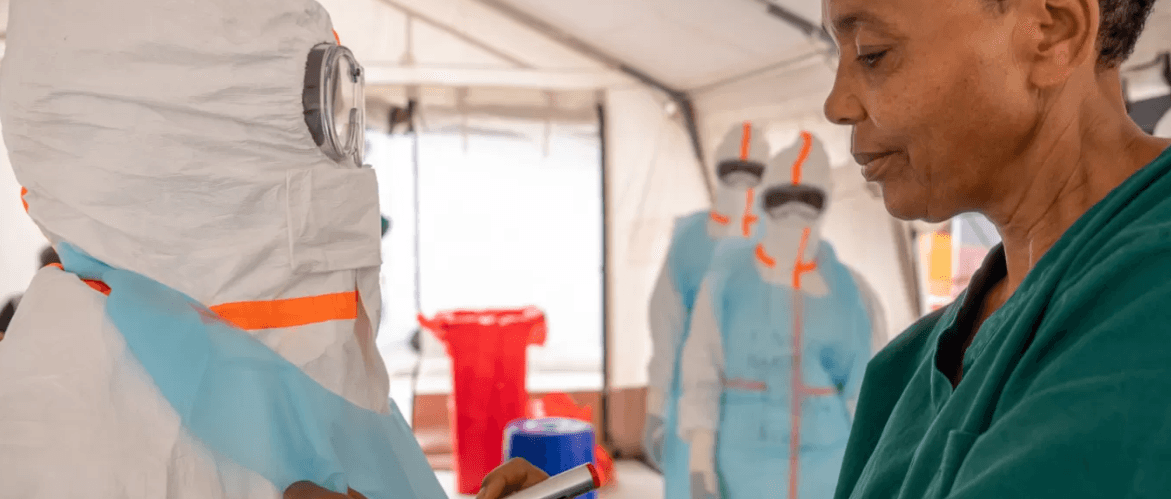
Health authorities and global health agencies have declared the end of the Bundibugyo Ebola virus outbreak in Uganda.
The Africa Centres for Disease Control and Prevention (Africa CDC) and the World Health Organization (WHO) confirmed the milestone on Thursday.
The declaration follows the successful completion of 42 consecutive days without recording any new confirmed cases since discharging the last imported patient on July 16, 2026.
The 42-day window represents twice the maximum incubation period of the virus.
This timeline serves as the globally recognized benchmark for verifying that all transmission chains have ended.
WHO Director-General, Dr Tedros Adhanom Ghebreyesus, praised the swift containment measures implemented across the country.
“Uganda has demonstrated that with decisive action, Ebola outbreaks can be brought under control quickly,” said Dr Tedros Adhanom Ghebreyesus.
“With a focus on preparedness, increased surveillance to find potential cases in health facilities and communities, and careful management of points of entry, countries can keep people and goods moving while ensuring people stay safe, or receive care if they are sick,” he added.

Uganda mounted a robust multi-sectoral response that combined aggressive contact tracing, rapid diagnostic testing, isolation protocols, and strict infection control.
Community mobilization and heightened screening at major border entry points contained further spread.
Africa CDC Director-General, H.E. Dr Jean Kaseya, commended Uganda’s leadership and public health capacity.
“Uganda has shown that Ebola can be stopped when leadership acts decisively, communities are trusted and public health systems reach people quickly,” Dr Kaseya said.
“This is a victory for Uganda and an important lesson for our continent,” he noted.
“We must now protect this achievement while accelerating the response in the DRC. We will only be secure when transmission is stopped everywhere,” Dr Kaseya emphasized.
Uganda initially announced the interruption of local transmission on July 28 after recording 42 days without an indigenous case.
Surveillance teams maintained strict monitoring after the discharge of the final imported case in mid-July to confirm zero undetected infections.
WHO Regional Director for Africa, Dr Mohamed Janabi, emphasized the long-term value of institutional readiness.
“Ending an Ebola outbreak is an important milestone, but the lasting achievement is a stronger ability to protect people from future health threats. Uganda has shown what sustained investment in preparedness can deliver,” Dr Janabi said.
The country registered 20 confirmed cases following the initial outbreak declaration on May 15, 2026.
Fifteen of the cases originated from the Democratic Republic of the Congo, while five were locally acquired among contacts and health workers.
Eighteen patients recovered fully, two died, and surveillance teams monitored over 800 contacts throughout the outbreak period.
Health authorities warned that cross-border trade and migration require continued vigilance as active transmission persists in the Democratic Republic of the Congo.
The WHO continues to advise against border closures, flight bans, or travel restrictions against affected nations, urging countries to rely on strong screening and disease surveillance instead.