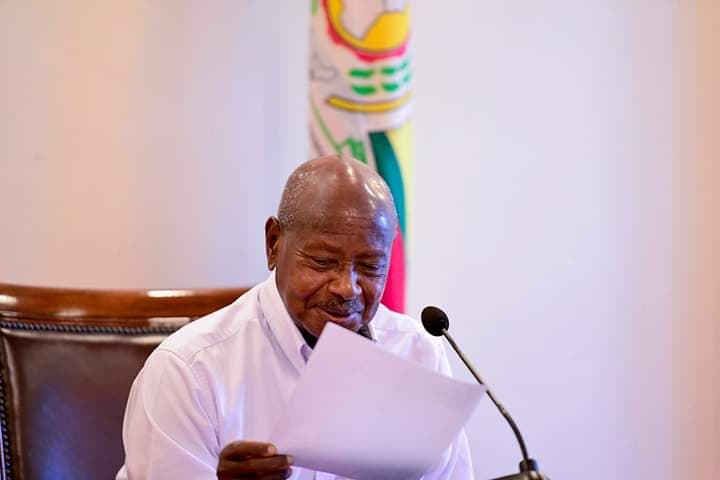
President Museveni has rejected changes in the NSSF Amendment Bill 2019 intended to allow members mid-term access to their savings, saying it would collapse the National Social Security Fund (NSSF).
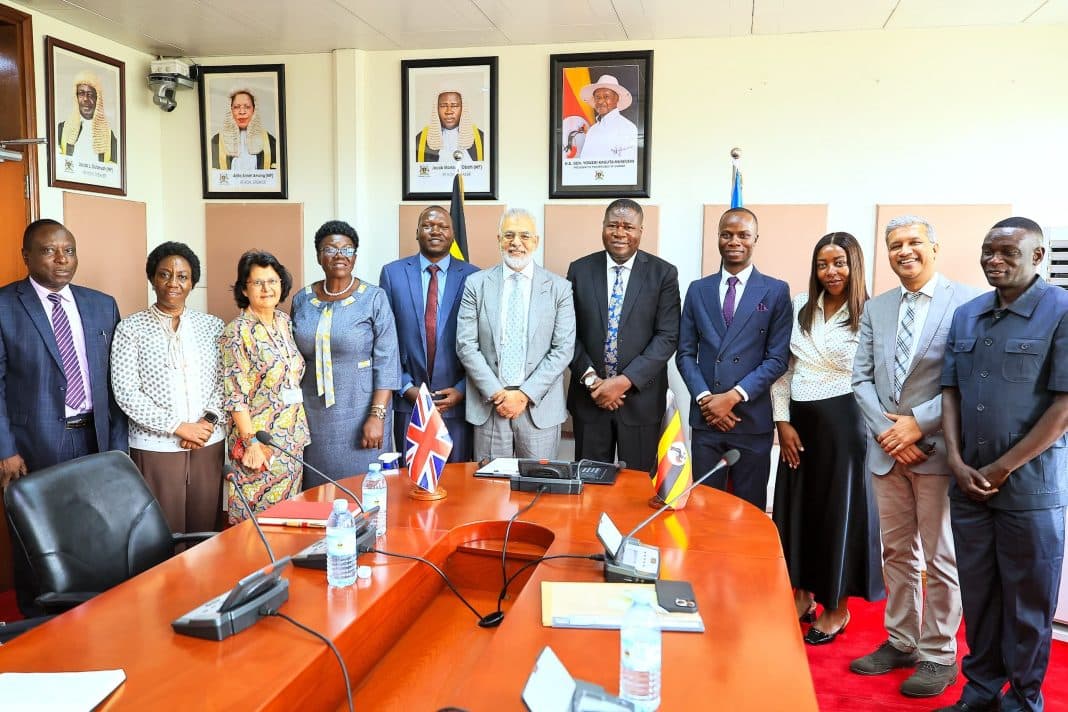
In a meeting with the Parliamentary Committee on Finance, Planning and Economic Development, the president advised them to rigorously analyze their proposals so they are based on fact, not sentiments.
The report of the joint committee on the NSSF Amendment Bill, which was due for tabling before parliament, had allowed the changes to allow members to access 20% of their benefits when they have saved for at least 10 years and are 45.
People With Disabilities (PWDS) who lack gainful employment or fail to generate income, and are unable to make contributions to the Fund for a period of not less than one year, would also be allowed to access up to 75% of their contributions upon application, subject to approval from the minister.
When the coronavirus broke out, many Ugandans wondered why it’s not possible to cash in part of their savings with the NSSF, considering the financial pain the coronavirus has subjected them to.
“Isn’t this what ‘social security’, a safety net, is about?” Kizza Besigye, the four-time presidential contender, tweeted.
In response to Besigye’s tweet, the Fund’s Managing Director Richard Byarugaba said it was legally limited.
“… the Fund has no legal basis upon which to make ad hoc payments as being suggested,” he said.
But as lawmakers moved to discuss some of the legal limitations, Byarugaba penned a missive to the Minister of Finance, Planning and Economic Development, citing financial ramifications of doling out mid-term savings.
The Fund, currently valued at around Shs13 trillion, would give out Shs2.6trn, on a 20% payout, in addition to the normal benefits payout for the financial year 2020/2021, projected at Shs800 billion.
To get the cash, Byarugaba noted the Fund would have to immaturely sell some of its assets, fail to invest in new government bonds, which would consequently see the country struggle to raise funds in its treasury auctions to fund its programs.
The Fund would also put some of the projects it has been running like construction at a halt due to lack of liquidity. The consequences go on and on.
As a result, total benefits payout in the next one year would translate into UGX 3.4T.
Away from that, the Bill also seeks to enhance the participation of Ugandans in saving with it and improve the management of the Fund.
On this, the president wants the Uganda Retirement Benefits Regulatory Authority, which is responsible for regulating the retirement sector, to be dissolved since liberalizing the sector has not been achieved and it was the reason the Authority was formed.
On top of this, the Authority snags Shs8 billion from NSSF to conduct its operations yet it doesn't offer any consequential value in return. He wants the finance ministry to supervise the fund, rejecting the proposal that it be supervised by both the finance minister and that of gender, labor, and social development.
Museveni said no other move should be made until his concerns have been addressed.
Not yet social security fund
After Byarugaba wrote his letter to the finance minister, Workers MP Sam Lyomokyi released a rejoinder, calling his declarations "misleading, irregular and alarmist".
"Obviously, such a reckless irresponsible proposition would be untenable due to lack of liquidity and would also lead to serious ramifications both to the members and the financial systems as ably and correctly articulated in his analysis. However, that misleading approach is not what our midterm proposal seeks. Our midterm proposal has considered this especially the numbers regarding savers 45 years and above of who have saved for at least 10 years as already analysed," he wrote.
"We note that Mr. Byarugaba’s analysis deliberately ignores this, and the previous discussions, concessions and proposed safeguards relating to the proposed midterm access. Mr. Byarugaba even couldn’t bother to consult the Board given that his controversial stance now appears to contradict the official position of the Board."
Additionally, Lyomoki said Uganda, under the current National Social Security Fund Act, 1985, has only 5 levels of benefits (i.e. age, withdrawal, invalidity, emigration grant, survivors’) that translate to only 3 (i.e. age, invalidity and survivors’) under the ILO standard.
The implication of this is that Uganda is still to actualize the remaining 6 benefits i.e. medical care; sickness benefit; unemployment benefit; employment injury benefit; family benefit and maternity benefit.
He says their proposal for midterm access, and to allow the management and board of NSSF flexibility and liberty in introducing new lines of benefits, is to allow a window of opportunity within the scope of the ILO standard taking into consideration the liquidity of the Fund and prevailing national circumstances.
"Anyone arguing that this shall erode the fund is either more concerned with servicing economic interests or isn’t well grounded in the core and purpose of the Fund," he said.
"Having a monument and a powerful NSSF with an ever-increasing financial muscle without this translating into the best social security of members is handing over a hitherto social security institute to economic hitmen," he said.
Supervisor
In 2003, President Museveni administratively transferred NSSF and placed it under the ministry responsible for Finance, Planning and Economic Development, given the volume of funds managed by the Fund.
However, Lyomoki says that transfer created a challenge. Whereas the ministry responsible for finance could handle the economic and investment imperatives of the Fund, which are actually secondary and consequential -- he argues -- that ministry has been incompetent in managing the social security aspects.
3 options were later suggested, namely:
- Leaving the Fund under finance but transfer the department of labour to finance so you create the ministry of state for labour under MoFPED
- Creating a dual supervision where both ministries, finance (MoFPED) and labour (MGL&SD) work in a guided way;
- Reverting the Fund to the ministry of Gender, Labour and Social Development.
The solution was to bring on board the ministry responsible for labour that houses social protection world over.