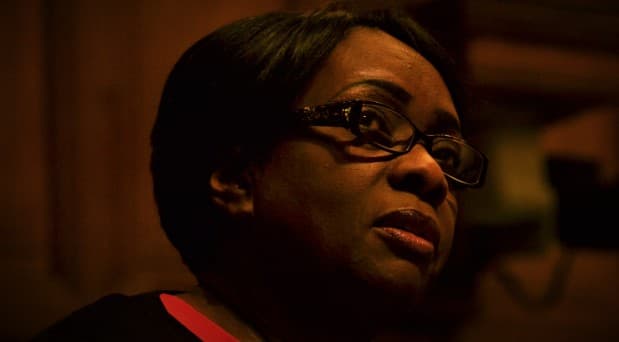
Justice Julia Sebutinde was Thursday re-elected to serve a second term at the United Nations International Court of Justice (ICJ).
Adonia Ayebare, Uganda's permanent representative to the United Nations, who led the re-election campaign – announced the development via Twitter.
“Delighted to announce the election of Justice Julia Sebutinde of Uganda to the International Court of Justice for a second term. I was privileged for leading the campaign team in New York. I thank my Boss Hon. Sam Kutesa (minister of foreign affairs [MOFA]), [MOFA] PS [Patrick] Mugoya and the team at MOFA,” Ayebare tweeted.
“Congratulations Justice Sebutinde, your [sic] an excellent candidate and a big Sister. I am privileged for having led your campaign twice, a record at the UN. I thank my team at the Mission for their support. I also Congratulate other candidates from Japan, Germany, China and Slovakia.”
One of Africa's most senior female judges and the first woman to work as a judge at the ICJ, Sebutinde scored 139 votes beating the Rwandan candidate who got 87 votes and the Nigerian who got 31.
She joined ICJ on February 6, 2012.
According to the ICJ website, for one to be appointed a judge at the ICJ, he or she had to be elected by members of the United Nations General Assembly and the Security Council, where polling takes place simultaneously but independent of each other.
In order to be elected, a candidate had to have an absolute majority in both bodies, which often leads to much lobbying and a number of rounds of voting.
Julia Sebutinde, who also currently serves as a chancellor of Muteesa I Royal University, once worked as a judge of Special Court for Sierra Leone.
A holder of a master of laws from the University of Edinburgh, UK, Sebutinde went to Gayaza High School and King's College Budo for secondary education, Makerere University for a bachelor of laws and Law Development Center in Kampala for a diploma in Legal Practice.
In her work life, which spans over two decades, she has worked with the Ministry of Justice in Uganda, the Ministry of the Commonwealth in the UK, the Ministry of Justice in Namibia and served as a judge at the High Court of Uganda.