

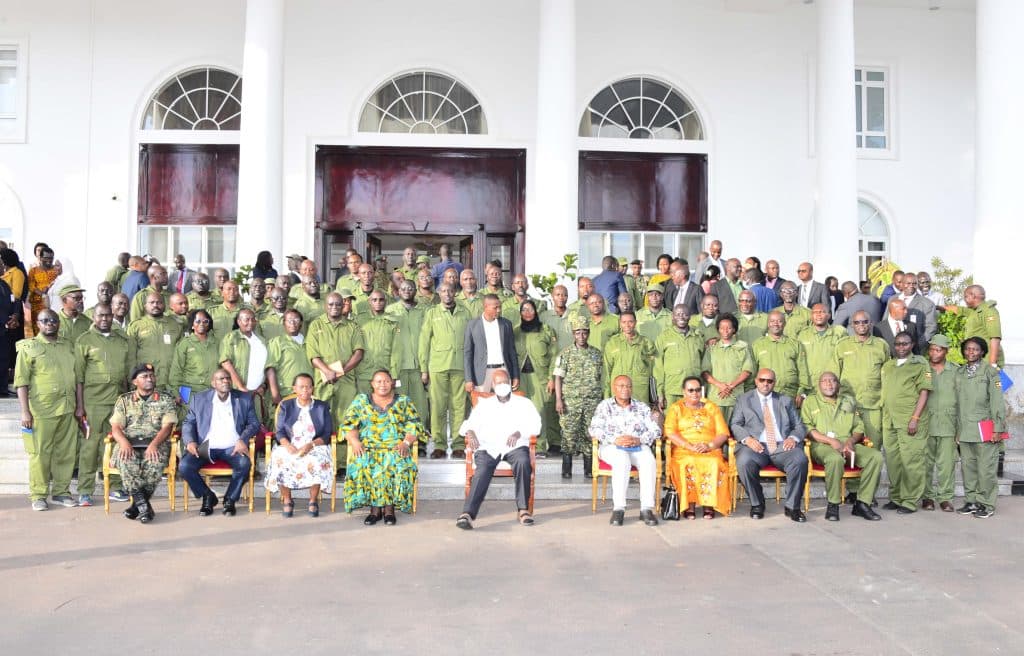
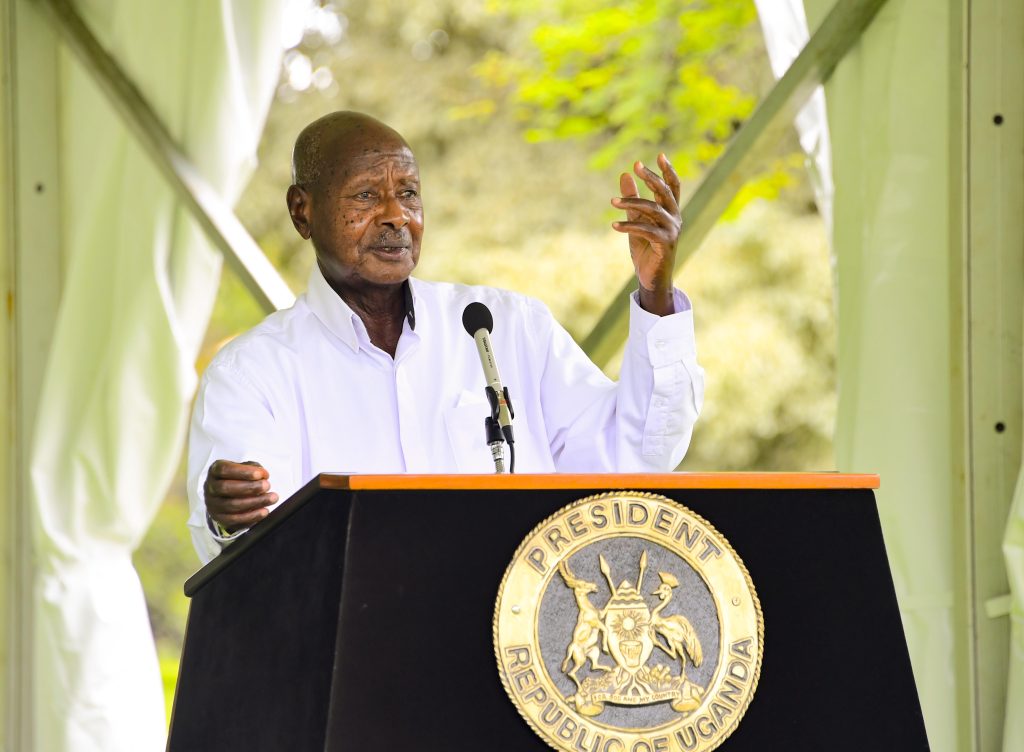
President Yoweri Kaguta Museveni has challenged local government leaders to confront and eliminate bottlenecks that continue to derail public service delivery and Uganda’s social transformation efforts.
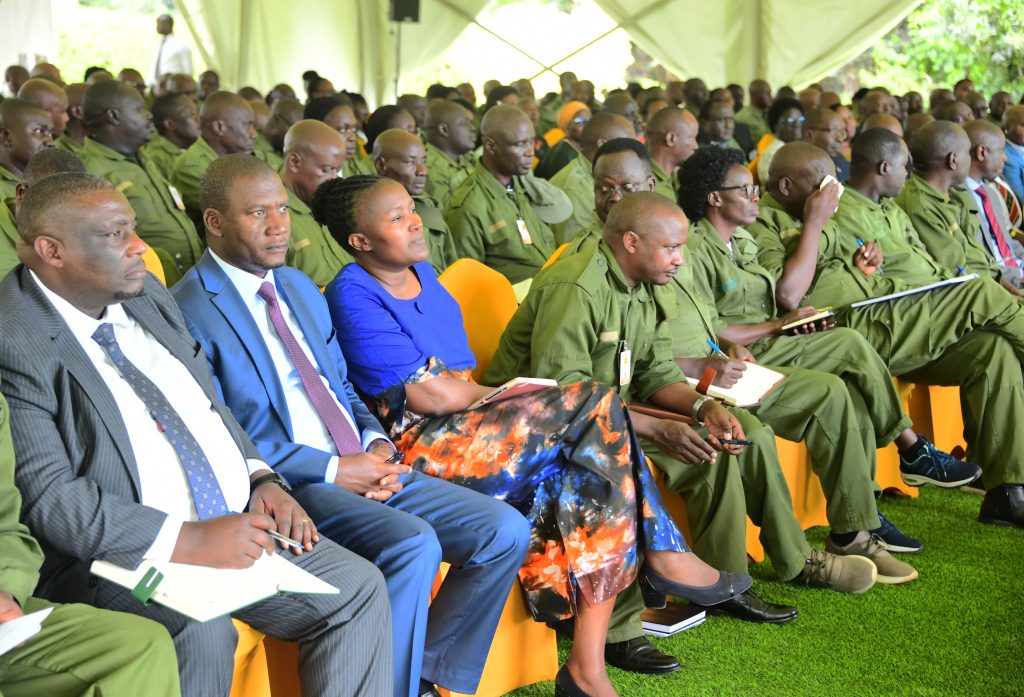
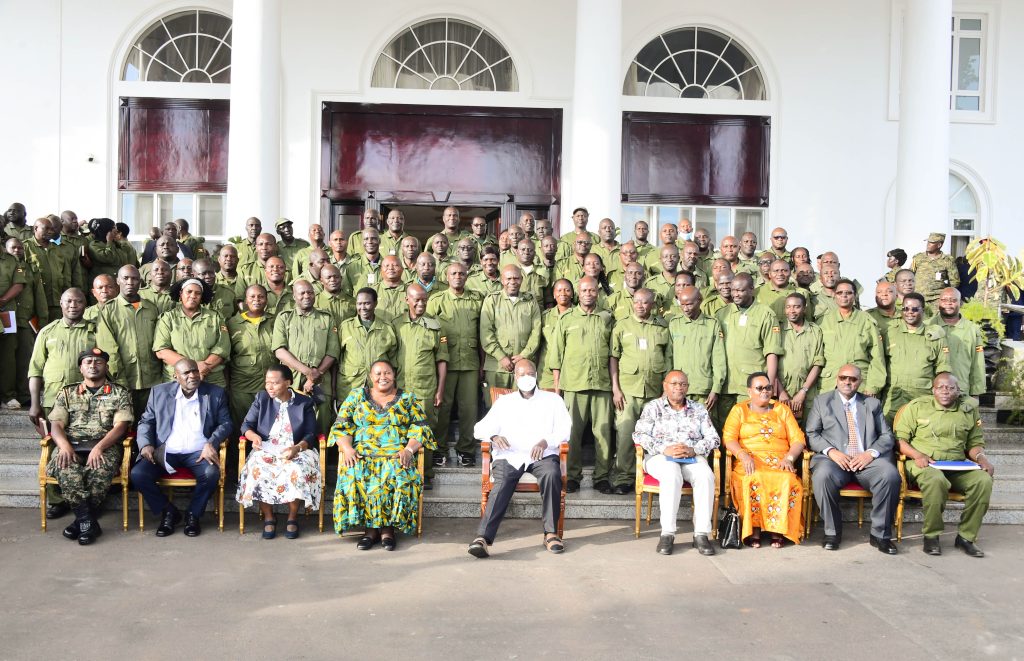
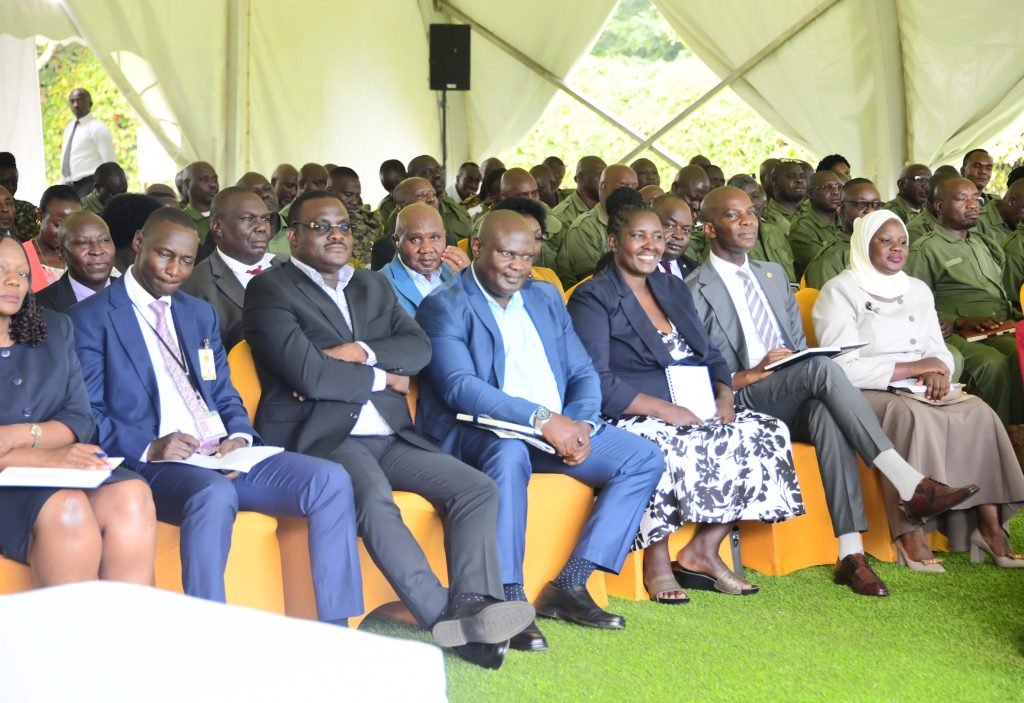
Speaking at State House, Entebbe, on Saturday to over 200 Chief Administrative Officers (CAOs), Town Clerks, and Under Secretaries, President Museveni identified corruption, land grabbing, drug theft, and the illegal charging of school fees as critical barriers undermining government programs.
“These are irritants causing suffering to Ugandans,” the President said. “We must stop them if we are to restore public trust and speed up national development.”
The group of administrators had just completed a two-week training at the National Leadership Institute (NALI) in Kyankwanzi, aimed at equipping them with ideological clarity and practical tools to drive service delivery under the theme “Transformative Public Service: A Path to Development, Improved Service Delivery and Wealth Creation.”
President Museveni singled out the illegal collection of school fees in government-aided schools as one of the worst forms of policy sabotage.
“Why has the political class failed to see the importance of Boona Basome (Education for All)?” he asked. “Head teachers are sabotaging our free education program by imposing illegal charges on parents.”
He urged CAOs and town clerks to enforce the no-fees policy and cautioned against promoting boarding schools under the guise of public education. “Let the children sleep at home. These added costs are suffocating poor families,” he said.
On healthcare, the President condemned the theft of medicines from government health centers, calling it an obstacle to the country's successful immunization and disease prevention campaigns.
“The stealing of drugs is a big irritant. We must stop it. Immunization is working and we have proof some diseases have disappeared. But corruption in our health facilities continues to cause suffering,” he said.
The President also warned against land grabbing, especially cases involving rogue security personnel. He pledged to issue an Executive Order barring soldiers from meddling in land disputes.
“The army’s duty is to protect Uganda’s borders, not to patrol land boundaries,” President Museveni stressed.
He further urged the officers to embrace the NRM’s Four-Acre Model as a blueprint for wealth creation among smallholder farmers, explaining that this strategy offers families a path out of poverty through diversified and intensive farming.
“In our strategy, one acre should be for clonal coffee, one for fruits, one for pasture for zero-grazing dairy cows, and one for food crops. The backyard should be used for poultry, pigs, and fish farming,” Museveni advised.
He emphasized that effective delivery of free education, healthcare, and wealth-creation initiatives would lead Uganda to lasting prosperity. “If you work only for the stomach and forget the pocket, you’ll remain poor. But if we combine free education, health, and wealth creation, Uganda will rise,” he said.
Local Government Minister Raphael Magyezi praised the training, calling it timely and transformative. “These officers are energetic, committed, and now better equipped to deliver,” he said.
Speaking on behalf of the officers, Gabriel Atama, Chief Administrative Officer for Tororo District, thanked the President for his leadership and credited government policies for visible progress in service delivery.
“With your guidance and support, we have strengthened the implementation, coordination, and supervision of government programs in line with the NRM manifesto,” Atama said.
He highlighted several achievements, including the registration of 10,585 SACCOs under the Parish Development Model (PDM), the construction of 321 new health units, and a rise in girl-child enrollment to nearly 50% in government schools.
However, Atama also voiced concerns about the working conditions of officers, including low pay, high transport costs, and the rising cost of living, which he said were limiting their capacity to fully deliver on their mandates.
“As officers committed to national development, we stand ready to continue delivering. We however appeal for increased facilitation and welfare improvements to match the expectations placed upon us,” he said.
The meeting was also attended by the Head of Public Service and Secretary to the Cabinet, Lucy Nakyobe; Minister for Presidency, Babirye Milly Babalanda; Minister of State for Local Government, Victoria Rusoke Businge; and the Permanent Secretary of the Ministry of Local Government, Ben Kumumanya.