
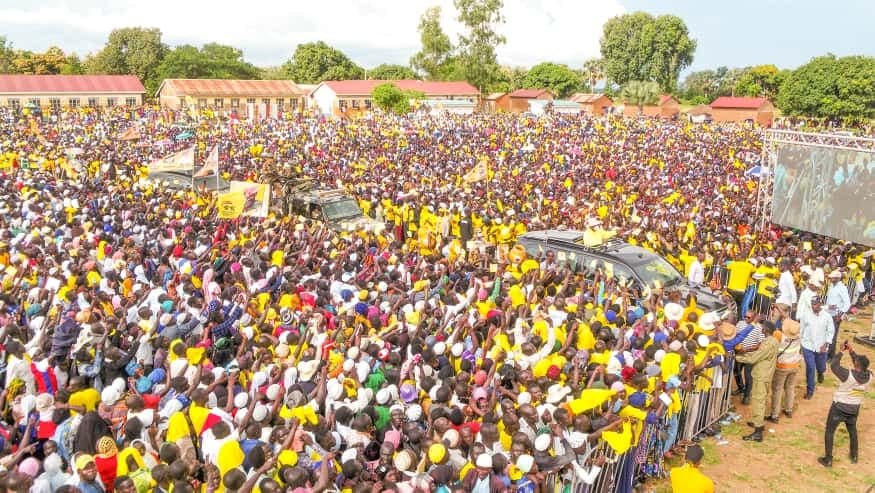
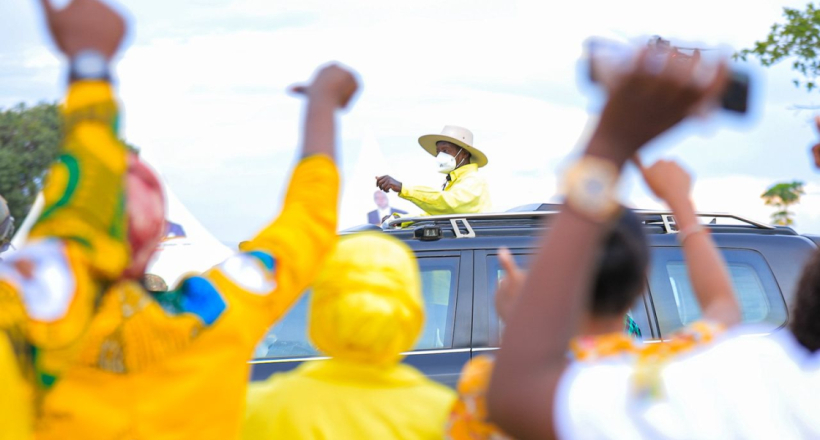
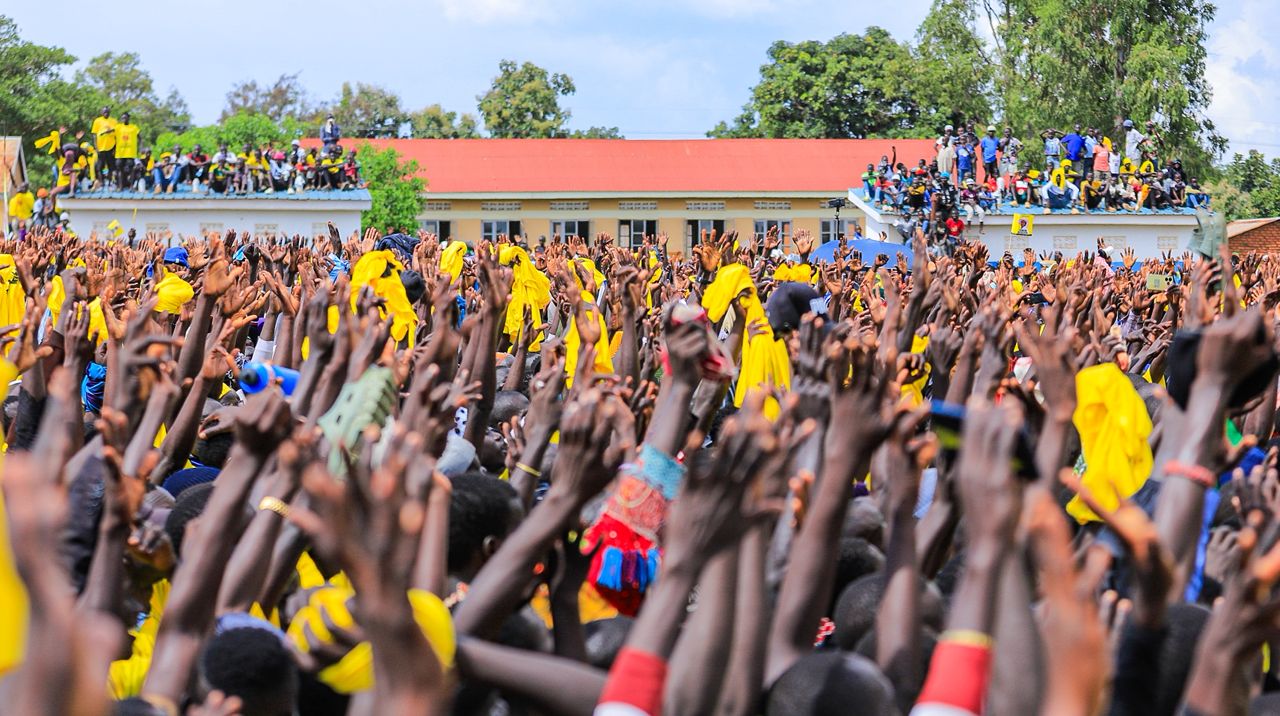
When President Yoweri Kaguta Museveni met residents of Yumbe District on Thursday, he didn’t just speak about the past, he painted a picture of the future. Standing before a sea of yellow at a campaign rally, Museveni reminded Ugandans that while the National Resistance Movement (NRM) has delivered peace, unity, and infrastructure, the next national mission is clear: turning development into household wealth.
“The NRM has united Ugandans and delivered development to all corners of the country, roads, electricity, schools, and health centers,” Museveni said. “However, there is a trap. Some people fail to distinguish between what belongs to all of us, and what belongs to you as a family or individual.”
He urged families to move beyond celebrating public projects and start building their own economic foundations. “You may travel on a tarmac road, but you do not sleep on the tarmac. When you return home, poverty is still waiting for you,” he said. “Development is collective, it is ours. Wealth creation is personal, it belongs to your family, your company, or your household.”
The Call for Household Prosperity
Museveni pointed to the Parish Development Model (PDM) as a practical tool for transforming lives. Through the initiative, government injects Shs 100 million per parish every year, with plans to raise the figure to include Shs 15 million for local leaders to ensure inclusivity.
“In five years, each parish will have received about Shs 575 million. The money is a revolving fund. You do not pay it back to government, it remains in your SACCO to help others. That is your own bank,” he said.
To illustrate how PDM is changing lives, the President shared a success story. “I heard of one woman who bought four goats and planted onions and tomatoes. Although some goats died, the rest multiplied. From her crops, she built a modern house, sends her children to good schools, and is saving for university education. That is the meaning of wealth creation,” he said.
Museveni clarified that the 6% interest on PDM loans is not for profit but to protect funds from inflation. “If a cup of tea costs one shilling today, it may cost one shilling and ten cents next year. That is why we add a little interest, not to profit, but to maintain value,” he explained.
Empowering Religious and Cultural Leaders
To deepen community participation, the President announced plans for special funds targeting religious and cultural leaders. These funds, he said, will help faith-based institutions start income-generating activities and strengthen their role in fighting poverty.
“We shall also create a fund for religious leaders, Sheikhs, Reverends, Fathers, according to their dioceses and Muslim districts. Cultural leaders will also have their own arrangements. All this is aimed at chasing poverty from our homes,” Museveni noted.
He further appreciated Yumbe leaders for offering land for a model farm that will produce coffee, cocoa, and fruit seedlings for farmers, describing it as a cornerstone for regional agricultural transformation.
Unity as the Foundation of Progress
Museveni emphasized that Uganda’s journey to development rests on national unity. He praised the NRM for ending the divisive politics that once crippled the country.
“Our strength lies in rejecting sectarianism, whether tribal, religious, or gender-based. That is why the NRM has remained the only national political movement that unites the majority of Ugandans,” he said.
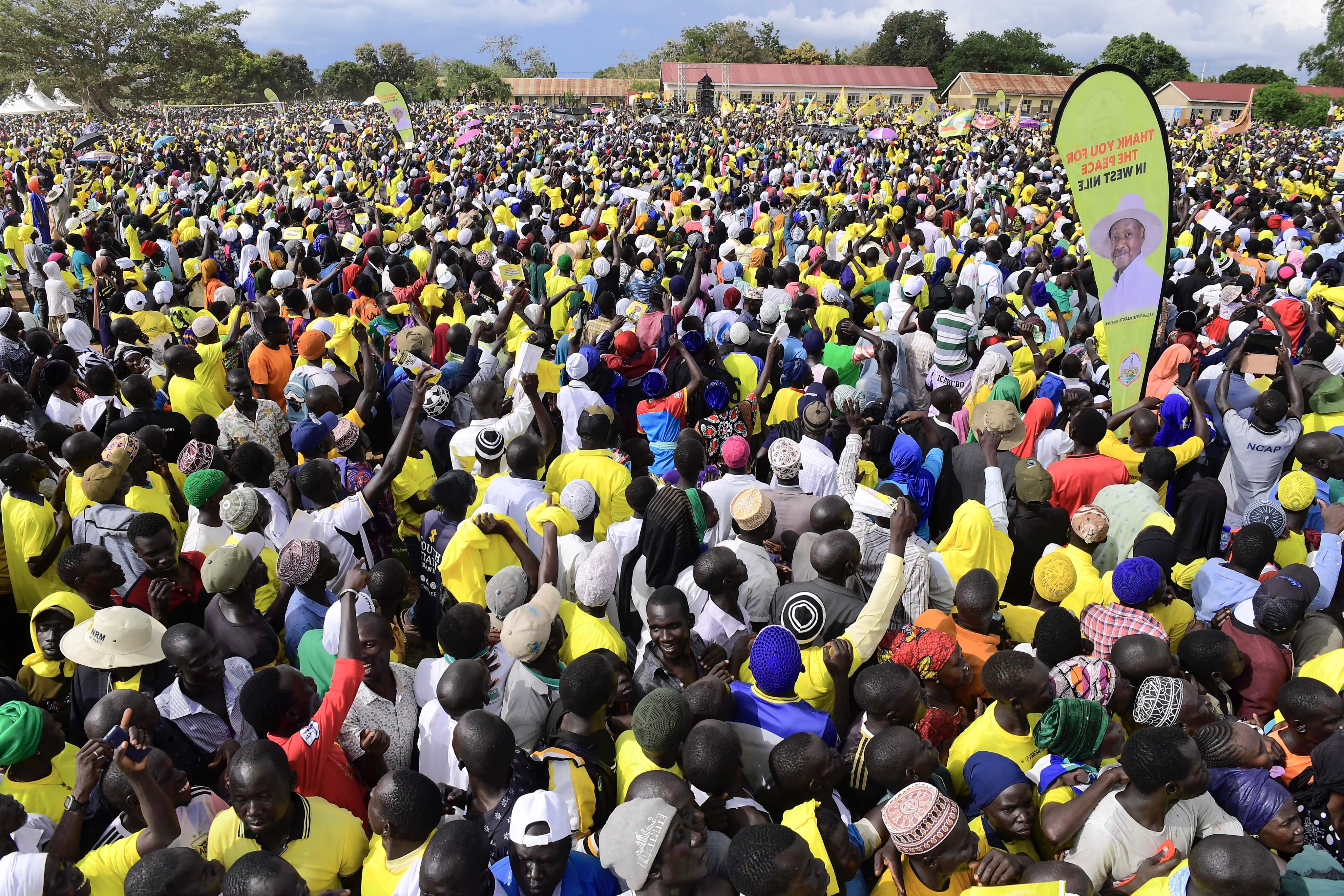
The President compared current politics with the fragmented era of the 1960s. “In 1962, no party could win outright because politics was divided along religion and tribe. That kind of politics is suicidal. But because we believe in unity, in Uganda, in Africa, we win in the first round,” he said.
From Instability to Stability
Looking back, Museveni recalled Uganda’s troubled history before 1986, marked by wars, coups, and instability. He credited the NRM for restoring peace and sustaining it for nearly four decades.
“Before the British came, there were kingdoms and dynasties that later fell into wars, between Buganda, Bunyoro, Ankole, Rwanda, and others. After independence, things worsened with wars in 1966, the Amin era of the 1970s, and later conflicts between different groups,” he said.
“When the NRM took power in 1986, peace returned. We continued to fight residual rebel groups until around 2007. Since then, Uganda has enjoyed the longest period of stability in its history.”
As the sun set over Yumbe, Museveni’s message was simple but firm, peace and development are foundations, not finish lines.
“The NRM has given you peace, unity, and infrastructure,” he told the crowd. “Now, use them to create wealth in your homes. Poverty should not be your companion anymore.”