
Kampala's primary garbage dumping ground will transition into a fully digitized waste-processing facility to drive data-driven environmental management across the metropolis.
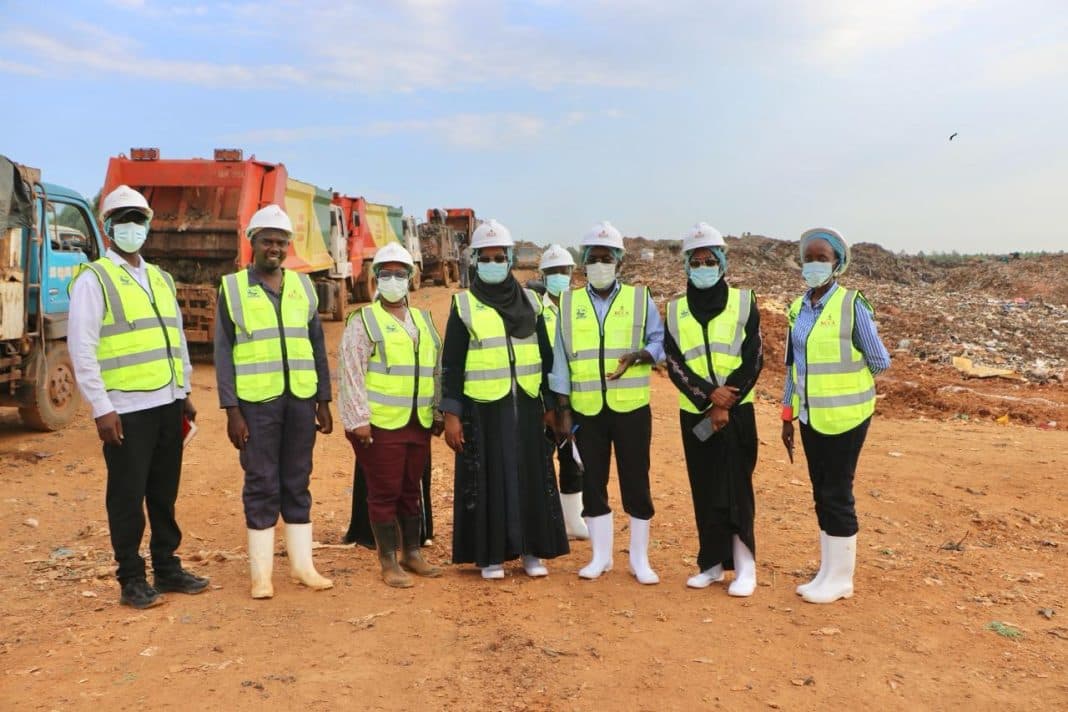
An inspection of the Buyala Waste Management Facility by the Ministry of ICT and National Guidance triggered the technological mandate on Tuesday. The 230-acre complex has emerged as the critical waste-handling lifeline for the Greater Kampala Metropolitan Area. It currently swallows between 1,500 and 2,000 tonnes of urban refuse daily.
The Kampala Capital City Authority manages the massive complex, which anchors more than 150 heavy disposal trucks every day from the satellite towns of Kira, Nansana, and Mukono.
Operations currently sit restricted to a five-acre emergency zone approved by the National Environment Management Authority. However, municipalities are officially abandoning open dumping in favor of a modern ecological master plan. The blueprint breaks the facility into specialized industrial hubs for composting, waste-to-energy conversion, and advanced material recovery.
KCCA Executive Director Sharifah Buzeki confirmed the immediate departure from traditional sanitation methods.
“We have a master plan and we are on the right track to ensuring that we have a modern waste management facility," Buzeki stated. "We are not going to continue working traditionally like this. We are aiming to establish a modern waste management facility that will include various hubs for waste composting, waste-to-energy production, and material recovery.”
Beyond waste processing, the facility functions as a vital grassroots economic center. The ecosystem supports 417 waste sorters and 57 traders who harvest recyclable materials for industrial factories. These independent laborers earn between UGX 40,000 and UGX 50,000 daily, injecting critical cash into the local circular economy.
To eliminate human error, engineers will automate the facility's weighbridge to precisely map the geographic source and metric volume of incoming trash. The Ministry will also plant electronic sensors across the site to monitor gas toxicity and atmospheric pollution levels in real time.
The Permanent Secretary in the Ministry of ICT and National Guidance, Dr. Aminah Zawedde, explained that the real-time metrics will steer national urban planning.
“We have seen the potential of utilizing digitization to improve efficiency and support data-driven decision-making," Dr. Zawedde said. "This will help us determine the amount of waste being handled at the facility and understand how many people are benefiting from its operations.”
The permanent secretary added that capturing precise baseline figures on trash inflows and operational employment will help the central government calculate the exact number of modern processing plants required countrywide.
Ultimately, the state plans to fuse science, technology, and innovation to convert municipal trash into a lucrative, structured industry that advances Uganda's middle-income development goals.