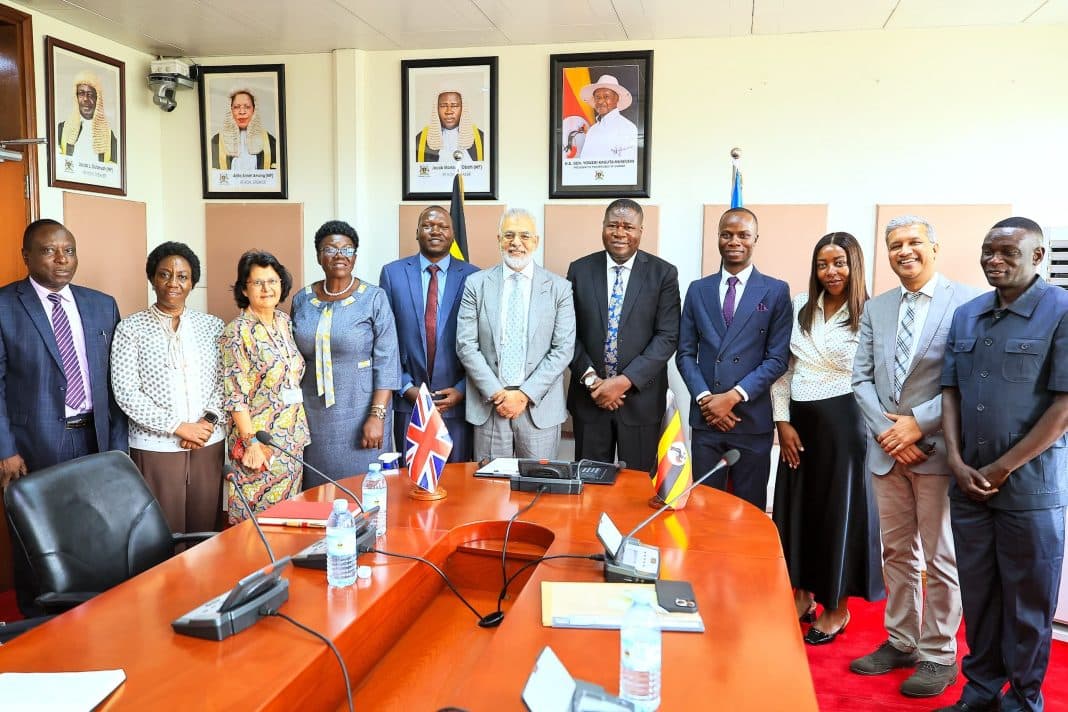

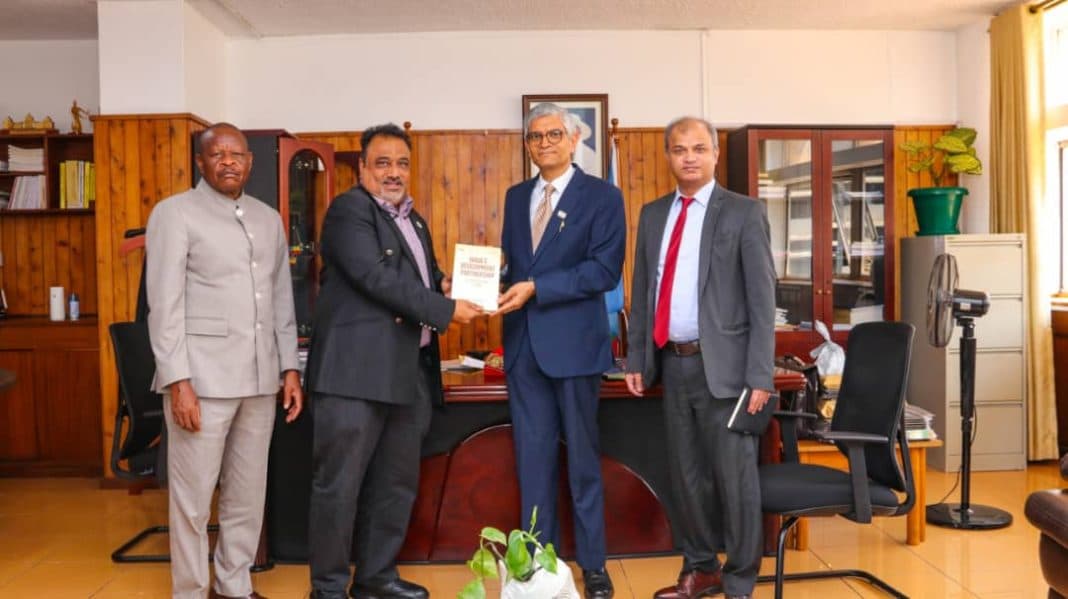
The Minister of Trade, Industry and Cooperatives, Hon. Sanjay Tanna, has held economic discussions with the High Commissioner of India to Uganda, H.E. Upender Singh Rawat, to correct a severe trade imbalance between the two nations.
The meeting took place at the Ministry of Trade offices to address the deficit, promote mutual investment, and support Uganda's state-led Ten-Fold Growth Strategy.
Bilateral trade volumes exceed $1.3 billion annually, but the exchange heavily favors India because Uganda primarily exports low-value primary commodities while importing expensive manufactured goods, pharmaceuticals, and capital equipment.
The diplomatic dialogue focused on expanding economic cooperation across core priority sectors, including industrialization, modern agriculture, digital transformation, and professional skills development.
H.E. Rawat underscored India's commitment to supporting Uganda's economic transformation through increased private sector investment and technology transfer.
The High Commissioner observed that local producers have significant potential to scale up exports under India's Duty-Free Tariff Preference Scheme (DFTP).
The trade arrangement grants duty-free and preferential market access to 94 percent of products originating from Least Developed Countries.
H.E. Rawat encouraged Ugandan exporters to strictly comply with international sanitary and phytosanitary standards to enhance their global competitiveness.
Hon. Sanjay Tanna welcomed India’s partnership but noted that key products where Uganda holds a comparative advantage, such as milk and cocoa, face entry restrictions despite the open tariff scheme.
The minister revealed that Uganda is accelerating production and value addition for items like shea butter, honey, and avocado, which are fully permitted under the DFTP guidelines.
Hon. Tanna urged the Indian envoy to support import substitution by actively encouraging Indian industrialists to establish local factories in Uganda.
“We need you to help us to market Uganda to the Indian investors as an investment destination because the Ugandan government has invested a lot in the infrastructure especially the roads, power, water, the airline, and also defense making Uganda a much safer country to invest in,” Hon. Tanna emphasized.
The trade minister also implored the Indian government to set up a credit facility enabling the local business community to access affordable financing from the India Exim Bank.
To strengthen digital transformation, India expressed willingness to share its technical experience in digital public infrastructure, electronic payment systems, and the digitalization of public services to boost regional financial inclusion.
In the health sector, the High Commissioner pledged continued cooperation to facilitate medical travel for Ugandan patients through more efficient visa processing.
H.E. Rawat concluded by extending an official invitation to Uganda to attend the 18th BRICS Heads of State Summit, which India will host in September 2026.
The incoming summit will serve as a pivotal international platform to cement commercial ties, pitch investment portfolios, and expand economic cooperation.