

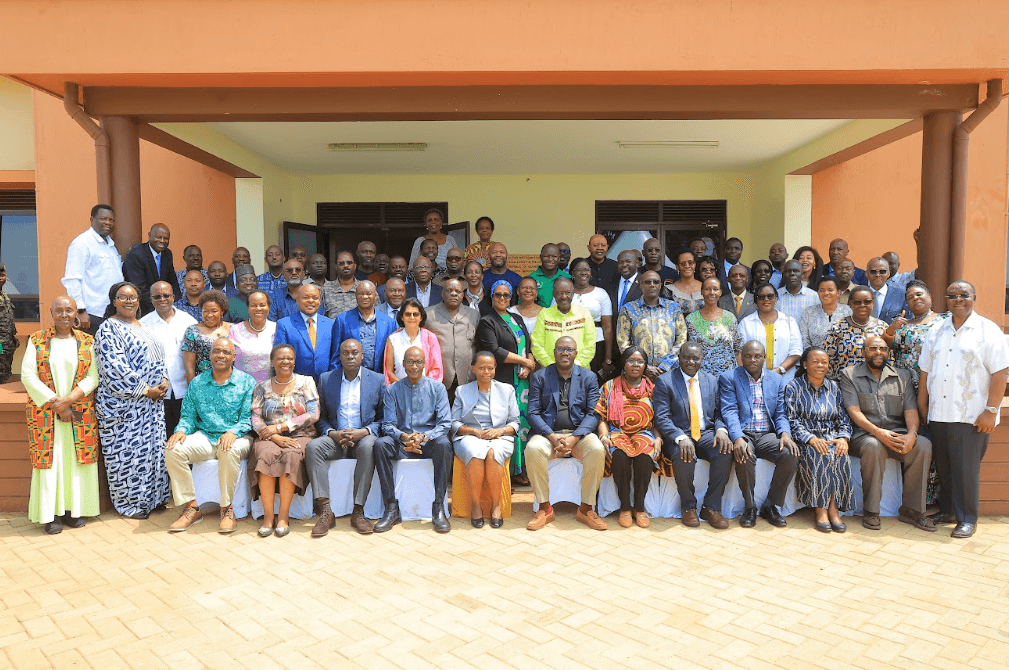
The Ministry of Foreign Affairs has reaffirmed its commitment to using diplomacy as a driver of Uganda’s development agenda as Heads of Mission convened for the third day of the Annual Ambassadors’ Conference at Gulu University.
The meeting, held under the theme “Strengthening the Foreign Service’s Contribution to National Development,” focused on evaluating the performance of Uganda’s Missions abroad and aligning their work with the country’s economic and political priorities.
Opening the day’s session, Bagiire Vincent Waiswa, the Permanent Secretary of the Ministry of Foreign Affairs, praised envoys for their resilience in representing Uganda in complex global environments. He described the conference as a moment of renewal and emphasized teamwork, clear delegation, and strong leadership as critical to achieving results. He also noted that recent additional funding to Missions from the Ministry of Finance must translate into measurable impact.
Head of Public Service and Secretary to Cabinet, Lucy Nakyobe, reinforced the call for accountability. She urged ambassadors to match government support with tangible outcomes, reflecting the President’s guidance on performance. “Support must be tied to clear and visible results,” she said, stressing that envoys must embrace leadership with urgency and responsibility.
Nakyobe also launched three policy instruments: the Ministry of Foreign Affairs Strategic Plan IV, the Client Charter, and the Service Delivery Standards. She described them as essential tools for efficiency, professionalism, and accountability, while underscoring the importance of accessible and responsive consular services for Ugandans abroad.
The day’s discussions also explored the intersection of diplomacy and security. Representing the Chief of Defence Forces, Gen. Muhoozi Kainerugaba, Rtd Gen. Kale Kayihura shared reflections on the link between the military and diplomacy. He emphasized that both are mutually reinforcing in safeguarding peace and stability. “Modern diplomats must understand the security environments they operate in, just as the military must value diplomacy in preventing and resolving conflict,” he said.
Envoys were further reminded that economic diplomacy remains central to Uganda’s foreign policy. They were tasked with attracting foreign investment, opening new markets for Ugandan exports, and promoting partnerships in technology, science, and regional integration.
Closing the day’s deliberations, Bagiire reiterated that diplomacy is now defined not only by political representation but by its ability to deliver concrete benefits. “Our missions must be measured by investments mobilized, jobs created, and Uganda’s image strengthened globally,” he said.
As the conference enters its final sessions, the message from Gulu is clear: Uganda’s foreign service will be judged not by presence abroad, but by performance at home.