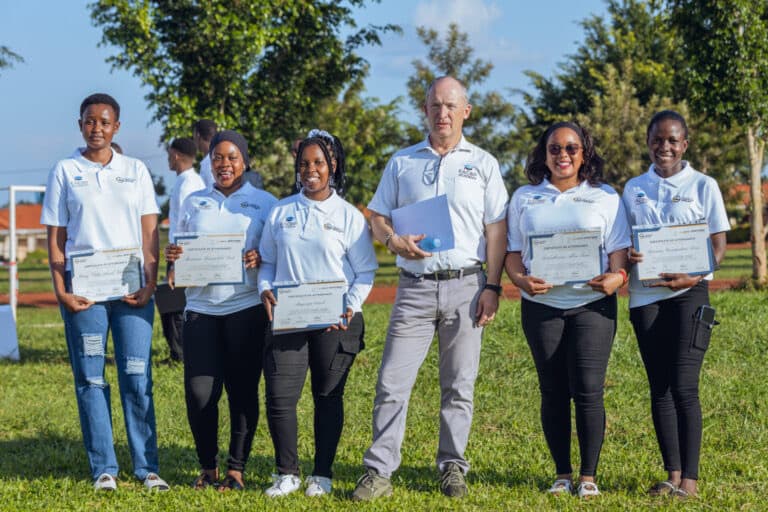
For years, jobs such as welding, rigging and heavy equipment operation have been viewed as men’s work. However, technical training programmes linked to the East African Crude Oil Pipeline (EACOP) are changing that perception by giving women opportunities to build careers in the energy and construction sectors.
Across Uganda and Tanzania, women are joining training programmes, earning industry certifications and taking on roles that were once considered beyond their reach.
The programmes focus on skills development rather than gender, allowing participants to undergo the same training, complete similar assessments and meet the same industry standards.
The initiative is part of EACOP’s National Content strategy, which aims to ensure that the benefits of the pipeline project support local communities and build skills that remain valuable beyond the construction phase.
Through the EACOP Academy and partnerships with institutions such as the Uganda Petroleum Institute Kigumba (UPIK) and vocational colleges in Tanzania, trainees receive specialised instruction in areas including coded welding, mechanical maintenance, non-destructive testing and heavy equipment operation.
Participants also earn internationally recognised certifications from bodies such as the Engineering Construction Industry Training Board (ECITB) and OPITO, giving them skills that can be used across global energy and construction industries.
“Our objective is not simply to build a pipeline, but to build local capacity that outlasts the construction phase,” EACOP’s National Content team said.
The programme has attracted hundreds of young people from communities along the 1,443-kilometre pipeline corridor, helping to create a pool of skilled workers in Uganda and Tanzania.
Historically, women have been underrepresented in technical fields because of cultural beliefs and assumptions about physical ability. EACOP’s Gender Equality and Social Inclusion (GESI) framework seeks to address these barriers through targeted recruitment, mentorship and workplace support.
Women now make up up to 25 per cent of trainees in some specialised midstream technical programmes. Some are qualifying as heavy equipment operators, while others are learning advanced welding techniques required for pipeline construction.
For some female trainees, the experience has changed how their communities view women in technical professions.
“When people first saw me in a welding helmet, they thought it was too dangerous for a woman. Today, when they see my welds pass inspection, they see a qualified professional,” one trainee at UPIK said.
Beyond employment, the training is helping women gain financial independence and leadership opportunities while contributing to household incomes and local economic growth.
EACOP said the skills gained through the programme will create a long-term workforce that can support future projects in sectors such as construction, manufacturing and renewable energy.
As construction activities continue towards operational readiness, the project is expanding vocational training and supplier development programmes.
The initiative shows how investment in skills can help reshape traditional views about work and create more opportunities for women in East Africa’s industrial development.
“When you train a woman in technical engineering, you don’t just fill a job role, you transform entire community perceptions of what is possible,” EACOP’s Gender Equality and Social Inclusion team said.