

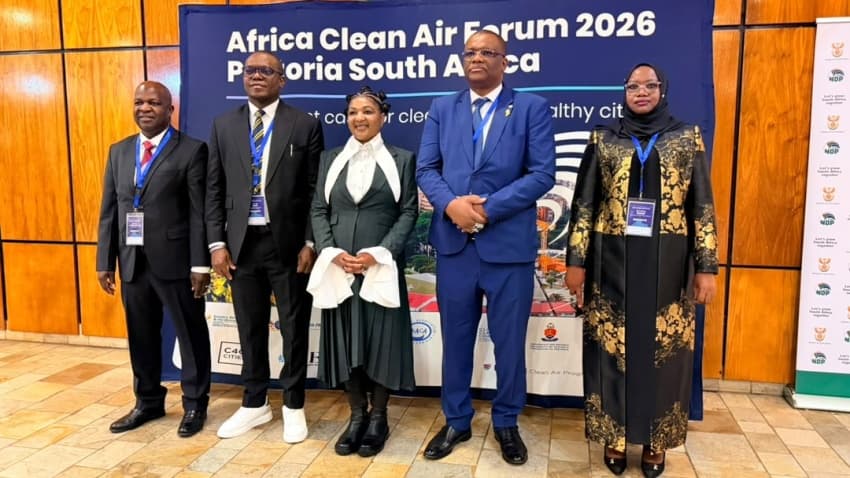
Kampala has presented its growing air quality monitoring network, cleaner transport projects and community programmes as part of its campaign to cut pollution by half by 2030.
Kampala Capital City Authority Executive Director Sharifah Buzeki outlined the city’s progress at the Africa Clean Air Forum 2026 in Pretoria, South Africa.
She said Kampala had expanded from limited pollution monitoring in 2018 to 134 air quality stations across the city.
The network includes sensors that collect local pollution data and provide real-time information to the public.
KCCA uses the findings to track pollution patterns and identify areas that need urgent action.
The authority aims to reduce the city’s average level of fine particulate matter by 50 per cent by 2030.
Buzeki said national environmental and public health laws support the campaign.
KCCA is also implementing the Kampala Clean Air Action Plan 2025–2030. The authority plans to introduce the Kampala Air Quality Management Bill.
“Clean air is not only an environmental issue; it is a public health and urban development priority,” Buzeki said.
South Africa’s Deputy Minister of Forestry, Fisheries and the Environment, Bernice Swarts, opened the forum with a call for stronger action.
She urged African governments, institutions and communities to treat clean air as a basic requirement for healthy cities.
Buzeki said Kampala had placed residents at the centre of its campaign.
Communities take part in neighbourhood clean-ups and public awareness drives.
KCCA has trained journalists to promote clean air messages. Village Health Teams also help residents understand pollution and monitor air quality.
Buzeki said the programmes had encouraged residents to view clean air as a shared responsibility rather than a government duty.
“Kampala’s clean air journey is built on partnerships between government, communities, the private sector and citizens,” she said.
KCCA has also included pollution control measures in its transport and urban development plans.
The authority has invested in cycling lanes and pedestrian walkways. It also plans to introduce electric buses and support the use of electric cars and motorcycles.
A new traffic control centre will manage junctions with traffic lights across the city.
KCCA expects the centre to ease congestion, improve traffic flow and reduce vehicle emissions.
“These initiatives are not only about reducing pollution, but also about building a culture of green mobility and healthier living,” Buzeki said.
Kampala won the National Environment Sustainability Award in June 2026.
The city was also among 15 nominees for the Guangzhou International Award for Urban Innovation. Organisers selected the nominees from more than 265 applicants worldwide.
Kampala also became the first African city to join the International Network of Tree Cities.
Buzeki said the capital had about 5,705 trees per square kilometre.
She urged African cities to share information and develop joint responses to pollution.
“Pollution knows no borders,” Buzeki said.
She called for more investment in real-time monitoring systems, community participation and urban planning that supports public health.
The Africa Clean Air Forum runs until July 16, 2026, at the University of Pretoria and the Council for Scientific and Industrial Research Convention Centre.
The meeting has brought together policymakers, researchers and city leaders to discuss ways of improving air quality across Africa.